


Biliary fibrosis drives liver repopulation and phenotype transition of transplanted hepatocytes
- PMID: 26855174
- PMCID: PMC5137249
- DOI: 10.1016/j.jhep.2016.01.036
Biliary fibrosis drives liver repopulation and phenotype transition of transplanted hepatocytes
Abstract
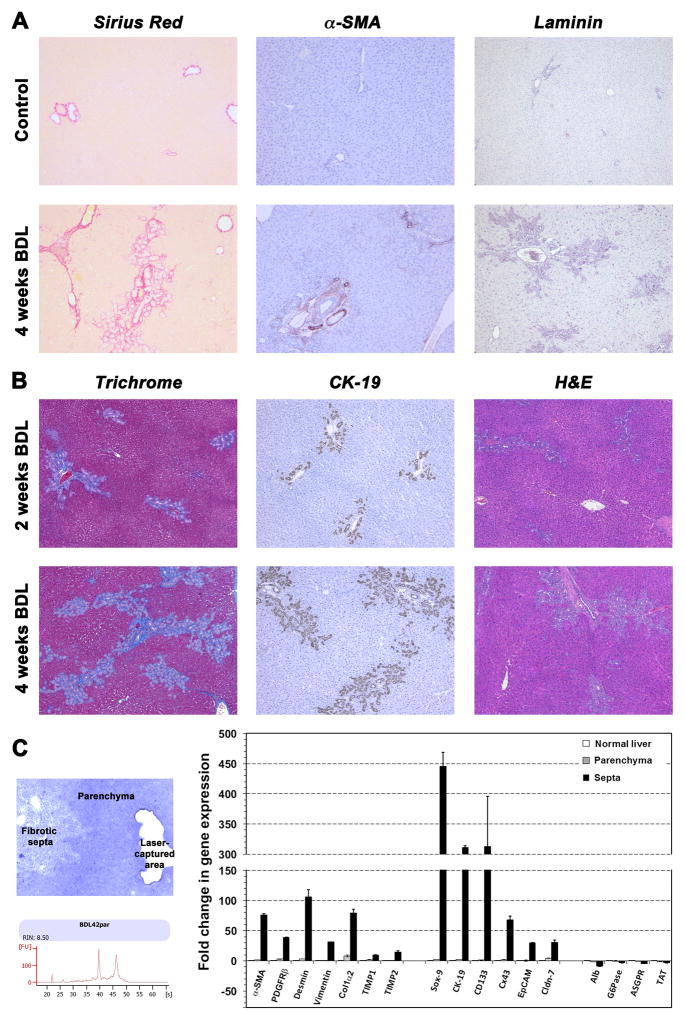
Background & aims: Current research focuses on developing alternative strategies to restore decreased liver mass prior to the onset of end-stage liver disease. Cell engraftment/repopulation requires regeneration in normal liver, but we have shown that severe liver injury stimulates repopulation without partial hepatectomy (PH). We have now investigated whether a less severe injury, secondary biliary fibrosis, would drive engraftment/repopulation of ectopically transplanted mature hepatocytes.
Methods: Ductular proliferation and progressive fibrosis in dipeptidyl-peptidase IV (DPPIV)(-) F344 rats was induced by common bile duct ligation (BDL). Purified DPPIV(+)/green fluorescent protein (GFP)(+) hepatocytes were infused without PH into the spleen of BDL rats and compared to rats without BDL.
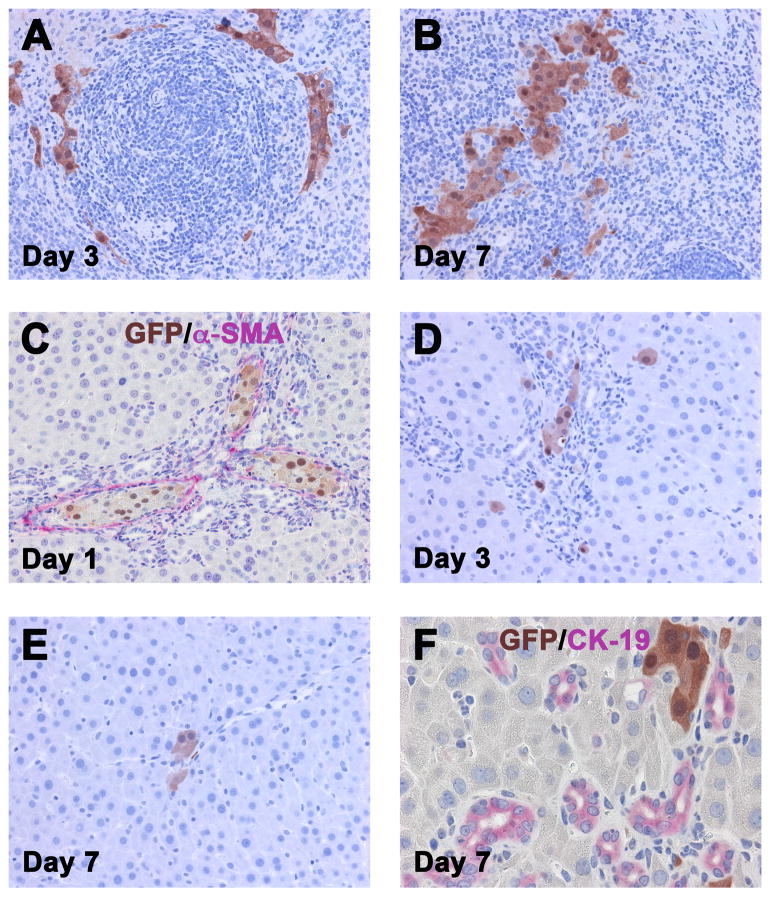
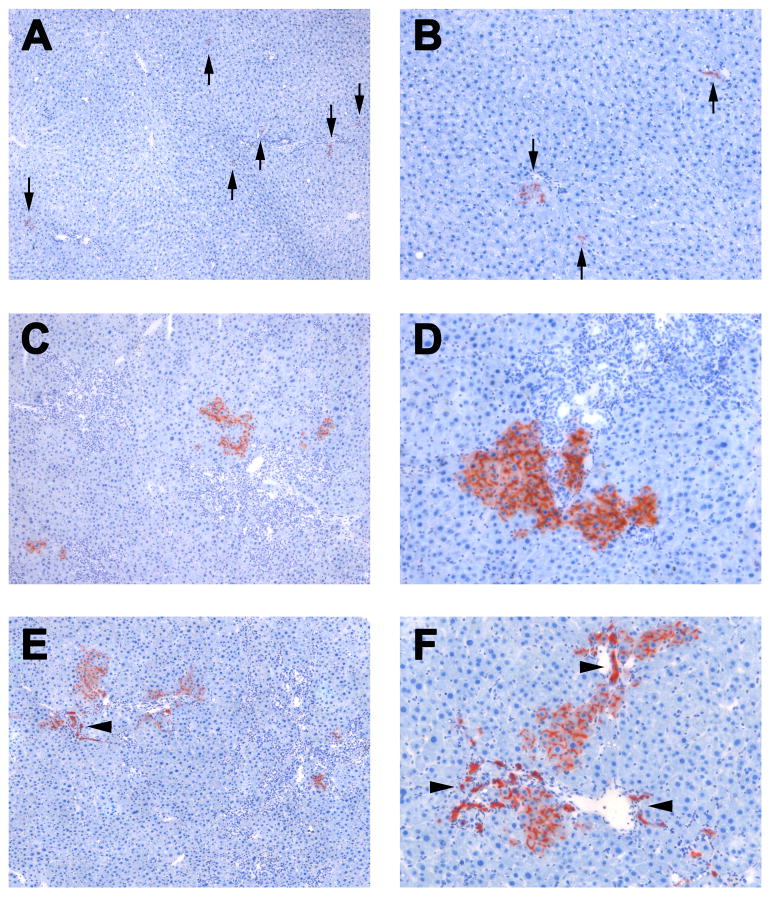
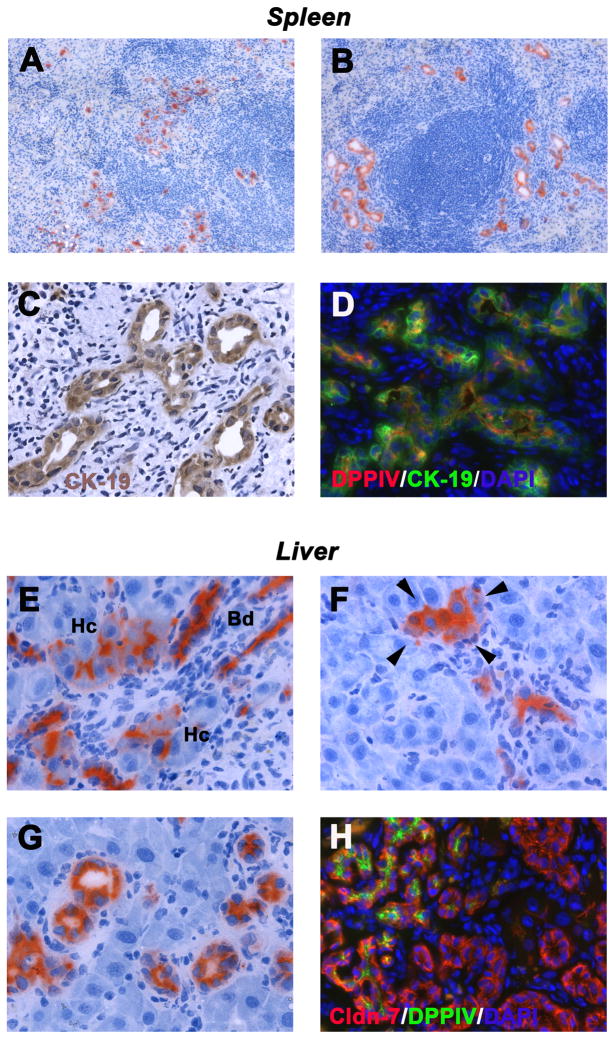
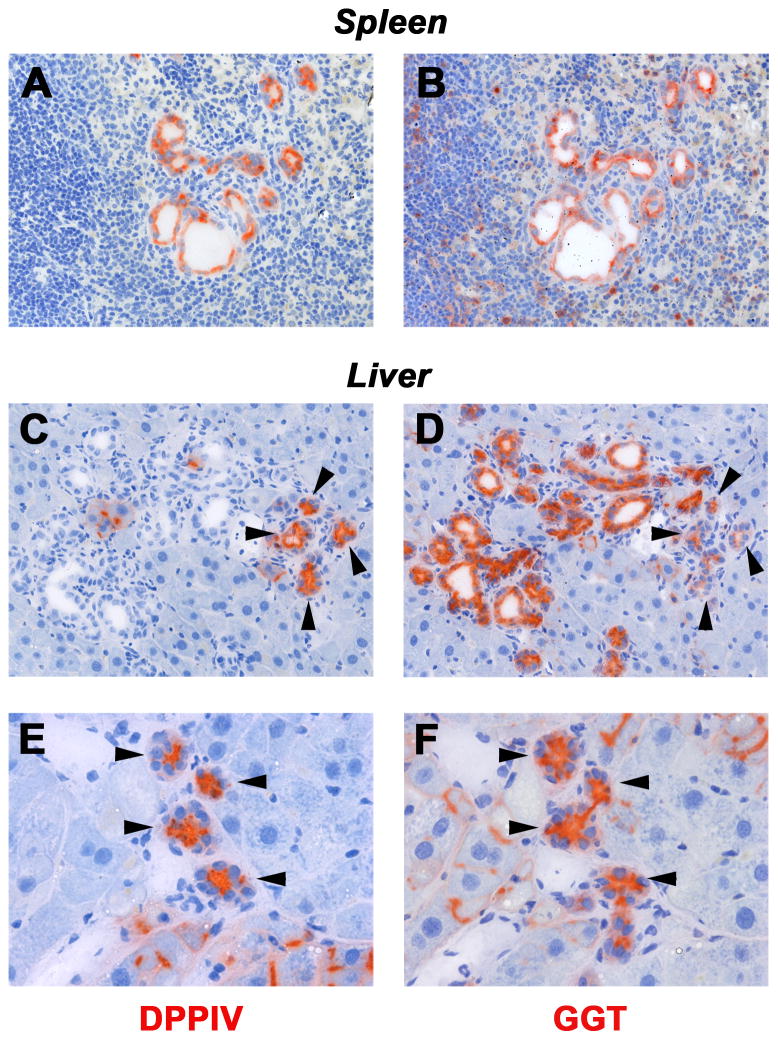
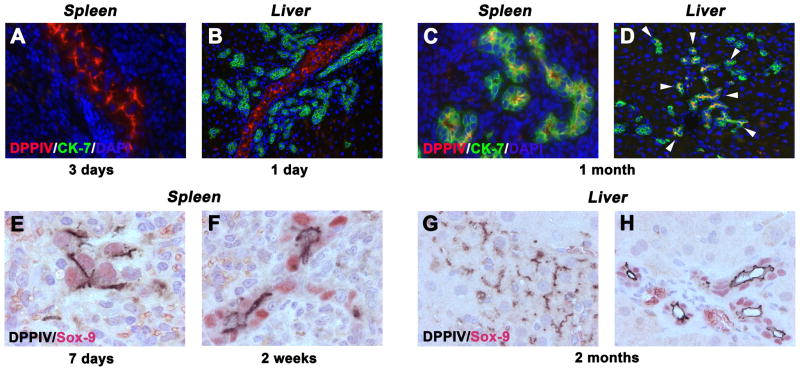
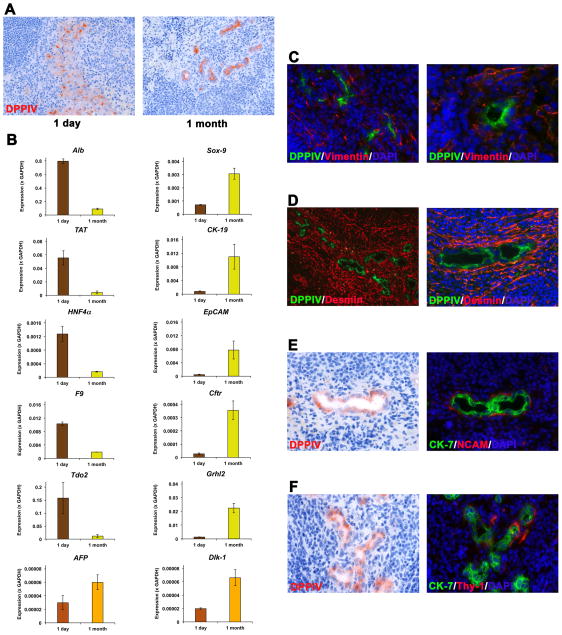
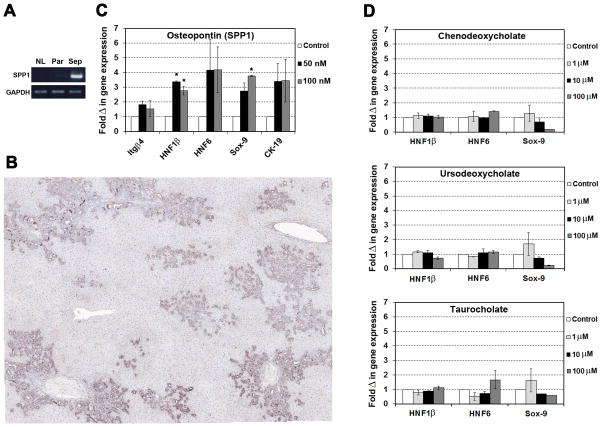
Results: Within one week, transplanted hepatocytes were detected in hepatic portal areas and at the periphery of expanding portal regions. DPPIV(+)/GFP(+) repopulating cell clusters of different sizes were observed in BDL rats but not untreated normal recipients. Surprisingly, some engrafted hepatocytes formed CK-19/claudin-7 expressing epithelial cells resembling cholangiocytes within repopulating clusters. In addition, substantial numbers of hepatocytes engrafted at the intrasplenic injection site assembled into multicellular groups. These also showed biliary "transdifferentiation" in the majority of intrasplenic injection sites of rats that received BDL but not in untreated recipients. PCR array analysis showed upregulation of osteopontin (SPP1). Cell culture studies demonstrated increased Itgβ4, HNF1β, HNF6, Sox-9, and CK-19 mRNA expression in hepatocytes incubated with osteopontin, suggesting that this secreted protein promotes dedifferentiation of hepatocytes.
Conclusions: Our studies show that biliary fibrosis stimulates liver repopulation by ectopically transplanted hepatocytes and also stimulates hepatocyte transition towards a biliary epithelial phenotype.
Keywords: Bile duct ligation; Cell transplantation; Hepatocyte dedifferentiation; Hepatocyte transdifferentiation; Osteopontin.
Copyright © 2016 European Association for the Study of the Liver. Published by Elsevier B.V. All rights reserved.
Conflict of interest statement
The authors indicate no potential conflicts of interest.
Figures
References
-
- Hernandez-Gea V, Friedman SL. Pathogenesis of liver fibrosis. Annu Rev Pathol. 2011;6:425–456. - PubMed
-
- Murphy SL, Xu J, Kochanek KD. Deaths: final data for 2010. Natl Vital Stat Rep. 2013;61:1–117. - PubMed
-
- Cárdenas A, Ginès P. Management of patients with cirrhosis awaiting liver transplantation. Gut. 2011;60:412–421. - PubMed
-
- Kim WR, Lake JR, Smith JM, Skeans MA, Schladt DP, Edwards EB, et al. OPTN/SRTR 2013 Annual Data Report: liver. Am J Transplant. 2015;15(Suppl 2):1–28. - PubMed
-
- Struecker B, Raschzok N, Sauer IM. Liver support strategies: cutting-edge technologies. Nat Rev Gastroenterol Hepatol. 2014;11:166–176. - PubMed
Publication types
MeSH terms
Substances
Grants and funding
LinkOut - more resources
Full Text Sources
Other Literature Sources
Research Materials
Miscellaneous
