


The circadian gene Rev-erbα improves cellular bioenergetics and provides preconditioning for protection against oxidative stress
- PMID: 26855417
- PMCID: PMC4905744
- DOI: 10.1016/j.freeradbiomed.2016.02.004
The circadian gene Rev-erbα improves cellular bioenergetics and provides preconditioning for protection against oxidative stress
Abstract
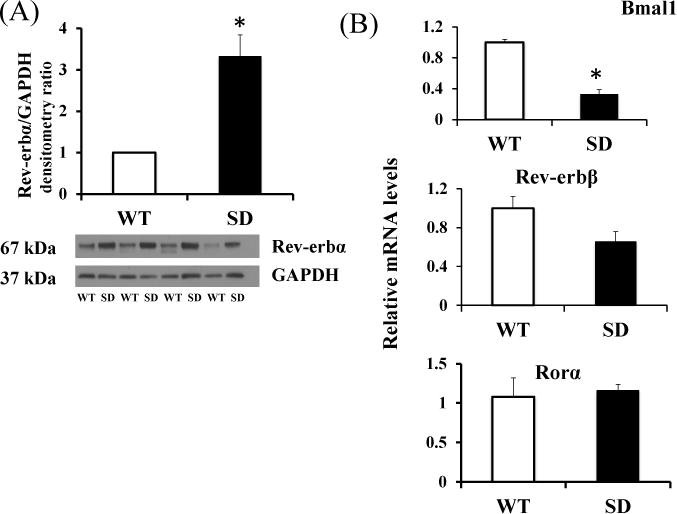
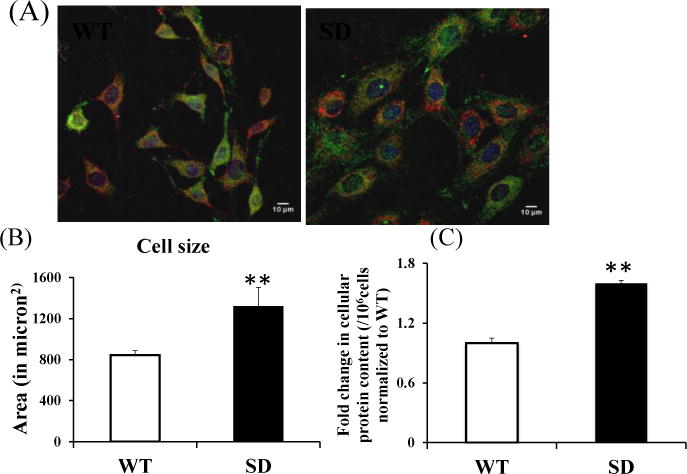
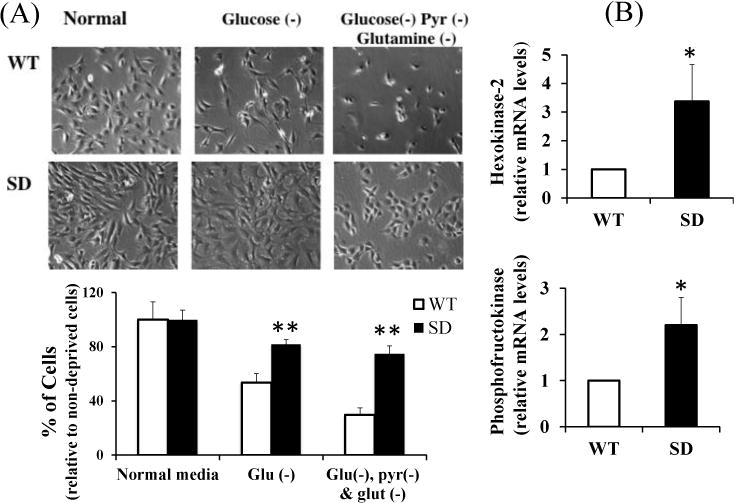
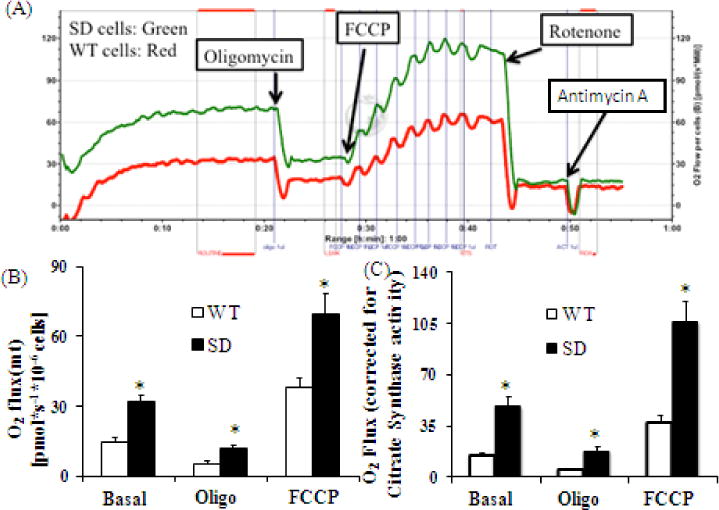
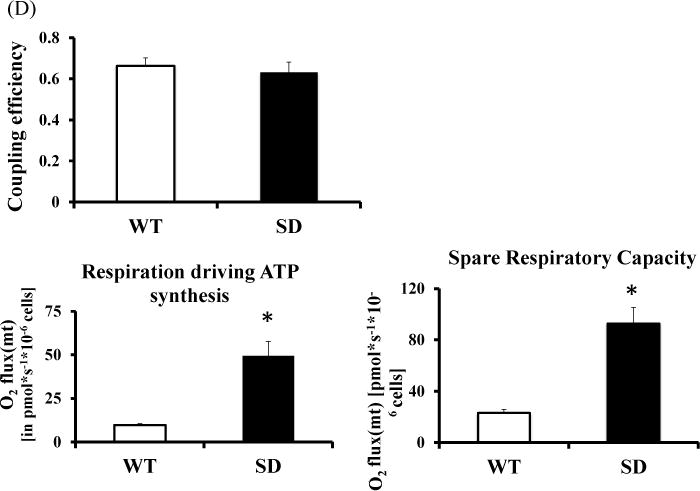
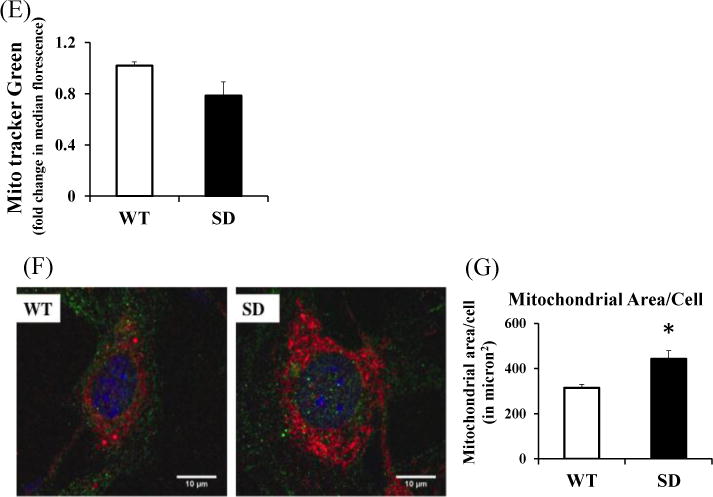
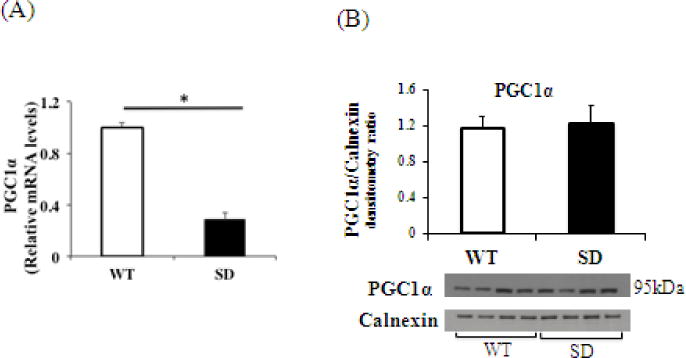
Diurnal oscillations in the expression of antioxidant genes imply that protection against oxidative stress is circadian-gated. We hypothesized that stabilization of the core circadian gene Rev-erbα (Nr1d1) improves cellular bioenergetics and protects against nutrient deprivation and oxidative stress. Compared to WT, mouse lung fibroblasts (MLG) stably transfected with a degradation resistant Rev-erbα (Ser(55/59) to Asp; hence referred to as SD) had 40% higher protein content, 1.5-fold higher mitochondrial area (confocal microscopy), doubled oxidative phosphorylation by high-resolution respirometry (Oroboros) and were resistant to glucose deprivation for 24h. This resulted from a 4-fold reduction in mitophagy (L3CB co-localized with MitoTracker Red) versus WT. Although PGC1α protein expression was comparable between SD and WT MLG cells, the role of mitochondrial biogenesis in explaining increased mitochondrial mass in SD cells was less clear. Embryonic fibroblasts (MEF) from C57Bl/6-SD transgenic mice, had a 9-fold induction of FoxO1 mRNA and increased mRNA of downstream antioxidant targets heme oxygenase-1 (HO-1), Mn superoxide dismutase and catalase (1.5, 2 fold and 2 fold respectively) versus WT. This allowed the SD cells to survive 1h incubation with 500 µM H2O2 as well as 24h of exposure to 95% O2 and remain attached whereas most WT cells did not. These observations establish a mechanistic link between the metabolic functions of Rev-erbα with mitochondrial homeostasis and protection against oxidative stress.
Keywords: Bioenergetics; Circadian; Energy metabolism; Mitochondria; NR1D1; Oxidative stress; Peroxisome proliferator‐activated receptor gamma coactivator 1‐alpha (PGC‐1α)(PPARGC1A); Preconditioning.
Copyright © 2016 Elsevier Inc. All rights reserved.
Figures
References
-
- Panda S, Hogenesch JB, Kay SA. Circadian rhythms from flies to human. Nature. 2002;417(6886):329–35. - PubMed
-
- Schernhammer ES, Laden F, Speizer FE, Willett WC, Hunter DJ, Kawachi I, et al. Rotating night shifts and risk of breast cancer in women participating in the nurses’ health study. J Natl Cancer Inst. 2001;93(20):1563–8. - PubMed
-
- Schernhammer ES, Laden F, Speizer FE, Willett WC, Hunter DJ, Kawachi I, et al. Night-shift work and risk of colorectal cancer in the nurses’ health study. J Natl Cancer Inst. 2003;95(11):825–8. - PubMed
Publication types
MeSH terms
Substances
Grants and funding
- K12 DK094723/DK/NIDDK NIH HHS/United States
- R21-HL111907/HL/NHLBI NIH HHS/United States
- T32 GM008076/GM/NIGMS NIH HHS/United States
- T32 HD060556/HD/NICHD NIH HHS/United States
- F31 NS086255/NS/NINDS NIH HHS/United States
- R01 NS029868/NS/NINDS NIH HHS/United States
- R01NS077773/NS/NINDS NIH HHS/United States
- K23 DK102659/DK/NIDDK NIH HHS/United States
- R01 NS077773/NS/NINDS NIH HHS/United States
- K12 HD043245/HD/NICHD NIH HHS/United States
- U54 HD086984/HD/NICHD NIH HHS/United States
- T32HD60556-4/HD/NICHD NIH HHS/United States
- T32GM008076/GM/NIGMS NIH HHS/United States
- R01 HD060132/HD/NICHD NIH HHS/United States
- R01 HL058752/HL/NHLBI NIH HHS/United States
- R01HL058752/HL/NHLBI NIH HHS/United States
- R21 HL111907/HL/NHLBI NIH HHS/United States
LinkOut - more resources
Full Text Sources
Other Literature Sources
Medical
Research Materials
Miscellaneous
