The effect of habitual and experimental antiperspirant and deodorant product use on the armpit microbiome
- PMID: 26855863
- PMCID: PMC4741080
- DOI: 10.7717/peerj.1605
The effect of habitual and experimental antiperspirant and deodorant product use on the armpit microbiome
Abstract
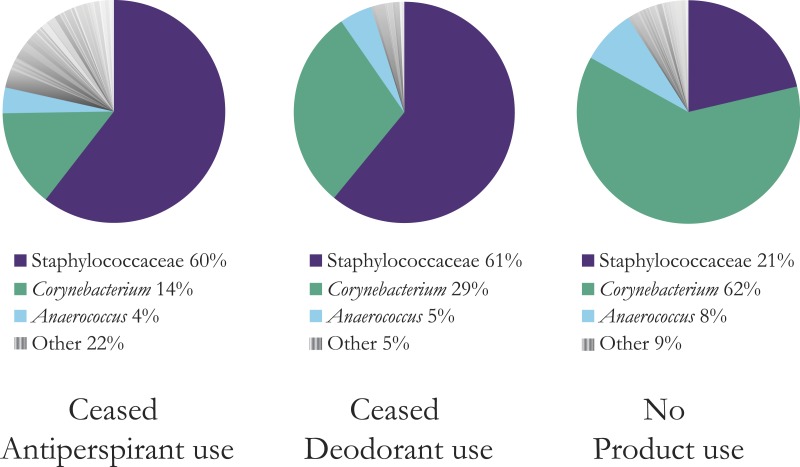
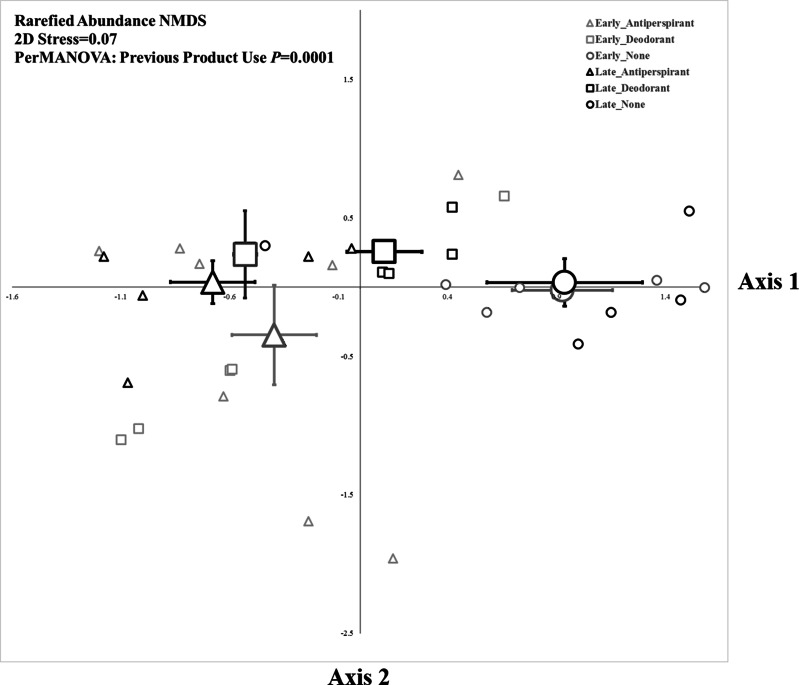
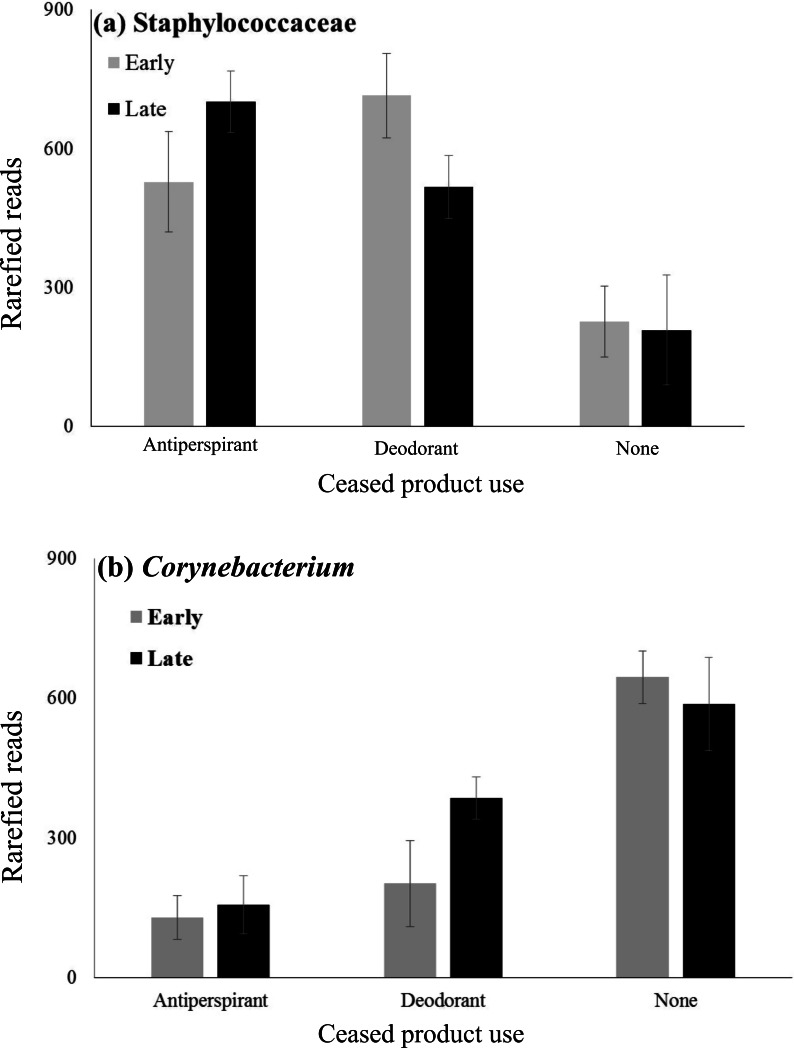
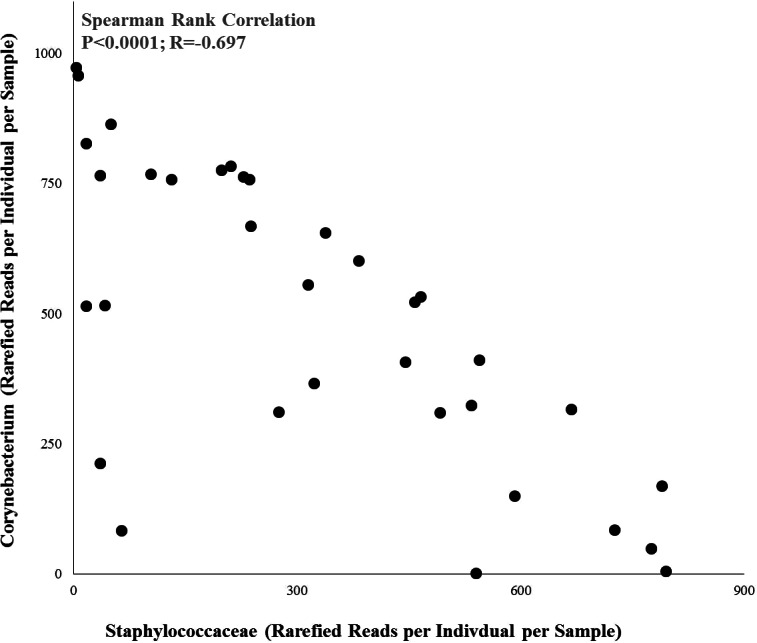
An ever expanding body of research investigates the human microbiome in general and the skin microbiome in particular. Microbiomes vary greatly from individual to individual. Understanding the factors that account for this variation, however, has proven challenging, with many studies able to account statistically for just a small proportion of the inter-individual variation in the abundance, species richness or composition of bacteria. The human armpit has long been noted to host a high biomass bacterial community, and recent studies have highlighted substantial inter-individual variation in armpit bacteria, even relative to variation among individuals for other body habitats. One obvious potential explanation for this variation has to do with the use of personal hygiene products, particularly deodorants and antiperspirants. Here we experimentally manipulate product use to examine the abundance, species richness, and composition of bacterial communities that recolonize the armpits of people with different product use habits. In doing so, we find that when deodorant and antiperspirant use were stopped, culturable bacterial density increased and approached that found on individuals who regularly do not use any product. In addition, when antiperspirants were subsequently applied, bacterial density dramatically declined. These culture-based results are in line with sequence-based comparisons of the effects of long-term product use on bacterial species richness and composition. Sequence-based analyses suggested that individuals who habitually use antiperspirant tended to have a greater richness of bacterial OTUs in their armpits than those who use deodorant. In addition, individuals who used antiperspirants or deodorants long-term, but who stopped using product for two or more days as part of this study, had armpit communities dominated by Staphylococcaceae, whereas those of individuals in our study who habitually used no products were dominated by Corynebacterium. Collectively these results suggest a strong effect of product use on the bacterial composition of armpits. Although stopping the use of deodorant and antiperspirant similarly favors presence of Staphylococcaceae over Corynebacterium, their differential modes of action exert strikingly different effects on the richness of other bacteria living in armpit communities.
Keywords: Antiperspirant; Armpit; Axillary region; Deodorant; Microbiology; Skin bacteria; Skin microbiome.
Conflict of interest statement
The authors declare there are no competing interests.
Figures
References
-
- Caporaso JG, Kuczynski J, Stombaugh J, Bittinger K, Bushman FD, Costello EK, Fierer N, Peña AG, Goodrich JK, Gordon JI, Huttley GA, Kelley ST, Knights D, Koenig JE, Ley RE, Lozupone CA, McDonald D, Muegge BD, Pirrung M, Reeder J, Sevinsky JR, Turnbaugh PJ, Walters WA, Widmann J, Yatsunenko T, Zaneveld J, Knight R. QIIME allows analysis of high-throughput community sequencing data. Nature Methods. 2010;7(5):335–336. doi: 10.1038/nmeth.f.303. - DOI - PMC - PubMed
LinkOut - more resources
Full Text Sources
Other Literature Sources