


Clonally expanded CD4+ T cells can produce infectious HIV-1 in vivo
- PMID: 26858442
- PMCID: PMC4763755
- DOI: 10.1073/pnas.1522675113
Clonally expanded CD4+ T cells can produce infectious HIV-1 in vivo
Abstract
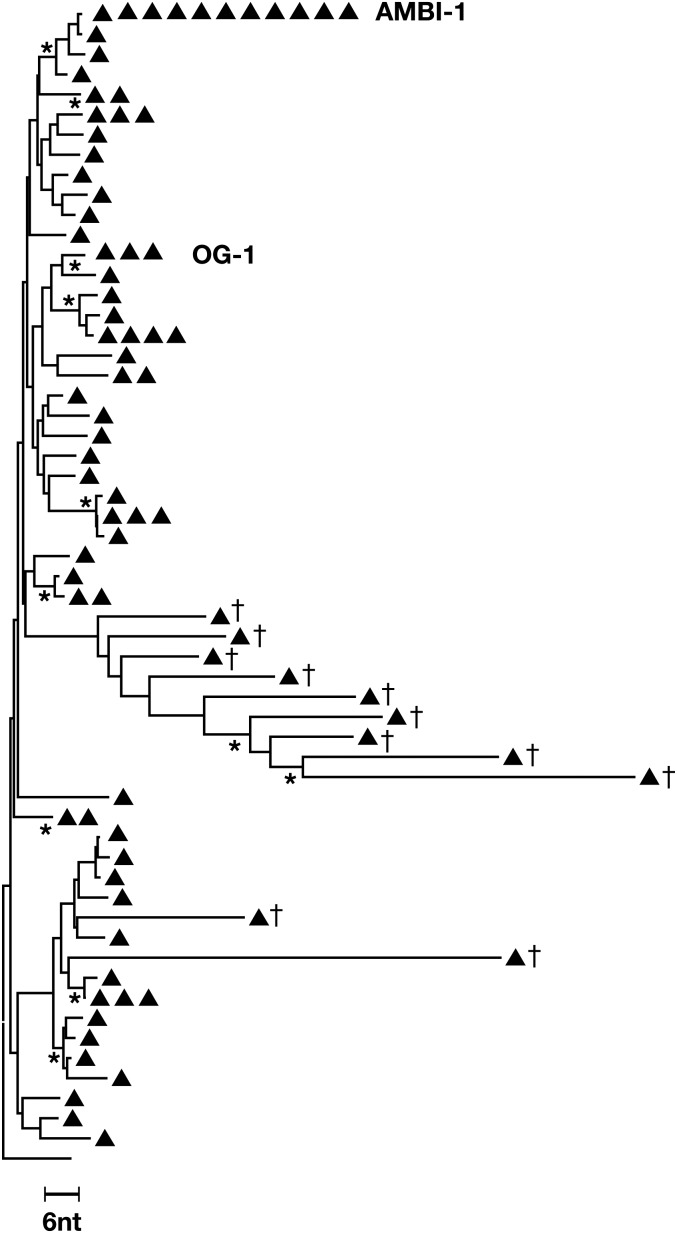
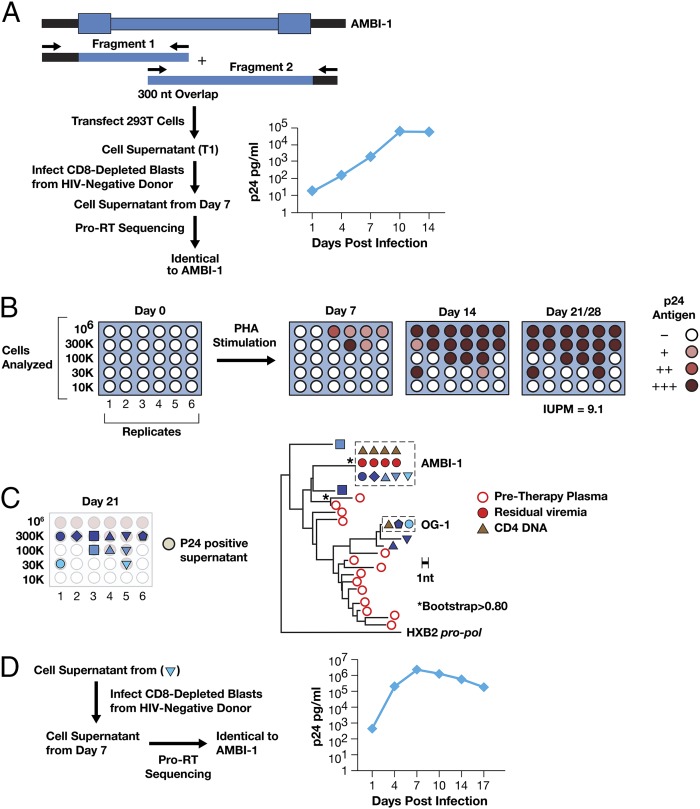
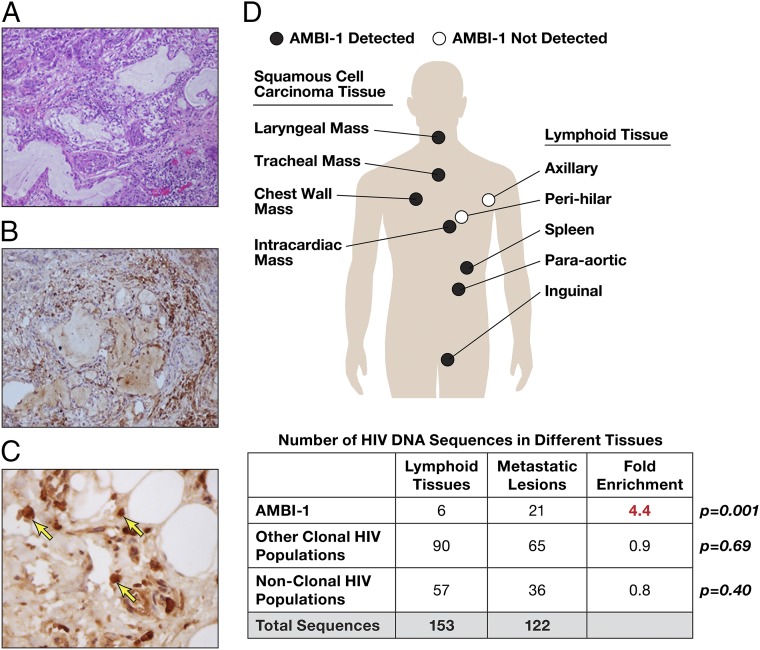
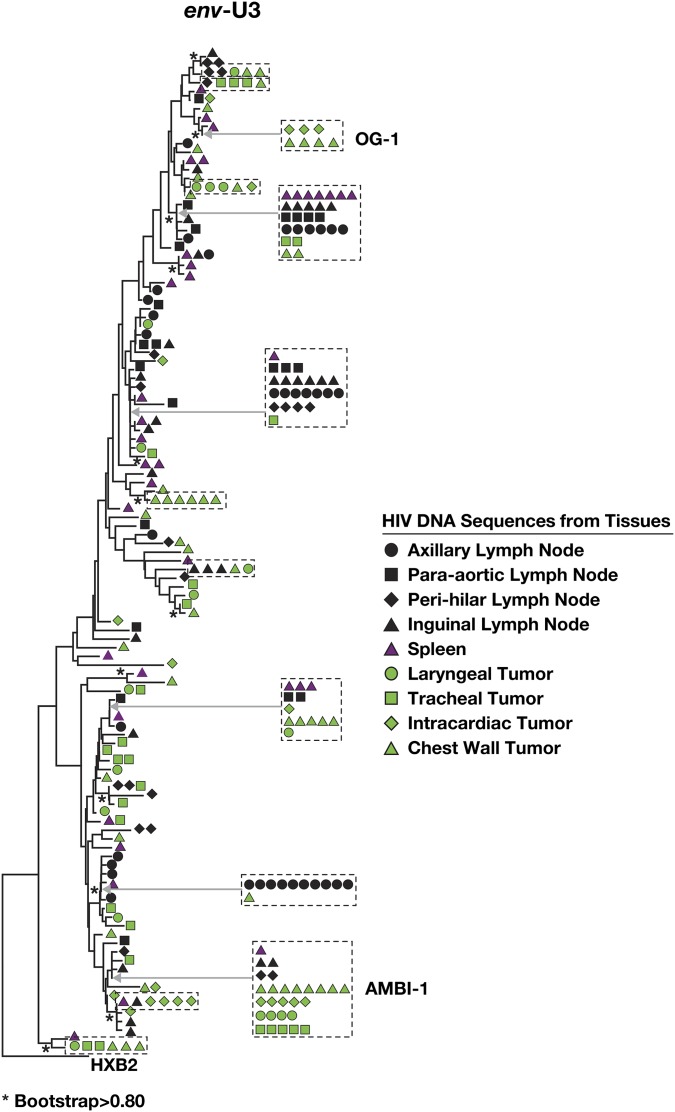
Reservoirs of infectious HIV-1 persist despite years of combination antiretroviral therapy and make curing HIV-1 infections a major challenge. Most of the proviral DNA resides in CD4(+)T cells. Some of these CD4(+)T cells are clonally expanded; most of the proviruses are defective. It is not known if any of the clonally expanded cells carry replication-competent proviruses. We report that a highly expanded CD4(+) T-cell clone contains an intact provirus. The highly expanded clone produced infectious virus that was detected as persistent plasma viremia during cART in an HIV-1-infected patient who had squamous cell cancer. Cells containing the intact provirus were widely distributed and significantly enriched in cancer metastases. These results show that clonally expanded CD4(+)T cells can be a reservoir of infectious HIV-1.
Keywords: HIV persistence; clonal expansion of infected cells; replication-competent HIV.
Conflict of interest statement
Conflict of interest statement: J.W.M. is a consultant for Gilead Sciences and owns shares in Co-Crystal, Inc.
Figures


Comment in
-
Reservoir expansion by T-cell proliferation may be another barrier to curing HIV infection.Proc Natl Acad Sci U S A. 2016 Feb 16;113(7):1692-4. doi: 10.1073/pnas.1600097113. Epub 2016 Feb 9. Proc Natl Acad Sci U S A. 2016. PMID: 26862166 Free PMC article. No abstract available.
References
Publication types
MeSH terms
Substances
Associated data
- Actions
- Actions
- Actions
Grants and funding
LinkOut - more resources
Full Text Sources
Other Literature Sources
Molecular Biology Databases
Research Materials
