


Inter-day reliability of blood pressure and cerebral blood flow velocities in persons with spinal cord injury and intact controls
- PMID: 26860937
- PMCID: PMC5430472
- DOI: 10.1080/10790268.2015.1135556
Inter-day reliability of blood pressure and cerebral blood flow velocities in persons with spinal cord injury and intact controls
Abstract
Background: Due to interruption of cardiovascular autonomic control unstable blood pressure (BP) is common in individuals with spinal cord injury (SCI) above the sixth thoracic vertebral level. The impact of unstable BP on cerebral blood flow (CBF) is not well appreciated, but symptoms associated with altered cerebral perfusion are reported, which can negatively impact daily life activities.
Methods: We measured seated BP and CBF in participants with SCI and able-bodied (AB) controls on three laboratory visits to determine the inter-day reliability (intraclass correlation coefficient: ICC). BP was assessed at the finger using photoplethysmography and at the brachial artery with manual sphygmomanometry. CBF velocities (CBFv) were assessed at the middle cerebral artery using transcranial Doppler (TCD) ultrasound.
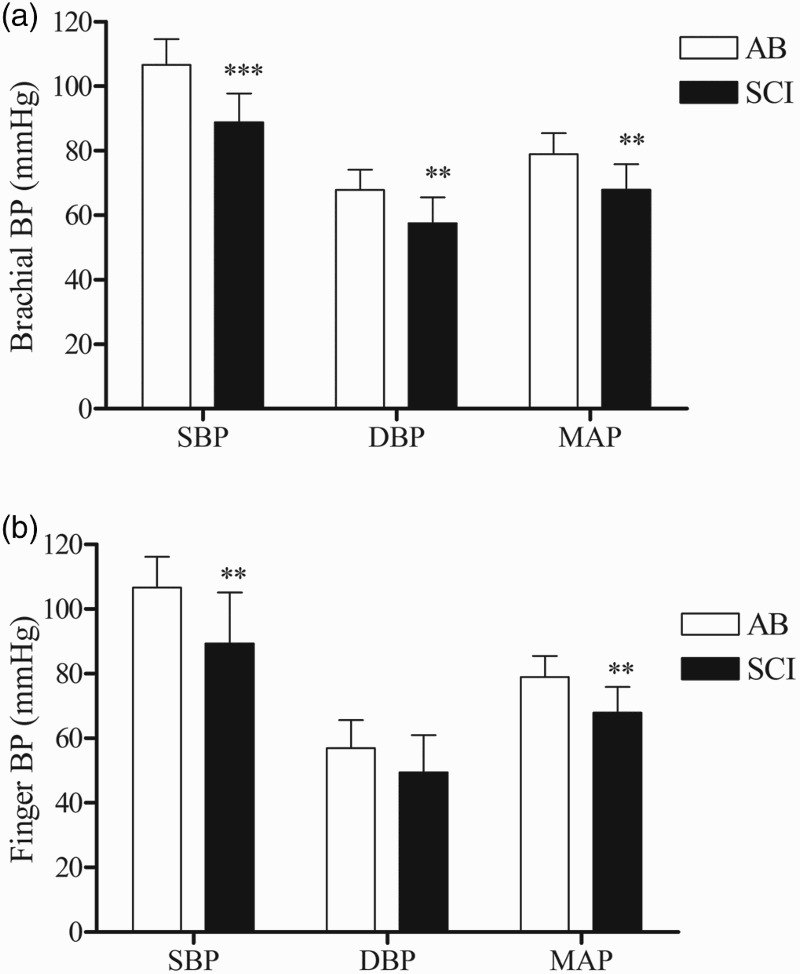
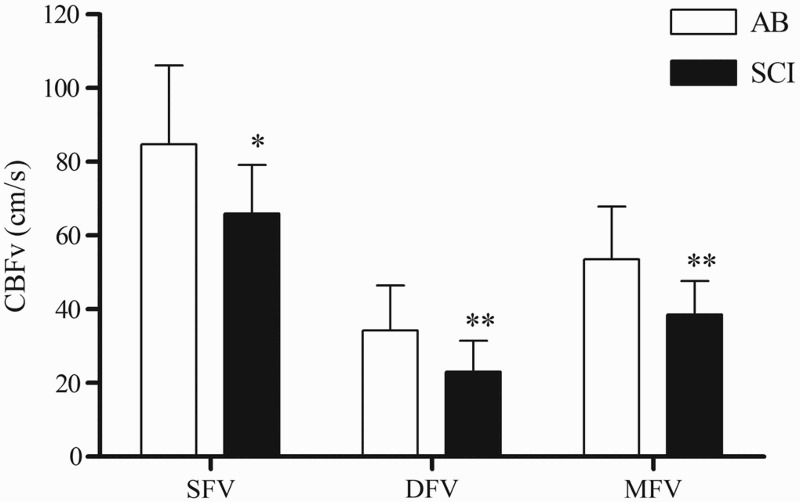
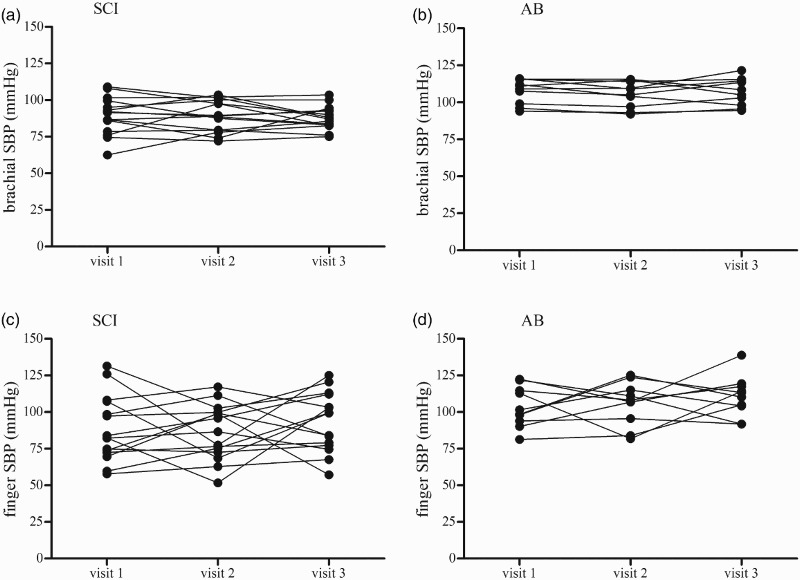
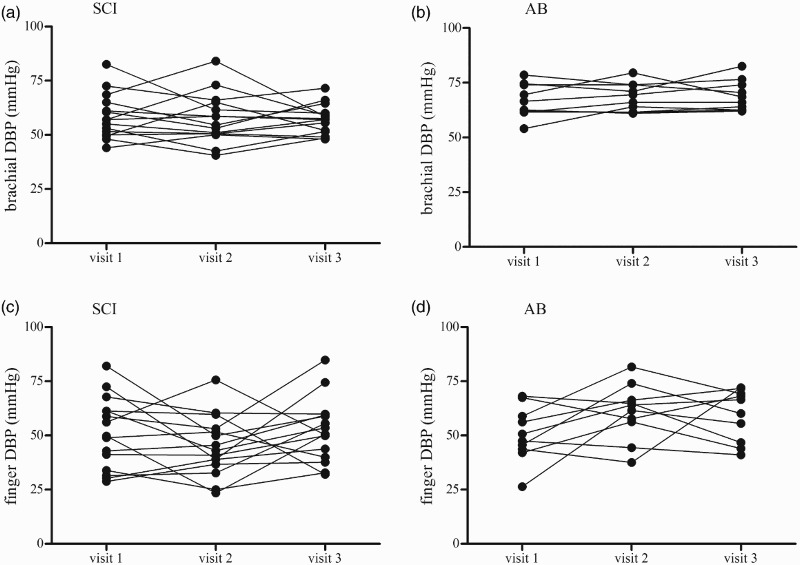
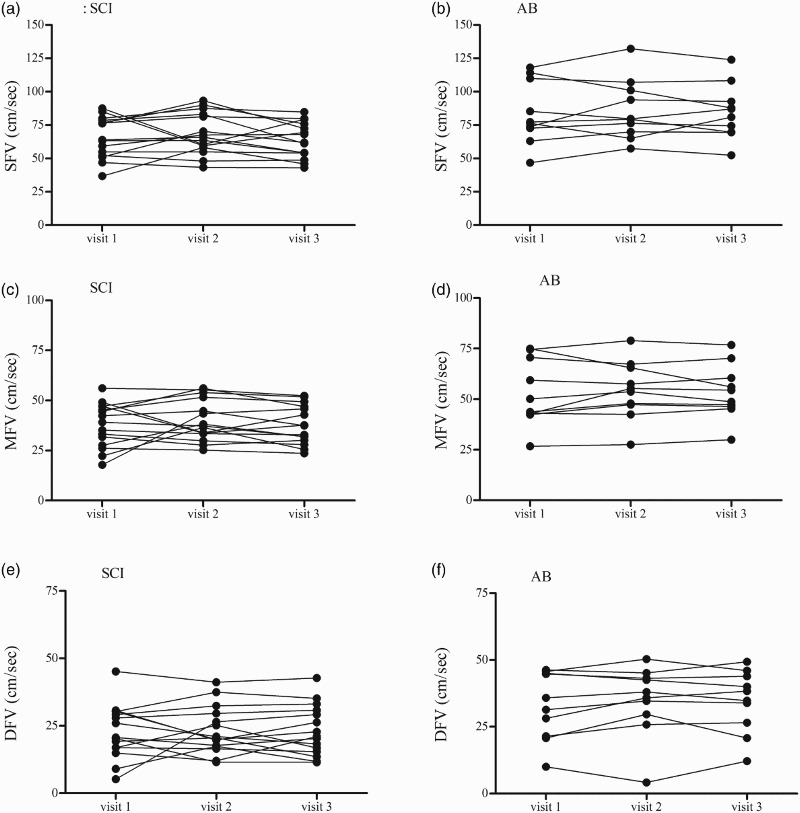
Results: Data were collected in 15 participants with chronic SCI (C3-T4) and 10 AB controls, the groups did not differ for age, height, weight or BMI; however, brachial BP (P < 0.001), finger BP (P < 0.01) and CBFv (P < 0.05) were significantly lower in the SCI group compared to the controls. The inter-day ICC for brachial BP ranged from 0.51 to 0.79, whereas the ICC for finger BP was not as high (0.17 to 0.47). The inter-day ICC for CBFv ranged from 0.45 to 0.96, indicating fair to substantial reliability.
Conclusions: These data indicate good inter-day reliability of brachial BP and TCD recording of CBFv; however, the assessment of finger BP appears to be somewhat less reliable. In addition, these data confirm reduced resting CBFv in association with hypotension in individuals with SCI compared to matched controls with low BP.
Keywords: Blood pressure; Cerebral blood flow; Paraplegia; Reliability; Tetraplegia.
Figures
References
-
- Krassioukov A. Autonomic dysreflexia: current evidence related to unstable arterial blood pressure control among athletes with spinal cord injury. Clin J Sport Med 2012;22(1):39–45. - PubMed
-
- Munakata M, Kameyama J, Kanazawa M, Nunokawa T, Moriai N, Yoshinaga K. Circadian blood pressure rhythm in patients with higher and lower spinal cord injury: simultaneous evaluation of autonomic nervous activity and physical activity. J Hypertens 1997;15(12 Pt 2):1745–9. doi: 10.1097/00004872-199715120-00083 - DOI - PubMed
Publication types
MeSH terms
LinkOut - more resources
Full Text Sources
Other Literature Sources
Medical
Miscellaneous
