


Ribosome biogenesis may augment resistance training-induced myofiber hypertrophy and is required for myotube growth in vitro
- PMID: 26860985
- PMCID: PMC4835943
- DOI: 10.1152/ajpendo.00486.2015
Ribosome biogenesis may augment resistance training-induced myofiber hypertrophy and is required for myotube growth in vitro
Abstract
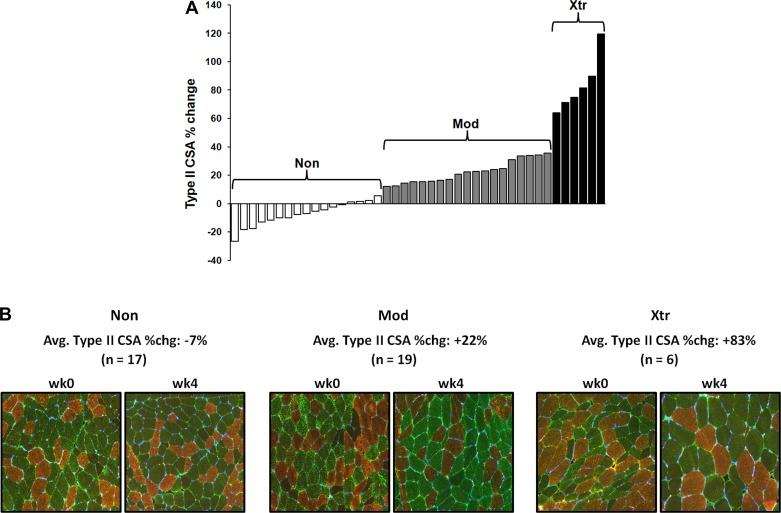
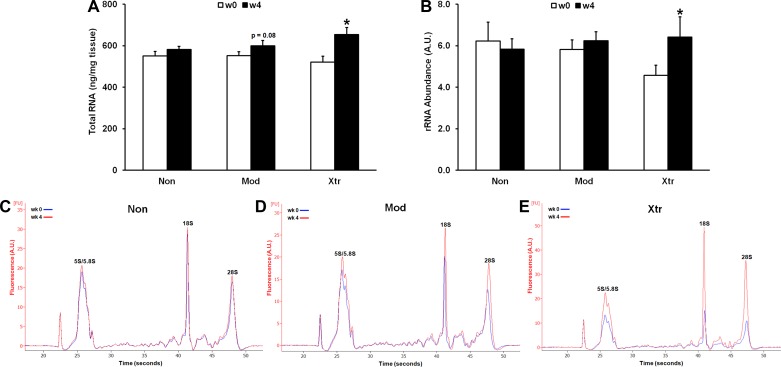
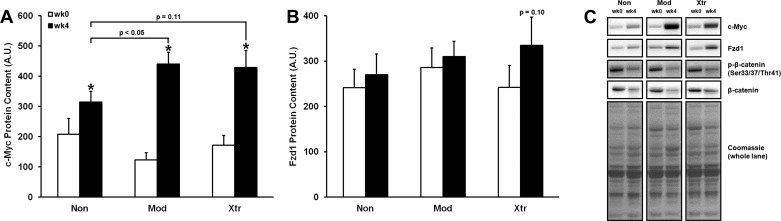
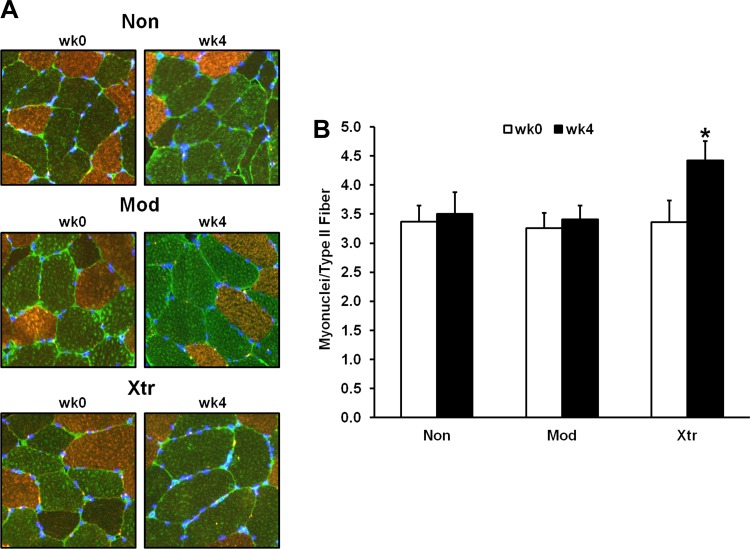
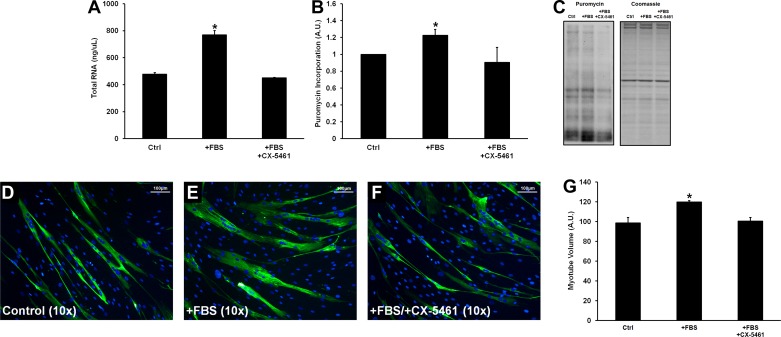
Resistance exercise training (RT) is the most effective method for increasing skeletal muscle mass in older adults; however, the amount of RT-induced muscle growth is highly variable between individuals. Recent evidence from our laboratory and others suggests ribosome biogenesis may be an important factor regulating RT-induced hypertrophy, and we hypothesized that the extent of hypertrophy is at least partly regulated by the amount of RT-induced ribosome biogenesis. To examine this, 42 older adults underwent 4 wk of RT aimed at inducing hypertrophy of the knee extensors (e.g., 2 sets of squat, leg press, and knee extension, 10-12 repetition maximums, 3 days/wk), and vastus lateralis muscle biopsies were performed pre- and post-RT. Post hoc K-means cluster analysis revealed distinct differences in type II myofiber hypertrophy among subjects. The percent change in type II myofiber size in nonresponders (Non; n = 17) was -7%, moderate responders (Mod; n = 19) +22%, and extreme responders (Xtr; n = 6) +83%. Total muscle RNA increased only in Mod (+9%, P < 0.08) and Xtr (+26%, P < 0.01), and only Xtr increased rRNA content (+40%, P < 0.05) and myonuclei/type II fiber (+32%, P < 0.01). Additionally, Mod and Xtr had a greater increase in c-Myc protein levels compared with Non (e.g., approximately +350 and +250% vs. +50%, respectively, P < 0.05). In vitro studies showed that growth factor-induced human myotube hypertrophy is abolished when rRNA synthesis is knocked down using the Pol I-specific inhibitor CX-5461. Overall, these data implicate ribosome biogenesis as a key process regulating the extent of RT-induced myofiber hypertrophy in older adults.
Keywords: Pol I; c-Myc; rRNA; ribosome; skeletal muscle.
Figures
References
-
- Adams GR, Bamman MM. Characterization and regulation of mechanical loading-induced compensatory muscle hypertrophy. Compr Physiol 2: 2829–2870, 2012. - PubMed
-
- Anthony JC, Anthony TG, Kimball SR, Jefferson LS. Signaling pathways involved in translational control of protein synthesis in skeletal muscle by leucine. J Nutr 131: 856S–860S, 2001. - PubMed
-
- Arabi A, Wu S, Ridderstrale K, Bierhoff H, Shiue C, Fatyol K, Fahlen S, Hydbring P, Soderberg O, Grummt I, Larsson LG, Wright AP. c-Myc associates with ribosomal DNA and activates RNA polymerase I transcription. Nat Cell Biol 7: 303–310, 2005. - PubMed
-
- Armstrong DD, Esser KA. Wnt/beta-catenin signaling activates growth-control genes during overload-induced skeletal muscle hypertrophy. Am J Physiol Cell Physiol 289: C853–C859, 2005. - PubMed
Publication types
MeSH terms
Substances
Grants and funding
LinkOut - more resources
Full Text Sources
Other Literature Sources
