. 2016 Jun;5(1):63-80.
doi: 10.1007/s40122-016-0045-2. Epub 2016 Feb 10.

Efficacy of Intraoperative Dexmedetomidine Compared with Placebo for Postoperative Pain Management: A Meta-Analysis of Published Studies

Affiliations

Efficacy of Intraoperative Dexmedetomidine Compared with Placebo for Postoperative Pain Management: A Meta-Analysis of Published Studies

Myriam Bellon et al. Pain Ther. 2016 Jun.

Abstract

Introduction: Dexmedetomidine (Dex) has sedative, analgesic, and anesthetic-sparing effects. This meta-analysis examines demonstrated intraoperative and postoperative effects of intraoperative Dex administration during pediatric surgery.

Methods: A search for randomized placebo-controlled trials was conducted to identify clinical trials examining intraoperative Dex use in children, infants, and neonates. Primary outcome was postoperative opioid consumption; secondary outcomes were: postoperative pain intensity and postoperative nausea and vomiting (PONV).

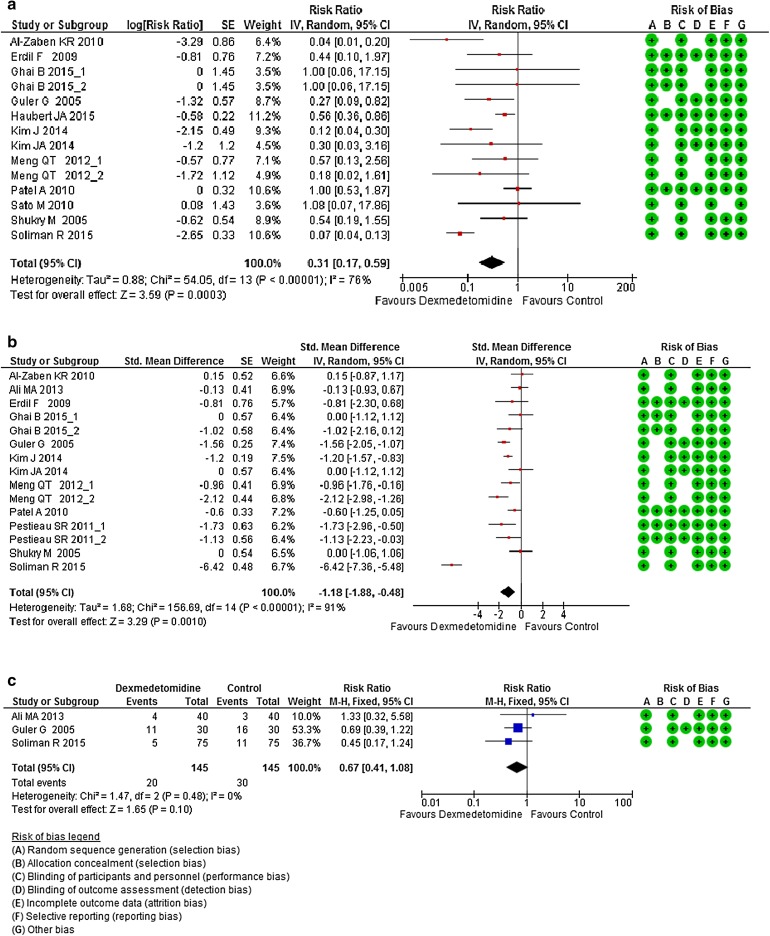
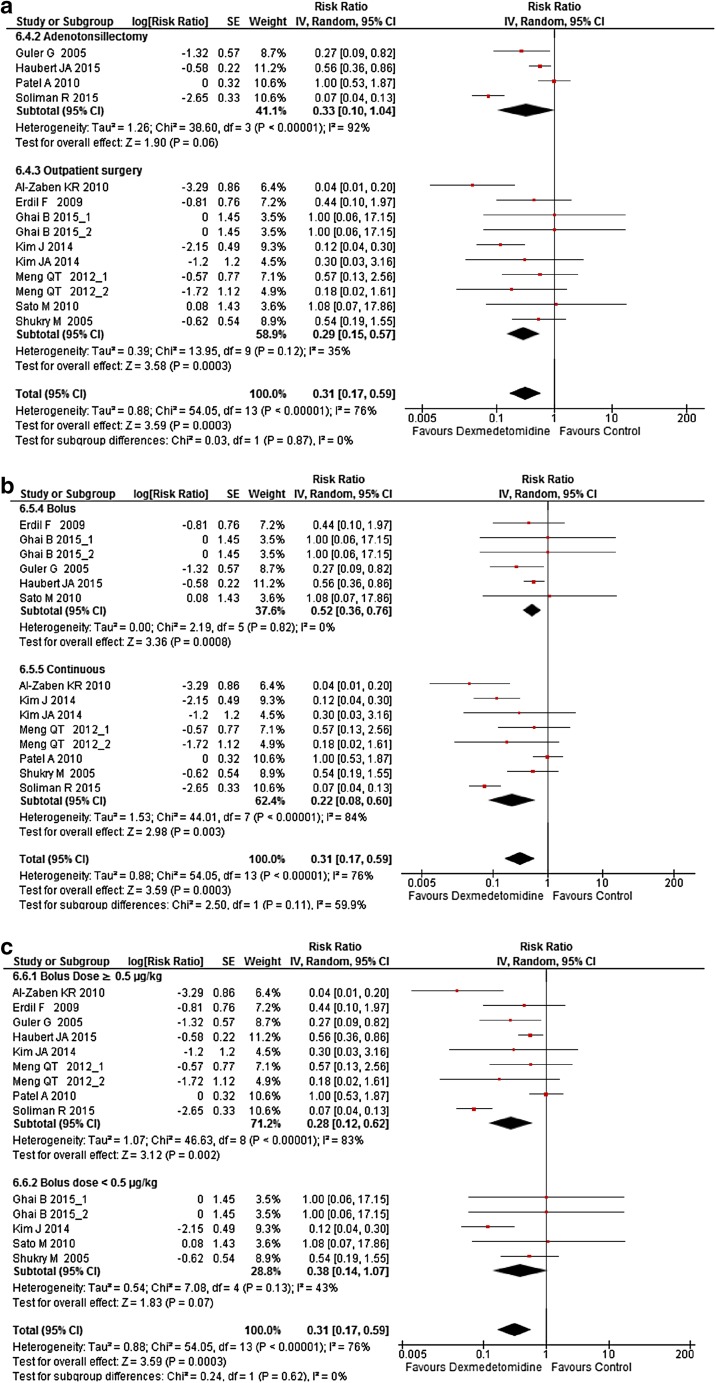
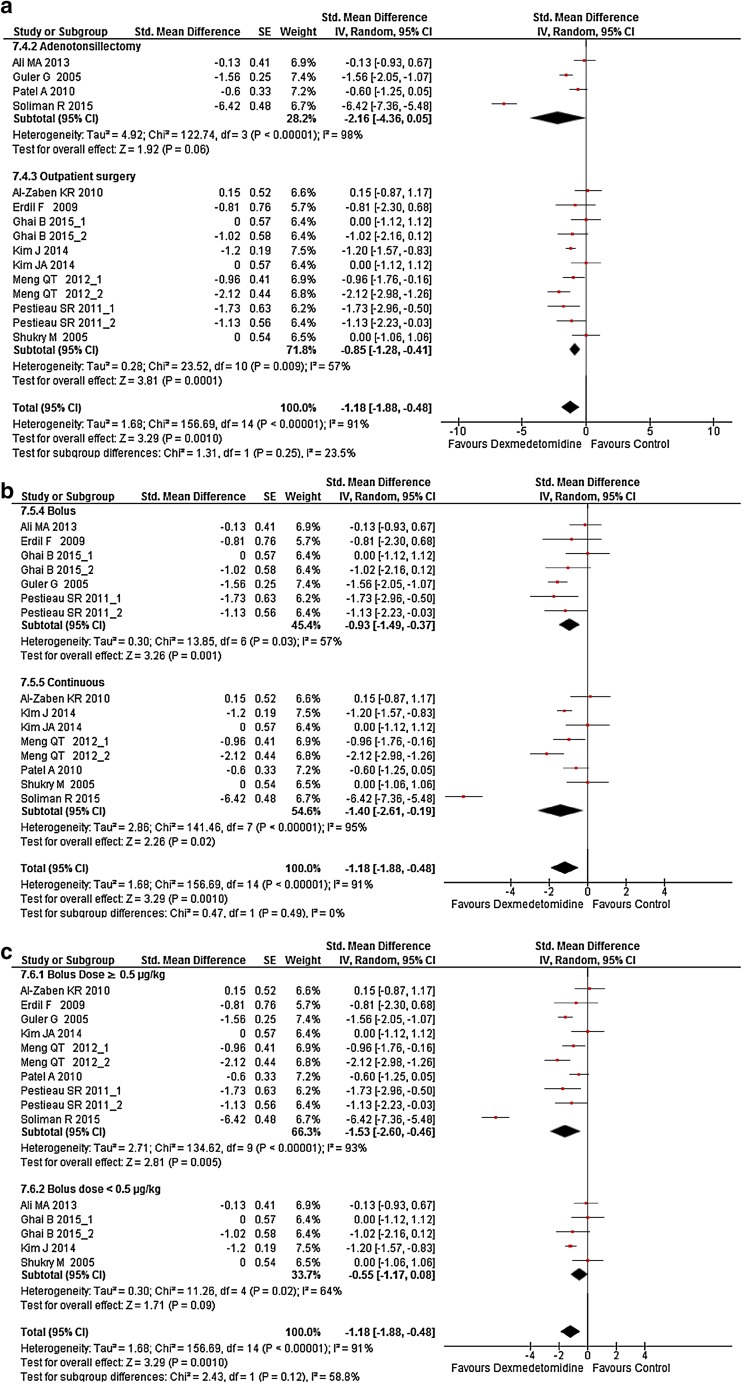
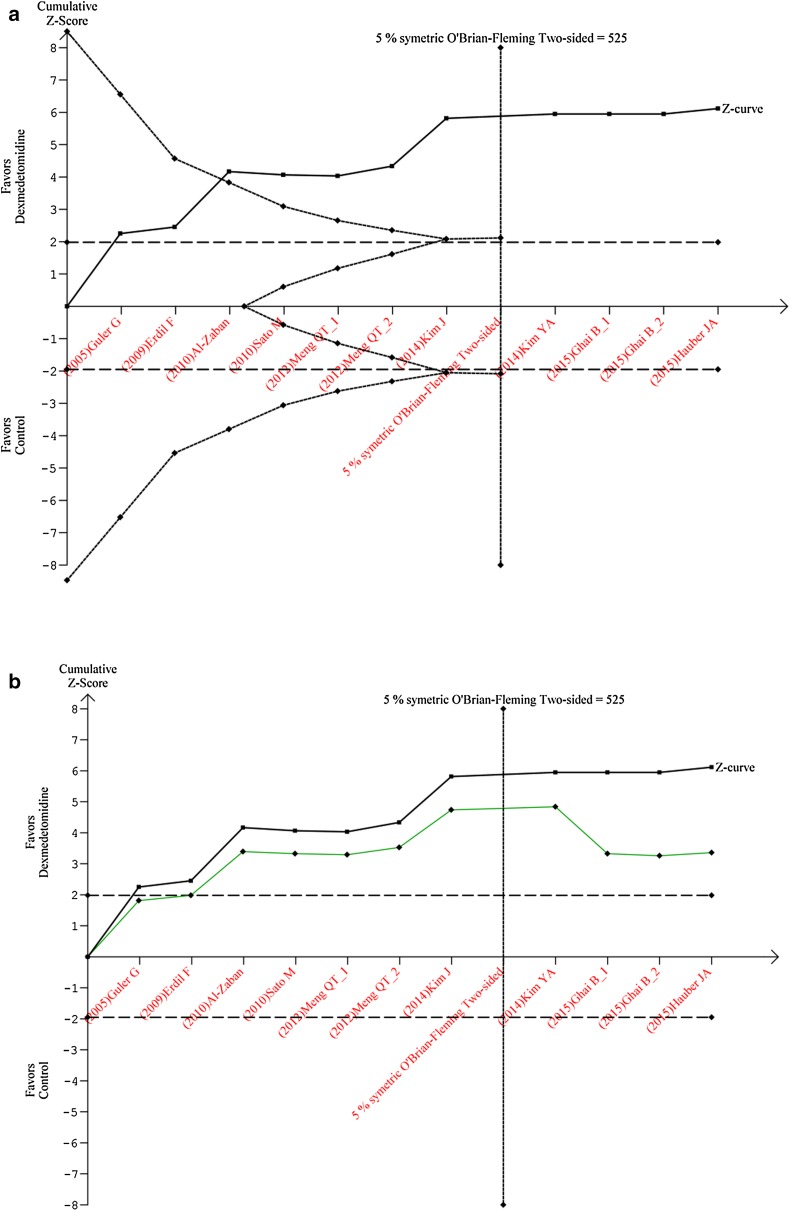
Results: Fourteen randomized controlled trials performed during painful procedures were analyzed. Intraoperative Dex administration was associated with significantly reduced postoperative opioid consumption in the postanesthesia care unit [PACU; risk ratio (RR) = 0.31 (0.17, 0.59), I (2) = 76%, p < 0.0001 and cumulative z score using trial sequential analysis], decreased pain intensity in PACU [standardized mean difference (SMD) = -1.18 (-1.88, -0.48), I (2) = 91%, p < 0.0001] but had no effect upon PONV incidence [RR = 0.67 (0.41, 1.08), I (2) = 0%, p = 0.48]. Subgroup analyses found administering Dex during adenotonsillectomy and using a bolus <0.5 µg/kg (irrespective to the use of a continuous administration) without effects on studies outcomes. Heterogeneity was high among results and a high suspicion of publication bias was present for all analyzed outcomes.

Conclusions: This meta-analysis shows that intraoperative Dex administration in children reduces postoperative opioids consumption and postoperative pain in PACU. According to our results, optimal bolus dose was found to be ≥0.5 µg/kg. Future studies have to explore this particular point and the postoperative analgesic effects of Dex during longer periods.

Keywords: Analgesia; Children; Dexmedetomidine; Meta-analysis; Postoperative pain; Recovery.


Figures
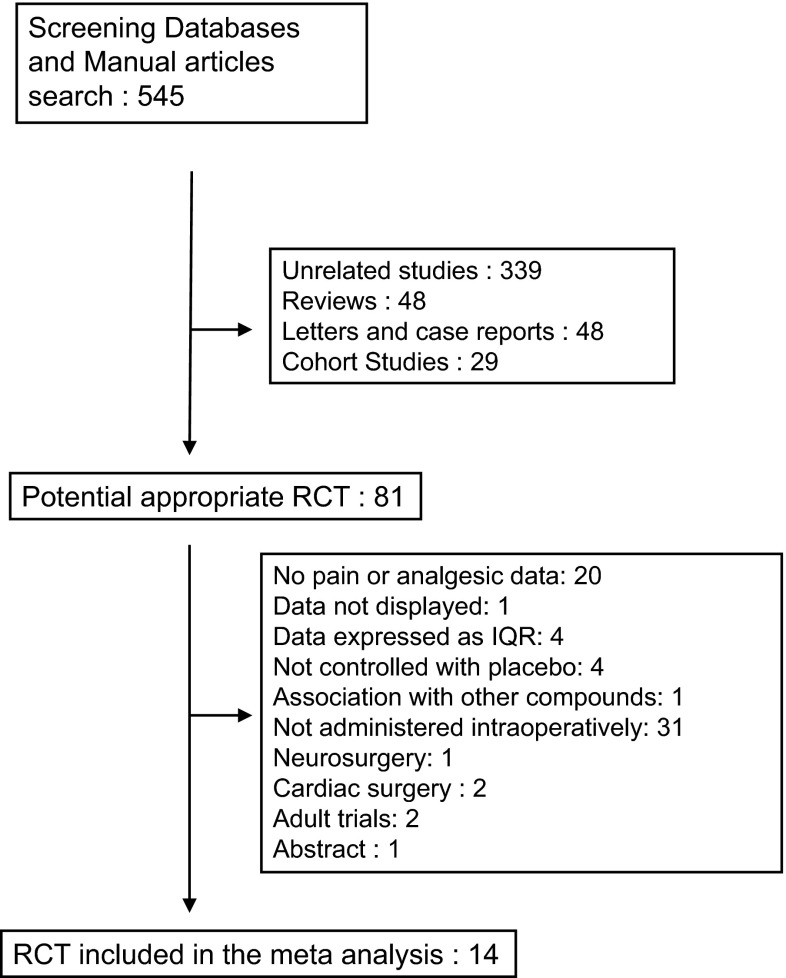
Fig. 1
Fig. 1
Meta-analysis flowchart. IQR interquartile range, RCT randomized controlled trial
Fig. 2
Fig. 2
a Forest plot of meta-analysis of the effects of Dex versus placebo on opioid consumption in the PACU. b Forest plot of meta-analysis of the effects of Dex versus placebo on postoperative pain intensity in the PACU. c Forest plot of meta-analysis of the effects of dexmedetomidine versus placebo on postoperative nausea and vomiting in the PACU. The square in front of each study (first author and year of publication) is the RR for individual trials, and the corresponding horizontal line is the 95% CI. The lozenge at the bottom represents pooled OR with 95% CI. Studies with more than one Dex arm are displayed as author, name, year of publication_1, and author name year of publication_2 (see Table 1 for exact description of each arm). CI confidence interval, Dex dexmedetomidine, OR odds ratio, PACU postanesthesia care unit, RR risk ratio, SE standard error, SMD standardized mean difference
Fig. 3
Fig. 3
Forest plot of subgroup analysis of the effect a of the surgery, b of the bolus mode versus the bolus plus continuous mode, and c the effect of a bolus of ≥0.5 µg/kg versus a bolus <0.5 µg/kg, on Dex opioid-sparing effect in the postanesthesia care unit. The square in front of each study (first author and year of publication) is the RR for individual trials, and the corresponding horizontal line is the 95% CI. The lozenge at the bottom represents pooled OR with 95% CI. The test for subgroup difference represents the interaction test between groups. Studies with more than one Dex arm are displayed as author name, year of publication_1, and author name, year of publication_2 (see Table 1 for exact description of each arm). CI confidence interval, Dex dexmedetomidine, RR risk ratio, SE standard error
Fig. 4
Fig. 4
Forest plot of subgroup analysis of a the surgery, b the bolus mode versus the bolus plus continuous mode, and c the effect of a bolus of Dex ≥0.5 µg/kg versus a bolus <0.5 µg/kg, on Dex effect on postoperative pain intensity in the postanesthesia care unit. The square in front of each study (first author and year of publication) is the SMD for individual trials, and the corresponding horizontal line is the 95% CI. The lozenge at the bottom represents pooled OR with 95% CI. The test for subgroup difference represents the interaction test between groups. Studies with more than one Dex arm are displayed as author name, year of publication_1, and author name year of publication_2 (see Table 1 for exact description of each arm). CI confidence interval, Dex dexmedetomidine SE standard error, SMD standardized mean difference
Fig. 5
Fig. 5
a Trial sequential analysis graph (x-axis studies effect, y-axis cumulative z scores). The displaying in the full line displays the cumulative z score, the horizontal dotted line the boundaries of significance (results in the region within these boundaries are non-significant), the vertical line the meta-analysis information size (size of patients to be included in order to show a significant outcome: 525). The etched lines the upper inward-sloping represents the trial sequential monitoring boundary and the lower outward-sloping the futility region. Given the evolution of the z score outside the futility region and crossing the monitoring boundary curve (constructed with low-risk bias studies), the opioid-sparing effect of dexmedetomidine is confirmed. b Correction for previous meta-analyses of trial sequential analysis graph: (x-axis studies effect, y-axis cumulative z scores). The upper curve represents the actual z scores analysis without correction and the lower one the corrected z scores taking in account previous analyses
Fig. 6
Fig. 6
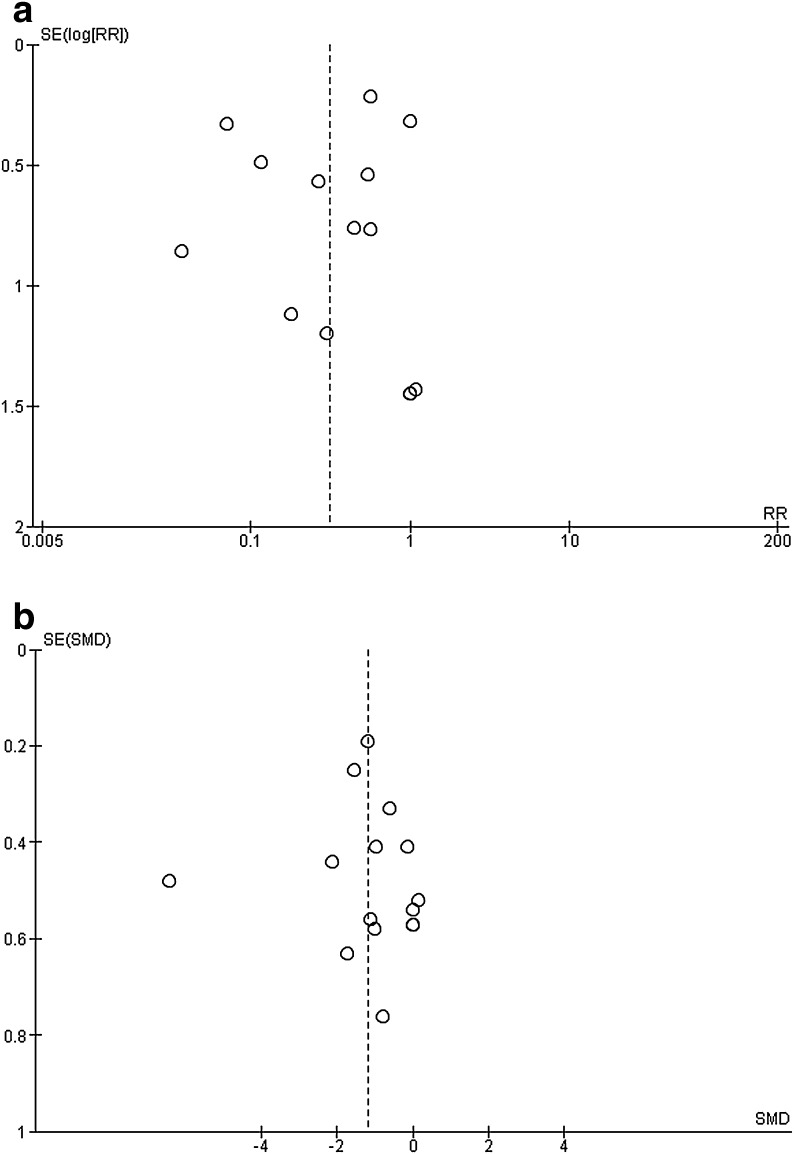
a Funnel plot of Dex effect upon opioid consumption in PACU. b Funnel plot of Dex effect upon postoperative pain intensity in PACU. Graphs display the intervention effect (RR or SMD) estimates from individual studies in the x-axis against some measure of each study’s size or precision (standard error of the intervention effect) in the y-axis. Dex dexmedetomidine, PACU postanesthesia care unit, RR risk ratio, SE standard error, SMD standardized mean difference

References

    1. Barr J, Fraser GL, Puntillo K, Ely EW, Gélinas C, Dasta JF, et al. Clinical practice guidelines for the management of pain, agitation, and delirium in adult patients in the intensive care unit. Crit Care Med. 2013;41(1):263–306. - PubMed
    1. Mahmoud M, Mason KP. Dexmedetomidine: review, update, and future considerations of paediatric perioperative and periprocedural applications and limitations. Br J Anaesth. 2015;115(2):171–182. doi: 10.1093/bja/aev226. - DOI - PubMed
    1. Mantz J, Josserand J, Hamada S. Dexmedetomidine: new insights. Eur J Anaesthesiol. 2011;28(1):3–6. doi: 10.1097/EJA.0b013e32833e266d. - DOI - PubMed
    1. Le Bot A, Michelet D, Hilly J, Maesani M, Dilly MP, Brasher C, et al. Efficacy of intraoperative dexmedetomidine compared with placebo for surgery in adults: a meta-analysis of published studies. Minerva Anestesiol. 2015;81(10):1105–1117. - PubMed
    1. Schnabel A, Reichl SU, Poepping DM, Kranke P, Pogatzki-Zahn EM, Zahn PK. Efficacy and safety of intraoperative dexmedetomidine for acute postoperative pain in children: a meta-analysis of randomized controlled trials. Paediatr Anaesth. 2013;23(2):170–179. doi: 10.1111/pan.12030. - DOI - PubMed

LinkOut - more resources