Review
. 2016 Mar;6(3):235-46.
doi: 10.1158/2159-8290.CD-15-0893. Epub 2016 Feb 10.

miRNA Deregulation in Cancer Cells and the Tumor Microenvironment

Affiliations
Review

miRNA Deregulation in Cancer Cells and the Tumor Microenvironment

Rajesha Rupaimoole et al. Cancer Discov. 2016 Mar.

Abstract

miRNAs are a key component of the noncoding RNA family. The underlying mechanisms involved in the interplay between the tumor microenvironment and cancer cells involve highly dynamic factors such as hypoxia and cell types such as cancer-associated fibroblasts and macrophages. Although miRNA levels are known to be altered in cancer cells, recent evidence suggests a critical role for the tumor microenvironment in regulating miRNA biogenesis, methylation, and transcriptional changes. Here, we discuss the complex protumorigenic symbiotic role between tumor cells, the tumor microenvironment, and miRNA deregulation.

Significance: miRNAs play a central role in cell signaling and homeostasis. In this article, we provide insights into the regulatory mechanisms involved in the deregulation of miRNAs in cancer cells and the tumor microenvironment and discuss therapeutic intervention strategies to overcome this deregulation.


Figures

Figure 1
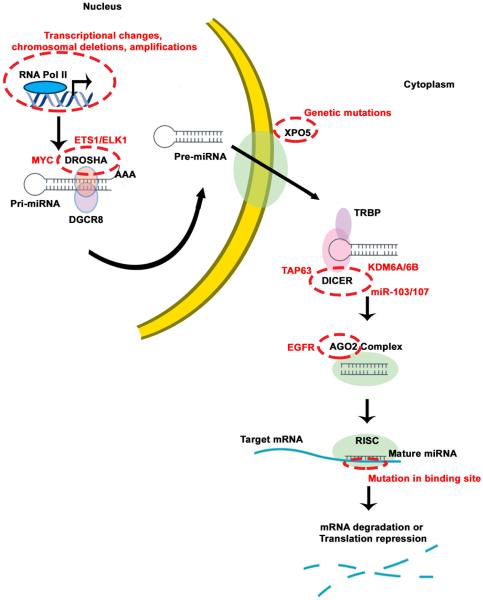
Figure 1. Summary of canonical miRNA biogenesis pathway
MicroRNA genes are transcribed from intergenic or intragenic regions of noncoding RNA transcripts mediated by RNA polymerase II, called primary miRNAs (pri-miRNA). These long pri-miRNAs are processed by the DROSHA-DGCR8 complex to form precursor miRNAs (pre-miRNAs) of approximately 60 nucleotides in length. EXPO5 mediates the export of these pre-miRNAs to the cytoplasm for further processing by DICER. DICER is a ribonuclease, which cleaves pre-miRNAs to form mature miRNAs of approximately 20 nucleotides in length. One of the strands of mature miRNA (guide strand) gets incorporated into RISC (RNAi induced silencing complex) involving DICER and AGO2 enzymes to target mRNAs to cause degradation or translational suppression of gene. The canonical miRNA biogenesis pathway is significantly perturbed in cancer by several proteins at various stages, as highlighted. At the gene level, transcripts are altered in cancer by transcription factors such as MYC or by epigenetic modifications. DROSHA mediated miRNA processing is suppressed in cancer by hypoxia, involving ETS1/ELK1 transcriptional repression of the DROHSA gene. Several studies have highlighted DICER downregulation in cancer mediated by several factors such as TAP63, hypoxia-mediated epigenetic changes, and miR-103/107. EGFR has been reported to bind to AGO2, resulting in phosphorylated AGO2 with decreased association to RISC. TRBP is TAR RNA binding protein.
Figure 2
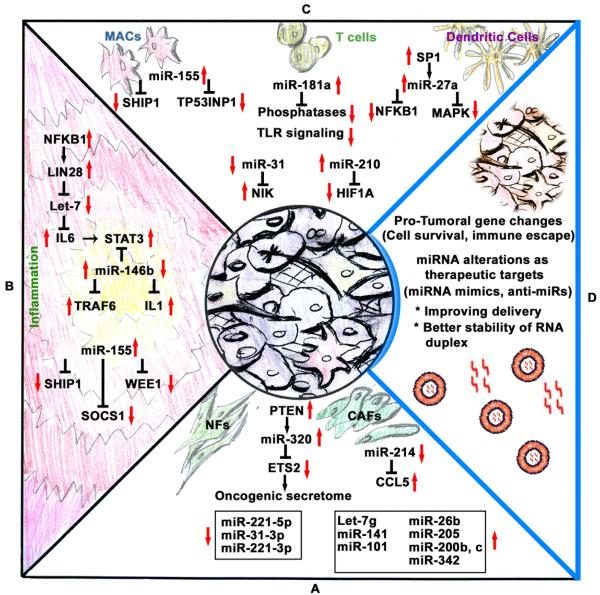
Figure 2. Illustration of cancer cells and tumor microenvironment-deregulated microRNA target networks leading to tumor growth and progression
Panel A, MiRNAs play a very important role in the transformation of normal fibroblasts (NFs) to cancer-associated fibroblasts (CAFs). For example, miR-320 targets ETS2 and controls oncogenic secretome secretion. This oncogenic secretome converts NFs to CAFs in the tumor microenvironment, leading to increased tumor growth via inflammation. Panel B, Inflammation in the tumor microenvironment results in alterations in several key miRNAs, such as Let-7 and miR-155, which target a multitude of mRNAs that are involved in pro-inflammatory signaling. Panel C, Macrophages (MACs), T cells, and dendritic cells, all of which are important immune cells found in the tumor microenvironment, deregulate miRNAs that promote tumor growth. Panel D, Key challenges in developing miRNA therapeutics include developing novel tumor targeting nanoparticle delivery systems and better stable miRNA mimics or anti-miRs.
Figure 3
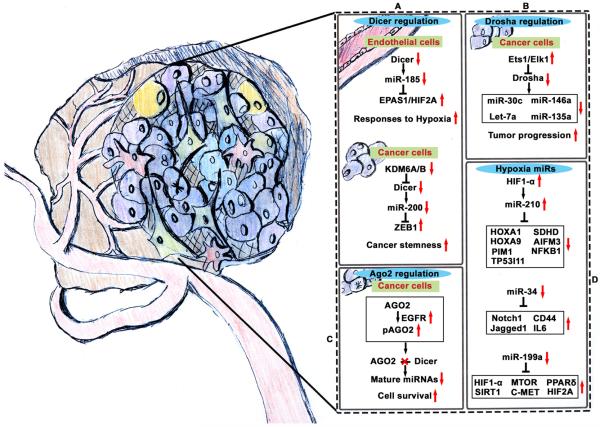
Figure 3. Tumoral hypoxia functions as a master regulator of microRNAs
Panel A, Hypoxia leads to decreased DICER expression in a HIF-dependent manner in endothelial cells and via methylation of DICER in cancer cells. Panel B, DROSHA is downregulated under hypoxic conditions by 2 transcription factors, ETS1 and ELK1, which bind to the DROSHA promoter region. This binding results in downregulation of DROSHA expression through promoter methylation. Panel C, AGO2, an important enzyme component of the RNA-induced silencing complex, is functionally downregulated via phosphorylation by EGFR under hypoxic conditions in cancer cells. The downregulation of these 3 key biogenesis components under hypoxic conditions results in various gene changes important for cancer cell survival and tumor metastasis. Panel D, Several miRNAs are regulated by hypoxia through mechanisms unrelated to biogenesis. For example, miR-210 is upregulated by the HIF1-α transcription factor and is involved in several hypoxia cancer cell signaling pathways. Also, miR-34 and miR-199a are significantly downregulated under hypoxic conditions, leading to altered prometastatic signaling.

References

    1. Esteller M. Non-coding RNAs in human disease. Nature reviews Genetics. 2011;12:861–74. - PubMed
    1. Lee RC, Feinbaum RL, Ambros V. The C. elegans heterochronic gene lin-4 encodes small RNAs with antisense complementarity to lin-14. Cell. 1993;75:843–54. - PubMed
    1. Wightman B, Ha I, Ruvkun G. Posttranscriptional regulation of the heterochronic gene lin-14 by lin-4 mediates temporal pattern formation in C. elegans. Cell. 1993;75:855–62. - PubMed
    1. Spizzo R, Nicoloso MS, Croce CM, Calin GA. SnapShot: MicroRNAs in Cancer. Cell. 2009;137:586–e1. - PubMed
    1. Boehm M, Slack FJ. MicroRNA control of lifespan and metabolism. Cell cycle (Georgetown, Tex. 2006;5:837–40. - PubMed

Publication types

MeSH terms