


Screening applications in drug discovery based on microfluidic technology
- PMID: 26865904
- PMCID: PMC4733079
- DOI: 10.1063/1.4940886
Screening applications in drug discovery based on microfluidic technology
Abstract
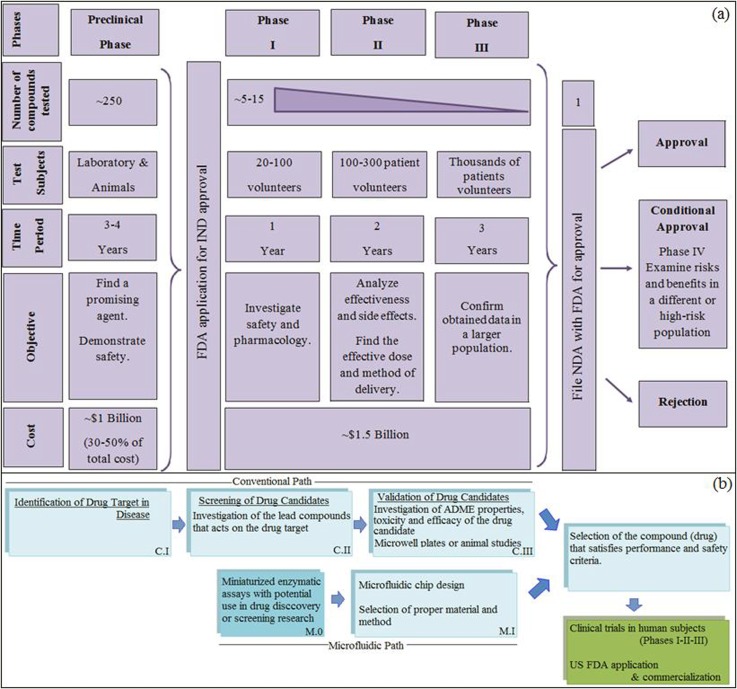
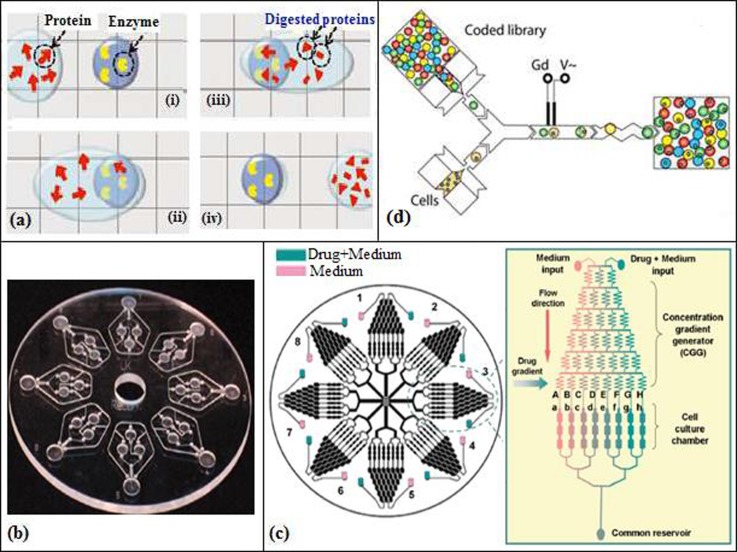
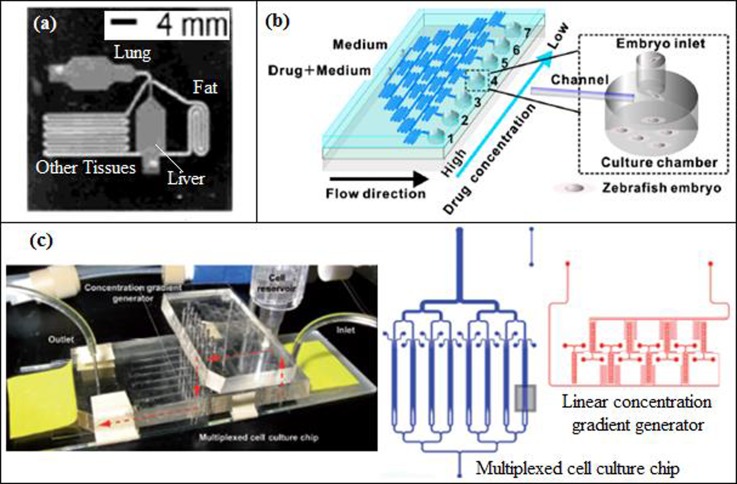
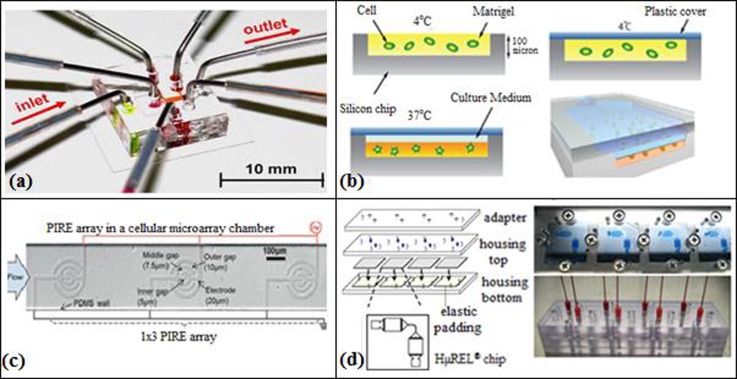
Microfluidics has been the focus of interest for the last two decades for all the advantages such as low chemical consumption, reduced analysis time, high throughput, better control of mass and heat transfer, downsizing a bench-top laboratory to a chip, i.e., lab-on-a-chip, and many others it has offered. Microfluidic technology quickly found applications in the pharmaceutical industry, which demands working with leading edge scientific and technological breakthroughs, as drug screening and commercialization are very long and expensive processes and require many tests due to unpredictable results. This review paper is on drug candidate screening methods with microfluidic technology and focuses specifically on fabrication techniques and materials for the microchip, types of flow such as continuous or discrete and their advantages, determination of kinetic parameters and their comparison with conventional systems, assessment of toxicities and cytotoxicities, concentration generations for high throughput, and the computational methods that were employed. An important conclusion of this review is that even though microfluidic technology has been in this field for around 20 years there is still room for research and development, as this cutting edge technology requires ingenuity to design and find solutions for each individual case. Recent extensions of these microsystems are microengineered organs-on-chips and organ arrays.
Figures
References
-
- Manz A., Graber N., and Widmer H. M., Sens. Actuators, B 1, 244 (1990).10.1016/0925-4005(90)80209-I - DOI
-
- See http://www.seurat-1.eu/ for SEURAT-1-Towards the Replacement of in vivo Repeated Dose Systemic Toxicity Testing (2015). - PubMed
Publication types
LinkOut - more resources
Full Text Sources
Other Literature Sources
Miscellaneous