


Isolation and Characterization of a Myoviridae MJ1 Bacteriophage Against Multi-Drug Resistant Escherichia coli 3
- PMID: 26865936
- PMCID: PMC4744325
- DOI: 10.5812/jjm.25917
Isolation and Characterization of a Myoviridae MJ1 Bacteriophage Against Multi-Drug Resistant Escherichia coli 3
Abstract
Background: Antibiotic resistance in Escherichia coli, a member of the Enterobacteriaceae, is of particular concern because it is the most common (Gram-negative) pathogen causing nosocomial and community infections. Researchers are now considering the use of phages for the control of various antibiotic-resistant bacterial infections.
Objectives: The purpose of this study was to isolate and characterize a novel pathogenic/lytic phage that targets multi-drug resistant (MDR) E. coli 3, and to investigate its effectiveness at lysing this bacterium.
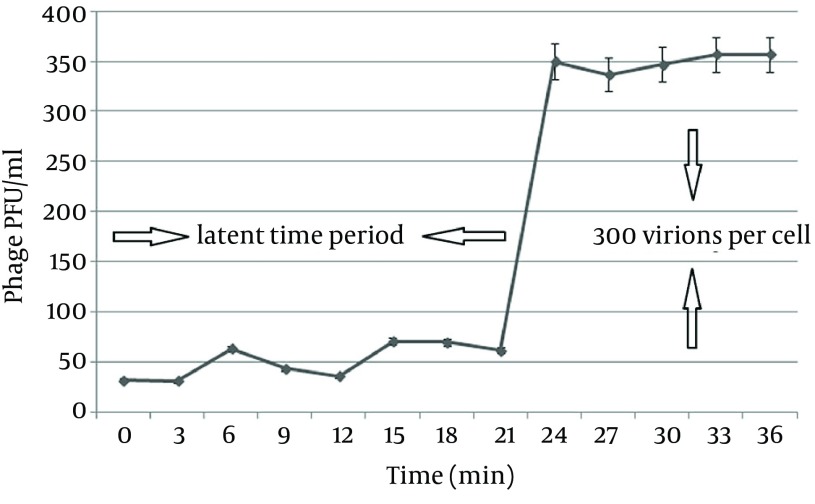
Materials and methods: A clinical strain of E. coli 3 was identified based on its 16S rRNA sequencing and its antibiotic resistance profile was determined by the disc diffusion method. A bacteriophage was isolated from wastewater and its various characteristics, such as host range, heat tolerance, pH stability, one step growth, total protein content, and genome size, were determined. The antibacterial property of the phage was determined against log-phase bacterial planktonic cells at 37°C.
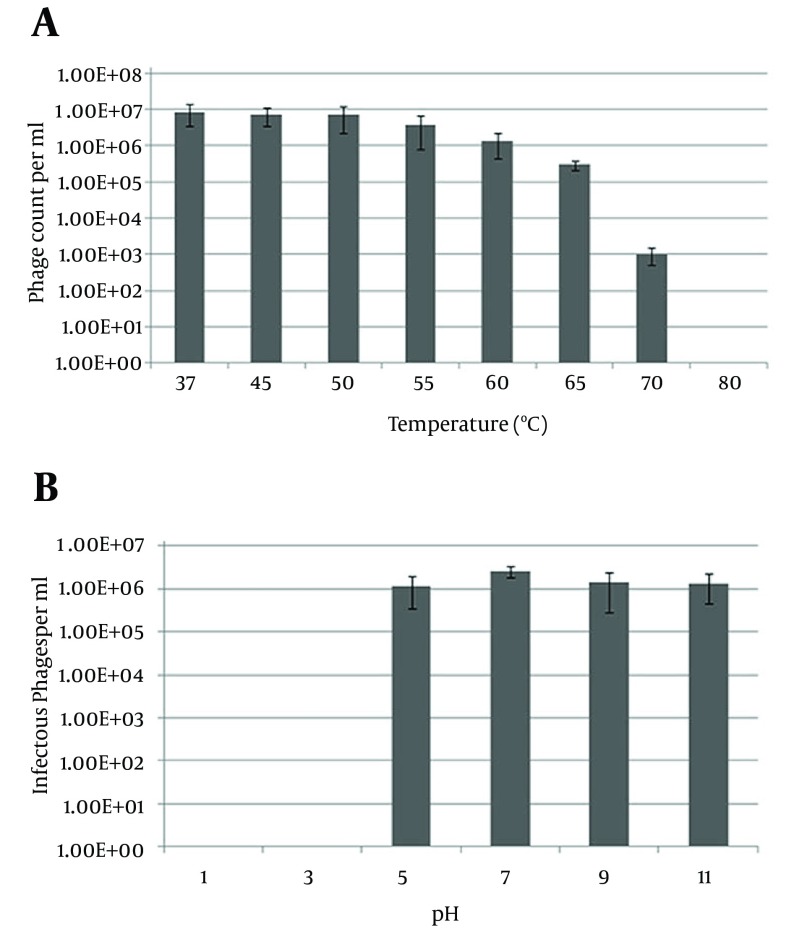
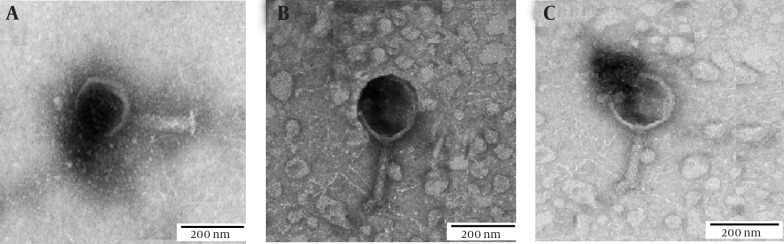
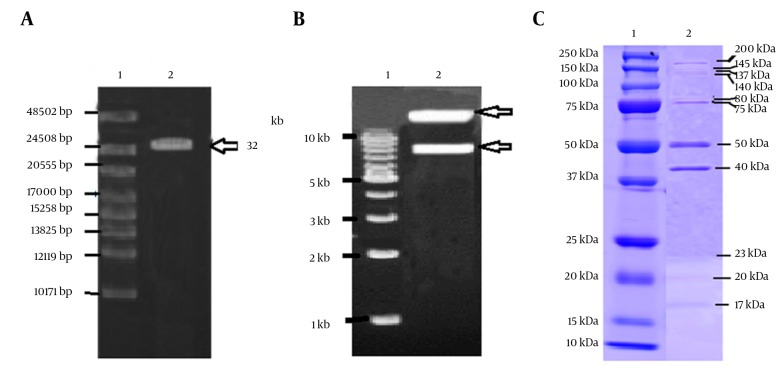
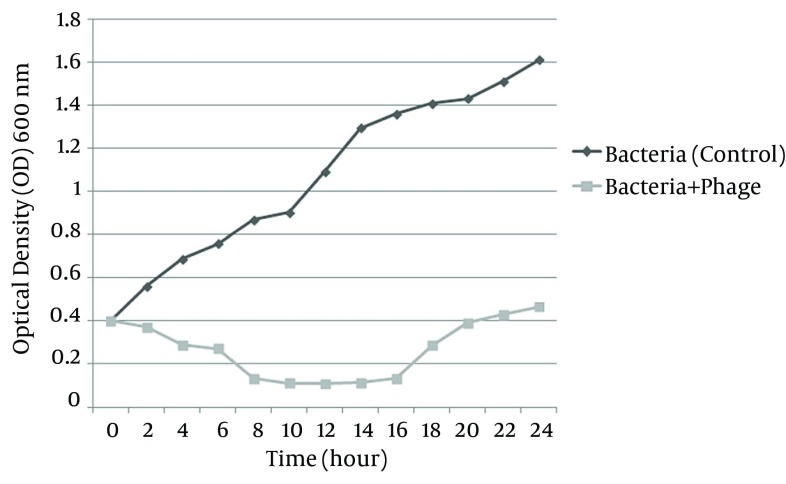
Results: The bacteriophage, designated MJ1, was isolated by testing against a clinical MDR E. coli 3 strain. The MJ1 phage showed a wide range of heat and pH stability. The phage morphology, determined by transmission electron microscopy, revealed a structure comprised of a head (108 ± 0.2 nm long by 128 ± 0.5 nm wide) and a contractile tail (123 ± 0.5 nm long by 15 - 26 nm wide). These features placed the MJ1 phage in the family Myoviridae and the order Caudovirales. Eleven structural proteins (17 to 200 kDa) for this phage were detected by sodium dodecyl sulfate polyacrylamide gel electrophoresis (SDS-PAGE). A double stranded DNA, approximately 32 kb, in size was detected for this phage on agarose gels. The phage efficacy against E. coli 3 planktonic cells was also investigated. The MJ1 phage demonstrated a very good capability to reduce the numbers of E. coli 3 planktonic cells, as determined by a change in the bacterial growth (an optical density decrease at 600 nm from 0.40 to 0.12).
Conclusions: MJ1 phage has much potential for use in phage therapy and other applications.
Keywords: Bacteriophage; Contractile; Escherichia coli; Myoviridae; Nosocomial; Planktonic.
Figures
References
-
- Pfaller MA, Jones RN. MYSTIC (Meropenem Yearly Susceptibility Test Information Collection) results from the Americas: resistance implications in the treatment of serious infections. MYSTIC Study Group (Americas). J Antimicrob Chemother. 2000;46 Suppl T2:25–37. - PubMed
-
- Hussain T, Jamal M, Nighat F, Andleeb S. Broad Spectrum Antibiotics and Resistance in Non-target Bacteria: An Example from Tetracycline. J Pure Appl Microbiol. 2014;8(4):2667–71.
-
- Alizade H, Ghanbarpour R, Nekoubin M. Phylogenetic of Shiga Toxin-Producing Escherichia coli and Atypical Enteropathogenic Escherichia coli Strains Isolated From Human and Cattle in Kerman, Iran. Int J Enteric Pathogens. 2014;2(1) doi: 10.17795/ijep15195. - DOI
LinkOut - more resources
Full Text Sources
Other Literature Sources
Molecular Biology Databases