


30-Day Mortality in Acute Pulmonary Embolism: Prognostic Value of Clinical Scores and Anamnestic Features
- PMID: 26866472
- PMCID: PMC4750907
- DOI: 10.1371/journal.pone.0148728
30-Day Mortality in Acute Pulmonary Embolism: Prognostic Value of Clinical Scores and Anamnestic Features
Abstract
Purpose: Identification of high-risk patients with pulmonary embolism is vital. The aim of the present study was to examine clinical scores, their single items, and anamnestic features in their ability to predict 30-day mortality.
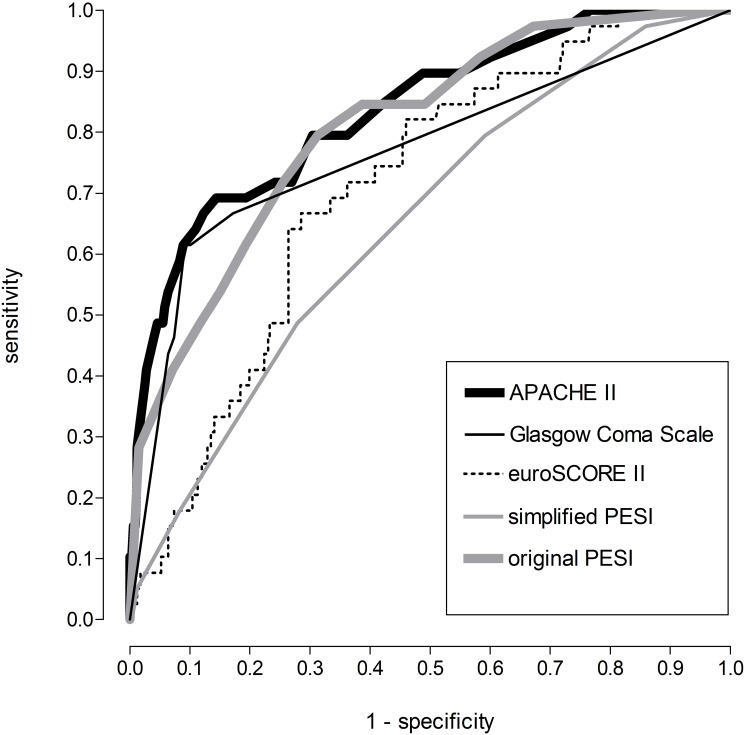
Materials and methods: A retrospective, single-center study from 06/2005 to 01/2010 was performed. Inclusion criteria were presence of pulmonary embolism, availability of patient records and 30-day follow-up. The following clinical scores were calculated: Acute Physiology and Chronic Health Evaluation II, original and simplified pulmonary embolism severity index, Glasgow Coma Scale, and euroSCORE II.
Results: In the study group of 365 patients 39 patients (10.7%) died within 30 days due to pulmonary embolism. From all examined scores and parameters the best predictor of 30-day mortality were the Glasgow Coma scale (≤ 10) and parameters of the circulatory system including presence of mechanical ventilation, arterial pH (< 7.335), and systolic blood pressure (< 99 mm Hg).
Conclusions: Easy to ascertain circulatory parameters have the same or higher prognostic value than the clinical scores that were applied in this study. From all clinical scores studied the Glasgow Coma Scale was the most time- and cost-efficient one.
Conflict of interest statement
Figures
References
MeSH terms
LinkOut - more resources
Full Text Sources
Other Literature Sources
Medical
