


Reduced reward-driven eating accounts for the impact of a mindfulness-based diet and exercise intervention on weight loss: Data from the SHINE randomized controlled trial
- PMID: 26867697
- PMCID: PMC4799744
- DOI: 10.1016/j.appet.2016.02.009
Reduced reward-driven eating accounts for the impact of a mindfulness-based diet and exercise intervention on weight loss: Data from the SHINE randomized controlled trial
Abstract
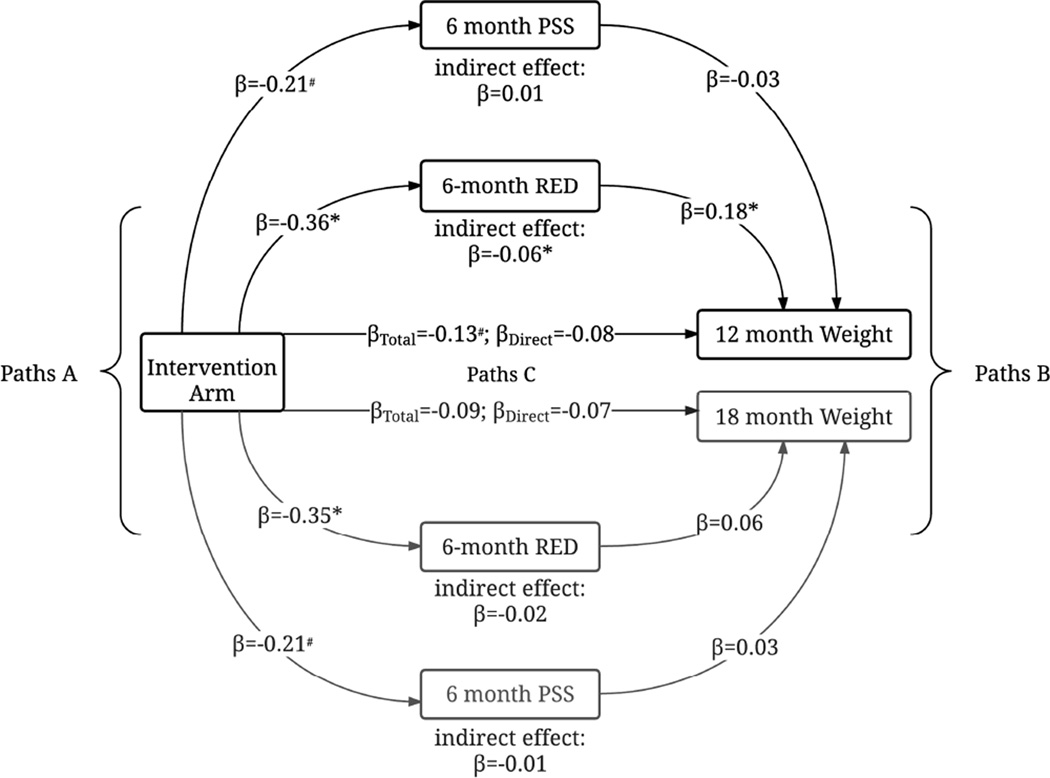
Many individuals with obesity report over eating despite intentions to maintain or lose weight. Two barriers to long-term weight loss are reward-driven eating, which is characterized by a lack of control over eating, a preoccupation with food, and a lack of satiety; and psychological stress. Mindfulness training may address these barriers by promoting awareness of hunger and satiety cues, self-regulatory control, and stress reduction. We examined these two barriers as potential mediators of weight loss in the Supporting Health by Integrating Nutrition and Exercise (SHINE) randomized controlled trial, which compared the effects of a 5.5-month diet and exercise intervention with or without mindfulness training on weight loss among adults with obesity. Intention-to-treat multiple mediation models tested whether post-intervention reward-driven eating and psychological stress mediated the impact of intervention arm on weight loss at 12- and 18-months post-baseline among 194 adults with obesity (BMI: 30-45). Mindfulness (relative to control) participants had significant reductions in reward-driven eating at 6 months (post-intervention), which, in turn, predicted weight loss at 12 months. Post-intervention reward-driven eating mediated 47.1% of the total intervention arm effect on weight loss at 12 months [β = -0.06, SE(β) = 0.03, p = .030, 95% CI (-0.12, -0.01)]. This mediated effect was reduced when predicting weight loss at 18 months (p = .396), accounting for 23.0% of the total intervention effect, despite similar weight loss at 12 months. Psychological stress did not mediate the effect of intervention arm on weight loss at 12 or 18 months. In conclusion, reducing reward-driven eating, which can be achieved using a diet and exercise intervention that includes mindfulness training, may promote weight loss (clinicaltrials.gov registration: NCT00960414).
Keywords: Behavioral intervention; Mindful eating; Obesity; Reward-driven eating; Weight loss.
Published by Elsevier Ltd.
Figures
References
-
- Alberts HJEM, Mulkens S, Smeets M, Thewissen R. Coping with food cravings. Investigating the potential of a mindfulness-based intervention. Appetite. 2010;55(1):160–163. - PubMed
-
- Alberts HJEM, Thewissen R, Raes L. Dealing with problematic eating behaviour. The effects of a mindfulness-based intervention on eating behaviour, food cravings, dichotomous thinking and body image concern. Appetite. 2012;58(3):847–851. - PubMed
-
- Baron RM, Kenny Da. The moderator-mediator variable distinction in social psychological research: conceptual, strategic, and statistical considerations. Journal of Personality and Social Psychology. 1986;51(6):1173–82. - PubMed
-
- Barte JCM, Ter Bogt NCW, Bogers RP, Teixeira PJ, Blissmer B, Mori TA, Bemelmans WJE. Maintenance of weight loss after lifestyle interventions for overweight and obesity, a systematic review. Obesity Reviews. 2010;11(12):899–906. - PubMed
Publication types
MeSH terms
Associated data
Grants and funding
- K24AT007827/AT/NCCIH NIH HHS/United States
- P01 AT005013/AT/NCCIH NIH HHS/United States
- K24 AT007827/AT/NCCIH NIH HHS/United States
- P30 DK098722/DK/NIDDK NIH HHS/United States
- 1P01AT005013/AT/NCCIH NIH HHS/United States
- K01 AT004199/AT/NCCIH NIH HHS/United States
- K01AT004199/AT/NCCIH NIH HHS/United States
- UL1 RR024146/RR/NCRR NIH HHS/United States
- U01 HL097973/HL/NHLBI NIH HHS/United States
- T32 AT003997/AT/NCCIH NIH HHS/United States
- U01HL097973/HL/NHLBI NIH HHS/United States
- UL1 TR000004/TR/NCATS NIH HHS/United States
- T32AT003997/AT/NCCIH NIH HHS/United States
LinkOut - more resources
Full Text Sources
Other Literature Sources
Medical
