


Comparative immunogenicity and structural analysis of epitopes of different bacterial L-asparaginases
- PMID: 26867931
- PMCID: PMC4750198
- DOI: 10.1186/s12885-016-2125-4
Comparative immunogenicity and structural analysis of epitopes of different bacterial L-asparaginases
Abstract
Background: E.coli type II L-asparaginase is widely used for treatment of acute lymphoblastic leukemia. However, serious side effects such as allergic or hypersensitivity reactions are common for L-asparaginase treatment. Methods for minimizing immune response on L-asparaginase treatment in human include bioengeneering of less immunogenic version of the enzyme or utilizing the homologous enzymes of different origin. To rationalize these approaches we compared immunogenicity of L-asparaginases from five bacterial organisms and performed sequence-structure analysis of the presumable epitope regions.
Methods: IgG and IgM immune response in C57B16 mice after immunization with Wollinella succinogenes type II (WsA), Yersinia pseudotuberculosis type II (YpA), Erwinia carotovora type II (EwA), and Rhodospirillum rubrum type I (RrA) and Escherichia coli type II (EcA) L-asparaginases was evaluated using standard ELISA method. The comparative bioinformatics analysis of structure and sequence of the bacterial L-asparaginases presumable epitope regions was performed.
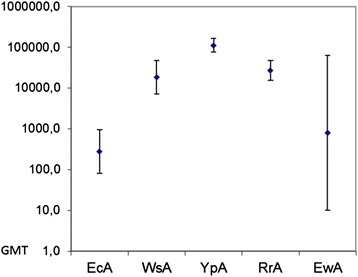
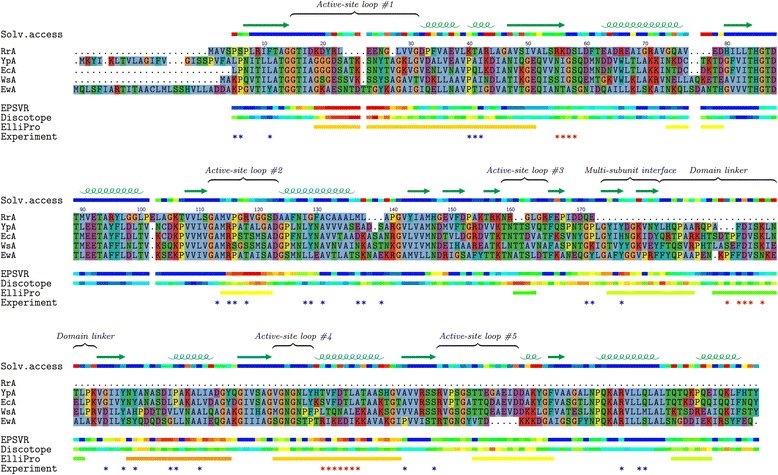
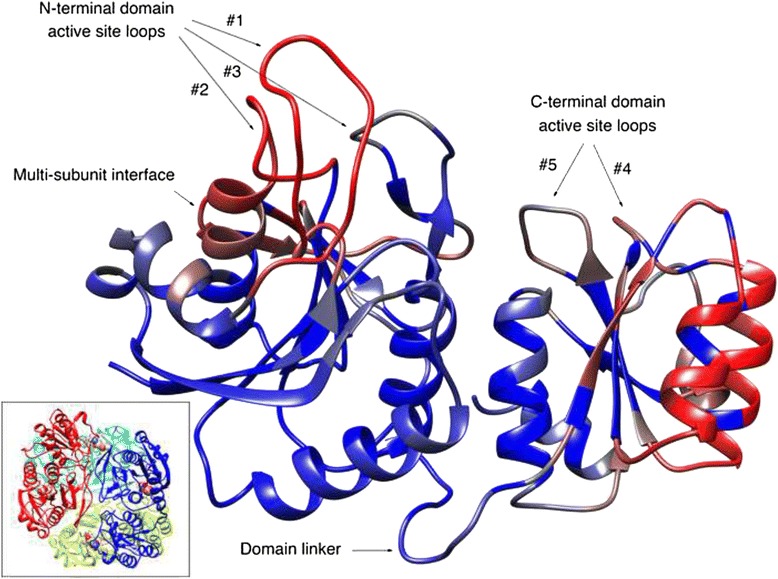
Results: We showed different immunogenic properties of five studied L-asparaginases and confirmed the possibility of replacement of EcA with L-asparaginase from different origin as a second-line treatment. Studied L-asparaginases might be placed in the following order based on the immunogenicity level: YpA > RrA, WsA ≥ EwA > EcA. Most significant cross-immunogenicity was shown between EcA and YpA. We propose that a long N-terminus of YpA enzyme enriched with charged aminoacids and tryptophan could be a reason of higher immunogenicity of YpA in comparison with other considered enzymes. Although the recognized structural and sequence differences in putative epitope regions among five considered L-asparaginases does not fully explain experimental observation of the immunogenicity of the enzymes, the performed analysis set the foundation for further research in this direction.
Conclusions: The performed studies showed different immunogenic properties of L-asparaginases and confirmed the possibility of replacement of EcA with L-asparaginase from different origin. The preferable enzymes for the second line treatment are WsA, RrA, or EwA.
Figures
References
-
- Warrell RP, Jr, Arlin ZA, Gee TS, Chou TC, Roberts J, Young CW. Clinical evaluation of succinylated Acinetobacter glutaminase-asparaginase in adult leukemia. Cancer Treat. Rep. 1982;66(7):1479–1485. - PubMed
-
- Abuchowski A, Kazo GM, Verhoest CR, Jr, Van Es T, Kafkewitz D, Nucci ML, Viau AT, Davis FF. Cancer therapy with chemically modified enzymes. I. Antitumor properties of polyethylene glycol-asparaginase conjugates. Cancer Biochem Biophys. 1984;7(2):175–186. - PubMed
-
- Asselin BL, Whitin JC, Coppola DJ, Rupp IP, Sallan SE, Cohen HJ. Comparative pharmacokinetic studies of three asparaginase preparations. J. Clin. Oncol. Off. J. Am. Soc. Clin. Oncol. 1993;11(9):1780–1786. - PubMed
Publication types
MeSH terms
Substances
LinkOut - more resources
Full Text Sources
Other Literature Sources
Medical
