


The effects of group and single housing and automated animal monitoring on urinary corticosterone levels in male C57BL/6 mice
- PMID: 26869685
- PMCID: PMC4758932
- DOI: 10.14814/phy2.12703
The effects of group and single housing and automated animal monitoring on urinary corticosterone levels in male C57BL/6 mice
Abstract
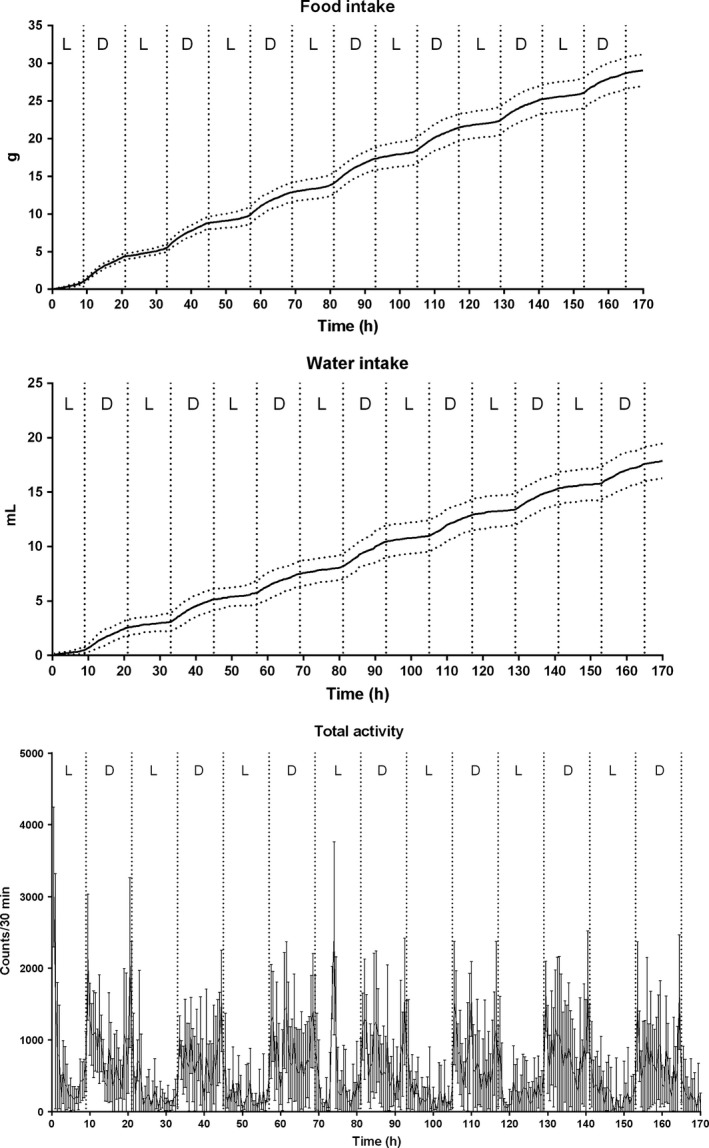
Mice are used extensively in physiological research. Automated home-cage systems have been developed to study single-housed animals. Increased stress by different housing conditions might affect greatly the results when investigating metabolic responses. Urinary corticosteroid concentration is considered as a stress marker. The aim of the study was to compare the effects of different housing conditions and an automated home-cage system with indirect calorimetry located in an environmental chamber on corticosterone levels in mice. Male mice were housed in different conditions and in automated home-cage system to evaluate the effects of housing and measuring conditions on urine corticosterone levels. Corticosterone levels in single-housed mice in the laboratory animal center were consistently lower compared with the group-housed mice. Single-housed mice in a separate, small animal unit showed a rise in their corticosterone levels a day after they were separated to their individual cages, which decreased during the following 2 days. The corticosterone levels of group-housed mice in the same unit were increased during the first 7 days and then decreased. On day 7, the corticosterone concentrations of group-housed mice were significantly higher compared with that of single-housed mice, including the metabolic measurement protocol. In conclusion, single housing caused less stress when compared with group-housed mice. In addition, the urine corticosterone levels were decreased in single-housed mice before the metabolic measurement started. Thus, stress does not affect the results when utilizing the automated system for measuring metabolic parameters like food and water intake and calorimetry.
Keywords: metabolic measurements; mice; stress; urinary corticosterone.
© 2016 The Authors. Physiological Reports published by Wiley Periodicals, Inc. on behalf of the American Physiological Society and The Physiological Society.
Figures



References
-
- Arndt, S. S. , Laarakker M. C., van Lith H. A., van der Staay F. J., Gieling E., Salomons A. R., et al. 2009. Individual housing of mice–impact on behaviour and stress responses. Physiol. Behav. 97:385–393. - PubMed
-
- Bamberg, E. , Palme R., and Meingassner J. G.. 2001. Excretion of corticosteroid metabolites in urine and faeces of rats. Lab. Anim. 35:307–314. - PubMed
-
- Bartolomucci, A. , Palanza P., Sacerdote P., Ceresini G., Chirieleison A., Panerai A. E., et al. 2003. Individual housing induces altered immuno‐endocrine responses to psychological stress in male mice. Psychoneuroendocrinology 28:540–558. - PubMed
-
- Brown, K. J. , and Grunberg N. E.. 1995. Effects of housing on male and female rats: crowding stresses male but calm females. Physiol. Behav. 58:1085–1089. - PubMed
Publication types
MeSH terms
Substances
LinkOut - more resources
Full Text Sources
Other Literature Sources
Medical
