


Assessing Visuospatial Abilities in Healthy Aging: A Novel Visuomotor Task
- PMID: 26869918
- PMCID: PMC4740775
- DOI: 10.3389/fnagi.2016.00007
Assessing Visuospatial Abilities in Healthy Aging: A Novel Visuomotor Task
Abstract
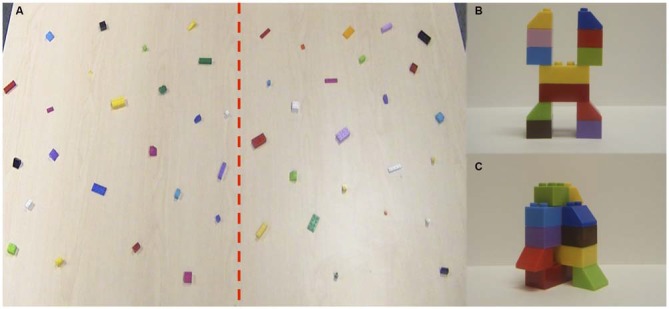
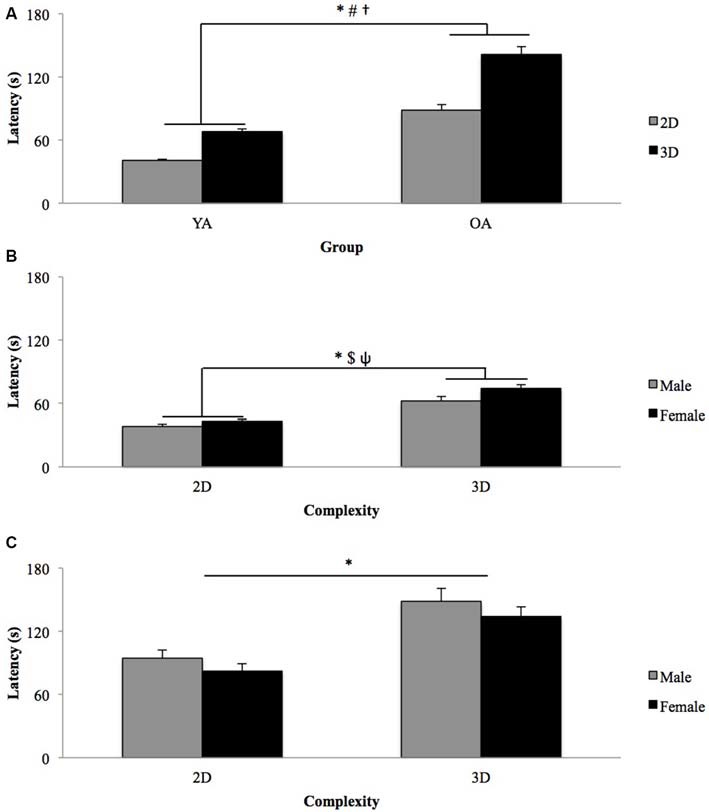
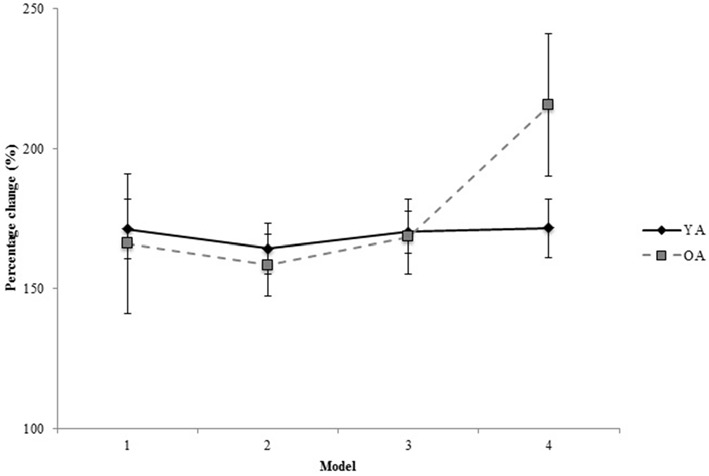
This study examined the efficacy of a novel reaching-and-grasping task in determining visuospatial abilities across adulthood. The task required male and female young (18-25 years) and older adults (60-82 years) to replicate a series of complex models by locating and retrieving the appropriate building blocks from an array. The task allows visuospatial complexity to be manipulated independently from the visuomotor demands. Mental rotation and spatial visualization abilities were assessed. The results showed that the time taken to complete the tasks increased with increased mental rotation complexity. Patterns of hand use were also influenced by the complexity of the models being constructed with right hand use being greater for the less complex models. In addition, although older adults consistently performed the visuomotor tasks slower than the younger adults, their performance was comparable when expressed as the percent change in task demands. This is suggestive that spatial abilities are preserved in older adults. Given the ecologically validity, the described task is an excellent candidate for investigating: (1) developmental; (2) sex-based; and (3) pathology-based differences in spatial abilities in the visuomotor domain.
Keywords: aging; reach-to-grasp; sex; spatial ability; visuomotor; visuospatial.
Figures
References
-
- Berg C., Hertzog C., Hunt E. (1982). Age differences in the speed of mental rotation. Dev. Psychol. 18, 95–107. 10.1037/0012-1649.18.1.95 - DOI
-
- Blanchard-Fields F., Hess T. (1996). Perspectives on Cognitive Change in Adulthood and Aging. New York: McGraw-Hill.
LinkOut - more resources
Full Text Sources
Other Literature Sources
