


Genetics of congenital heart disease
- PMID: 26872209
- PMCID: PMC4868504
- DOI: 10.1097/HCO.0000000000000274
Genetics of congenital heart disease
Abstract
Purpose of review: The goal of this review is to highlight recent discoveries in the field of genetics as it relates to congenital heart disease (CHD). Recent advancements in next generation sequencing technology and tools to interpret this growing body of data have allowed us to refine our understanding of the molecular mechanisms that result in CHD.
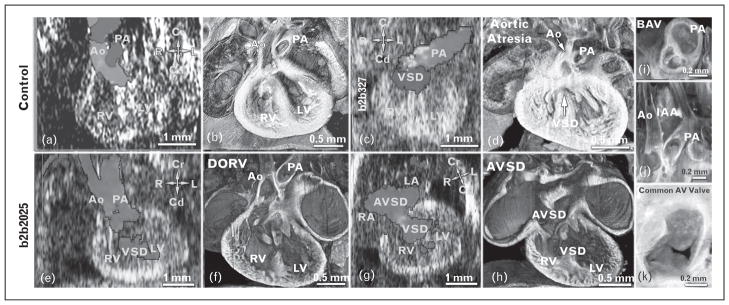
Recent findings: From multiple different study designs, the genetic lesions that cause CHD are increasingly being elucidated. Of the more novel findings, a forward genetic screen in mice has implicated recessive inheritance and the ciliome broadly in CHD pathogenesis. The developmental delays frequently observed in patients with CHD appear to result from mutations affecting genes that overlap heart and brain developmental regulation. A meta-analysis has provided clarity, discriminating pathologic from incidental copy number variations and defining a critical region or gene.
Summary: Recent technological advances have rapidly expanded our understanding of CHD genetics, and support the applicability to the clinical domain in both sporadic and inherited disease. Though significant gaps remain, genetic lesions remain the primary explanation for CHD pathogenesis, although the precise mechanism is likely multifactorial.
Conflict of interest statement
There are no conflicts of interest.
Figures
References
-
- El Malti R, Liu H, Doray B, et al. A systematic variant screening in familial cases of congenital heart defects demonstrates the usefulness of molecular genetics in this field. Eur J Hum Genet. 2016;24:228–236. Sequencing coding region GATA4, NKX2-5, ZIC3, and ELN and copy number analysis of 22q11 region, BMP4, CRELD1, NKX2-5, and TBX5 in familial CHD. - PMC - PubMed
-
- Blue GM, Kirk EP, Giannoulatou E, et al. Targeted next-generation sequencing identifies pathogenic variants in familial congenital heart disease. J Am Coll Cardiol. 2014;64:2498–2506. - PubMed
-
- Jia Y, Louw JJ, Breckpot J, et al. The diagnostic value of next generation sequencing in familial nonsyndromic congenital heart defects. Am J Med Genet A. 2015;167A:1822–1829. Sequencing coding regions in 57 proven and candidate CHD genes in familial CHD. - PubMed
-
- Weiss K, Applegate C, Wang T, Batista DA. Familial TAB2 microdeletion and congenital heart defects including unusual valve dysplasia and tetralogy of fallot. Am J Med Genet A. 2015;167:2702–2706. - PubMed
-
- Qu XK, Qiu XB, Yuan F, et al. A novel NKX2. 5 loss-of-function mutation associated with congenital bicuspid aortic valve. Am J Cardiol. 2014;114:1891–1895. - PubMed
Publication types
MeSH terms
Grants and funding
LinkOut - more resources
Full Text Sources
Other Literature Sources
Medical
Molecular Biology Databases
Research Materials
