


Knowledge and perceptions of asthma in Zambia: a cross-sectional survey
- PMID: 26873455
- PMCID: PMC4751639
- DOI: 10.1186/s12890-016-0195-3
Knowledge and perceptions of asthma in Zambia: a cross-sectional survey
Erratum in
-
Erratum to: Knowledge and perceptions of asthma in Zambia: a cross-sectional survey.BMC Pulm Med. 2016 Mar 24;16:44. doi: 10.1186/s12890-016-0204-6. BMC Pulm Med. 2016. PMID: 27013341 Free PMC article. No abstract available.
Abstract
Background: Zambia is currently experiencing an epidemiological transition, from communicable to non-communicable diseases. The annual rate of physician-diagnosed asthma is estimated at 3 %. However, the general public's knowledge of asthma symptoms and signs, and their perception of asthma remain unknown. A survey was conducted aiming to determine knowledge and perceptions of asthma among Zambians.
Methods: Adults and adolescents attending four clinics in the capital, Lusaka, were surveyed using a standardized questionnaire from July 2011 to March 2012.
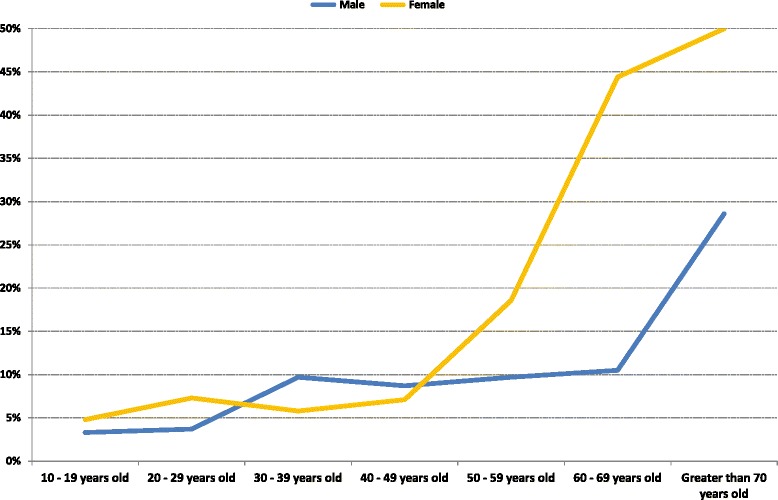
Results: Data from 1,540 participants (mean age 30.7 years, 65% female) were collected. Most patients (74%) were living in low-cost housing. One hundred and sixteen (7.6%) participants reported either a medical diagnosis of asthma or currently taking asthma medications. The most frequent asthma symptoms reported were wheezing (88%), and waking up at night with either shortness of breath (85%), chest tightness (85%), or cough (67%). Medications used to treat asthma were mostly oral short-acting beta-agonists (SABA) (59%), inhaled SABA (30.2%) and antibiotics (29.8%). Inhaled steroids were only used by 16.4% while less than 1% were on long-acting beta-agonists (LABA). Many misconceptions were identified among the entire surveyed population with only 54.7% believing hospitalisations are not preventable, 54.7% believing asthma symptoms can be prevented with the right medications and 37% believing inhalers are addictive. Nearly 60% thought that people with asthma cannot exercise or play hard. Significantly more individuals with asthma compared to those without thought tablets are better than inhalers for the treatment of asthma (46% vs 30%).
Conclusions: We conclude that knowledge on asthma is poor in Zambia, where there remains many misconceptions on asthma and its management.
Figures
References
-
- Beasley R. The Global Burden of Asthma Report, Global Initiative for Asthma (GINA). Available at: http://www.ginasthma.org 2004. Accessed 26 August 2013.
-
- Global strategy for asthma management and prevention 2010, Global Initiative for Asthma (GINA). 2010. Available at http://www.ginasthma.org.
-
- Ait-Khaled N, Odhiambo J, Pearce N, Adjoh KS, Maesano IA, Benhabyles B, Bouhayad Z, Bahati E, Camara L, Catteau C, El Sony A, Esamai FO, Hypolite IE, Melaku K, Musa OA, Ng’ang’a L, Onadeko BO, Saad O, Jerray M, Kayembe JM, Koffi NB, Khaldi F, Kuaban C, Voyi K, M’Boussa J, Sow O, Tidjani O, Zar HJ. Prevalence of symptoms of asthma, rhinitis and eczema in 13- to 14-year-old children in Africa: the International Study of Asthma and Allergies in Childhood Phase III. Allergy. 2007;62:247–58. doi: 10.1111/j.1398-9995.2007.01325.x. - DOI - PubMed
MeSH terms
Substances
LinkOut - more resources
Full Text Sources
Other Literature Sources
Medical
