


The impact of a school food aid program on household food insecurity
- PMID: 26873860
- PMCID: PMC4804736
- DOI: 10.1093/eurpub/ckv223
The impact of a school food aid program on household food insecurity
Abstract
Background: We had a unique opportunity to establish the extent of food insecurity and the potential impact of a large-scale school-based nutritional program, in low-socioeconomic status districts of Greece, during the current economic crisis.
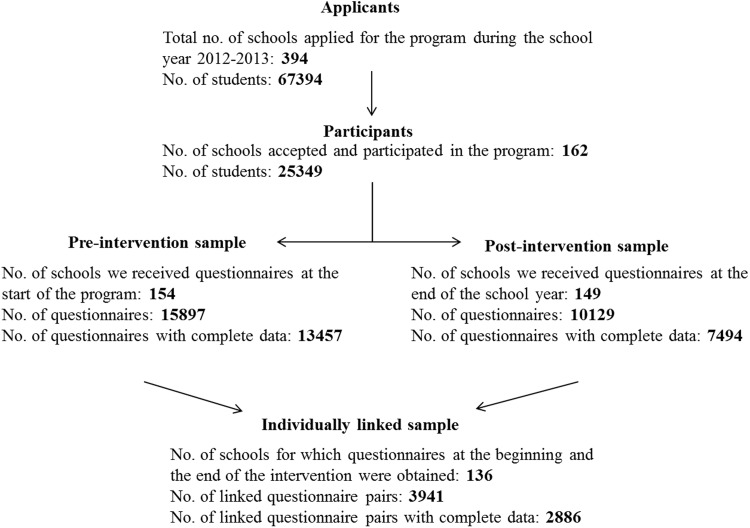
Methods: Around 162 schools with 25 349 students participated during the 2012-2013 school year. Each student received a daily healthy meal designed by nutrition specialists. Food insecurity levels, measured using the Food Security Survey Module were assessed at baseline and after a 1-8-month intervention period. Pre-post intervention responses were matched at an individual level.
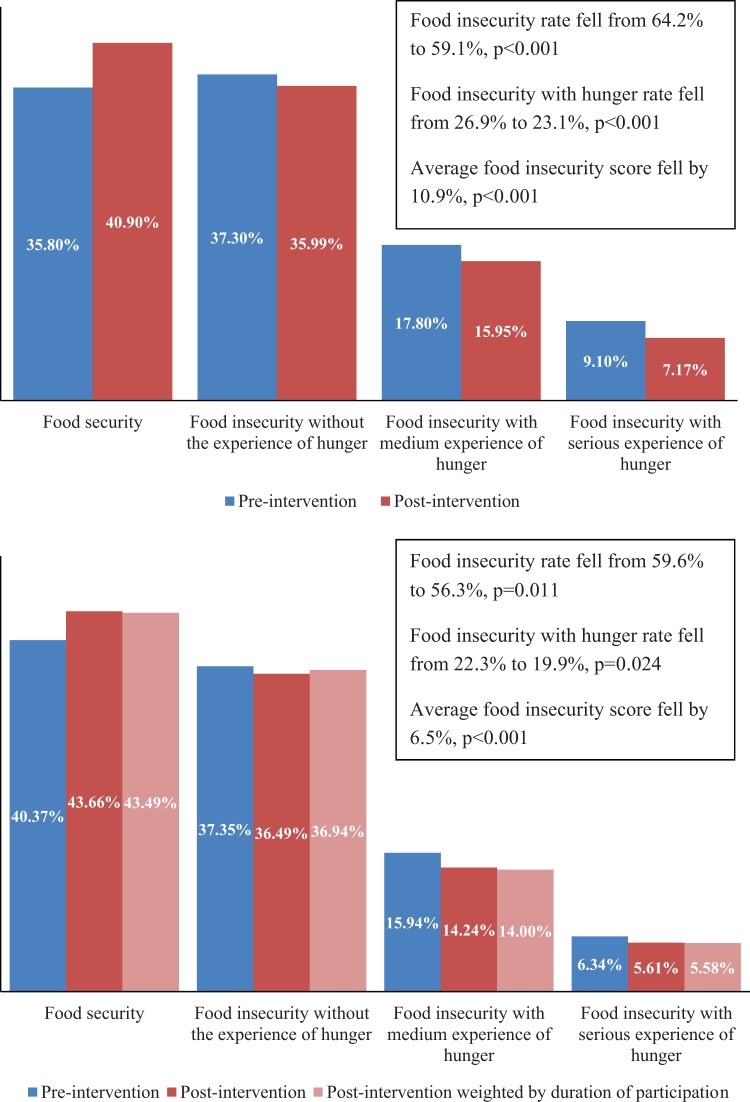
Results: Around 64.2% of children's households experienced food insecurity at baseline. This percentage decreased to 59.1% post-intervention,P< 0.001. On an individual level, food insecurity score diminished by 6.5%,P< 0.001. After adjustment for various socioeconomic factors, for each additional month of participation, the odds of reducing the food insecurity score increased by 6.3% (OR = 1.06, 95% CI: 1.02-1.11). Those experiencing food insecurity with hunger at baseline were more likely to improve food insecurity score than those who did not (OR = 3.51, 95%CI: 2.92-4.21).
Conclusion: Children and families residing in low socioeconomic areas of Greece, experience high levels of food insecurity. Our findings suggest that participation in a school-based food aid program may reduce food insecurity for children and their families in a developed country in times of economic hardship.
© The Author 2016. Published by Oxford University Press on behalf of the European Public Health Association.
Figures
References
-
- UNICEF. The situation of children in Greece, 2014: The impact of the economic crisis on children, Hellenic National Committee for UNICEF. Athens, 2014.
-
- Food and Agriculture Organization of the United Nations. Trade Reforms and Food Security: Conceptualizing the Linkages. Rome: FAO, 2003.
-
- Ramsey R, Giskes K, Turrell G, et al. Food insecurity among adults residing in disadvantaged urban areas: potential health and dietary consequences. Public Health Nutr 2012;15:227–37. - PubMed
-
- Household Food Insecurity. (2011–2012) Statistics Canada. http://www.statcan.gc.ca/pub/82-625-x/2013001/article/11889-eng.htm#n2.
-
- Coleman-Jensen A, Nord M, et al.. Household food security in the United States in 2012. Economic Research Service of U.S. Department of Agriculture, Economic Research Service No. 155, 2013.
Publication types
MeSH terms
LinkOut - more resources
Full Text Sources
Other Literature Sources
