


Studying auditory verbal hallucinations using the RDoC framework
- PMID: 26877116
- PMCID: PMC5119481
- DOI: 10.1111/psyp.12457
Studying auditory verbal hallucinations using the RDoC framework
Abstract
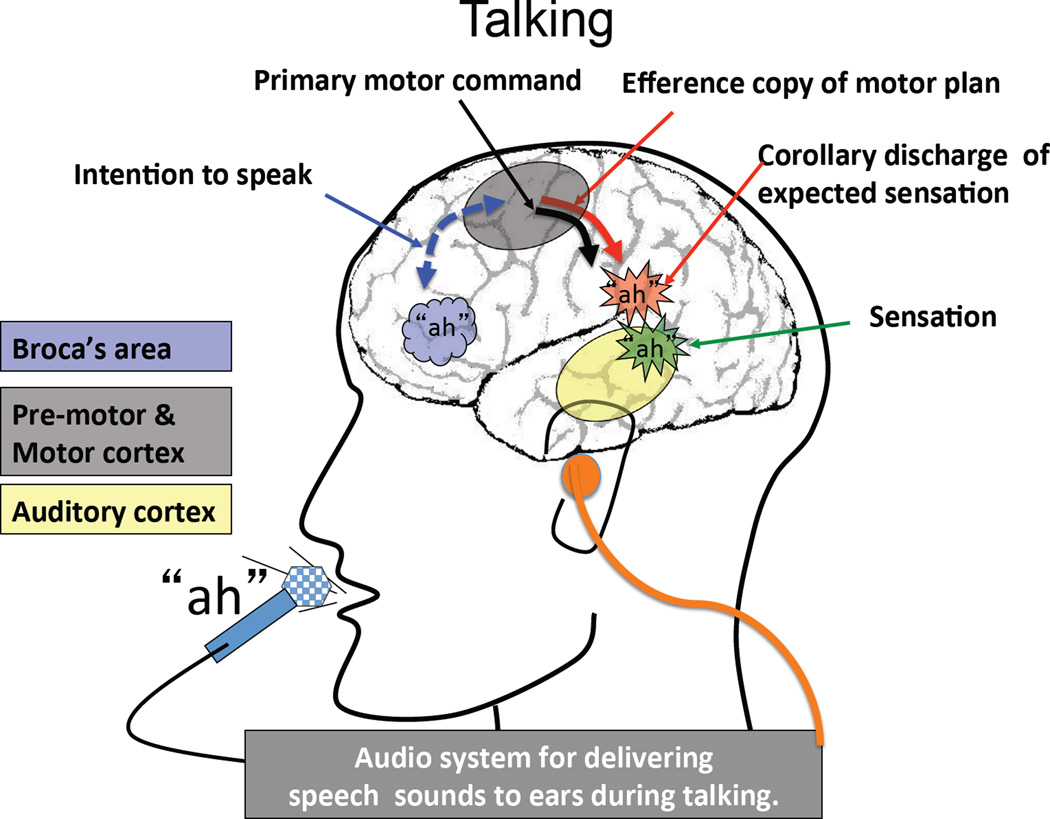
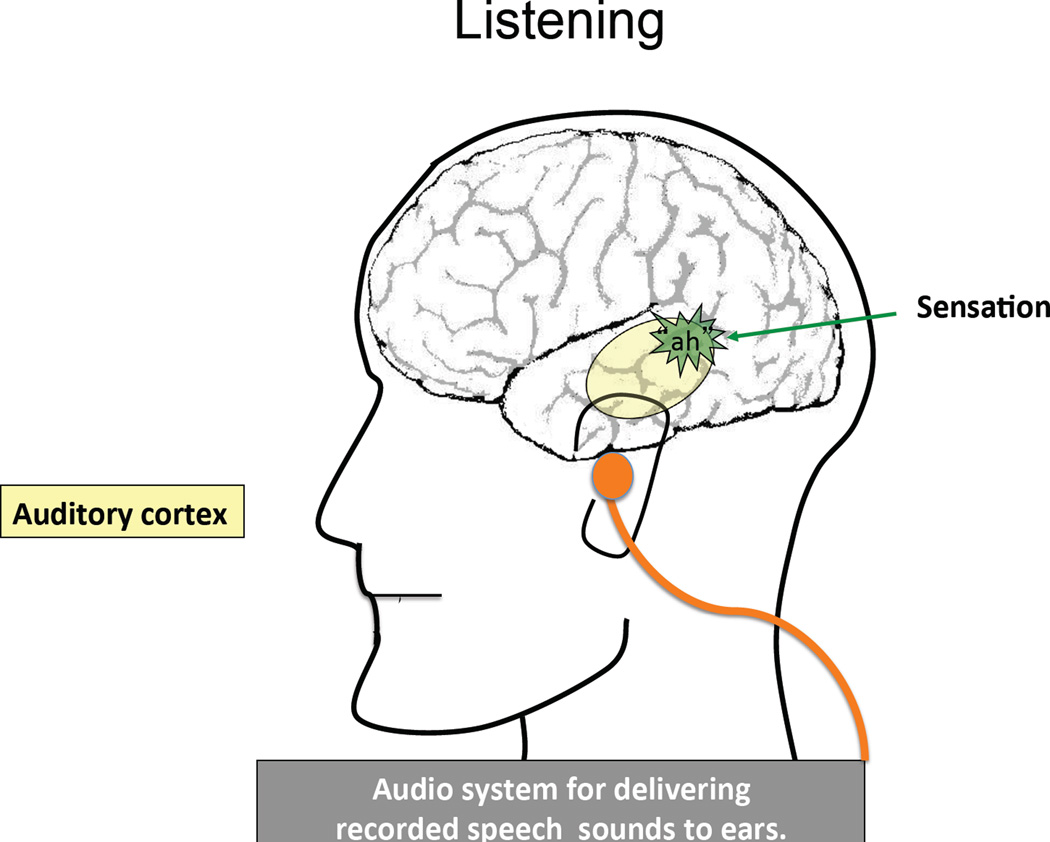
In this paper, I explain why I adopted a Research Domain Criteria (RDoC) approach to study the neurobiology of auditory verbal hallucinations (AVH), or voices. I explain that the RDoC construct of "agency" fits well with AVH phenomenology. To the extent that voices sound nonself, voice hearers lack a sense of agency over the voices. Using a vocalization paradigm like those used with nonhuman primates to study mechanisms subserving the sense of agency, we find that the auditory N1 ERP is suppressed during vocalization, that EEG synchrony preceding speech onset is related to N1 suppression, and that both are reduced in patients with schizophrenia. Reduced cortical suppression is also seen across multiple psychotic disorders and in clinically high-risk youth, but it is not related to AVH. The motor activity preceding talking and connectivity between frontal and temporal lobes during talking have both proved sensitive to AVH, suggesting neural activity and connectivity associated with intentions to act may be a better way to study agency and predictions based on agency.
Keywords: Agency; Auditory verbal hallucinations; EEG; ERP; N1; RDoC.
Published 2016. This article is a U.S. Government work and is in the public domain in the USA.
Figures
Comment in
-
Studies of auditory verbal hallucinations.Psychophysiology. 2016 Mar;53(3):305-7. doi: 10.1111/psyp.12591. Psychophysiology. 2016. PMID: 26877117
-
Achieving success with the Research Domain Criteria (RDoC): Going beyond the matrix.Psychophysiology. 2016 Mar;53(3):308-11. doi: 10.1111/psyp.12584. Psychophysiology. 2016. PMID: 26877118 Free PMC article.
References
-
- Allen P, Laroi F, McGuire PK, Aleman A. The hallucinating brain: a review of structural and functional neuroimaging studies of hallucinations. Neurosci Biobehav Rev. 2008;32(1):175–191. - PubMed
-
- Andreasen NC. The Scale for the Assessment of Negative Symptoms (SANS) Iowa City, IA: University of Iowa; 1983.
-
- Andreasen NC. Scale for the Assessment of Positive Symptoms. Iowa City, IA: University of Iowa; 1984.
-
- Baess P, Horvath J, Jacobsen T, Schroger E. Selective suppression of self-initiated sounds in an auditory stream: An ERP study. Psychophysiology. 2011;48(9):1276–1283. - PubMed
Publication types
MeSH terms
Grants and funding
LinkOut - more resources
Full Text Sources
Other Literature Sources
Medical
