


Endoscopic Repair of CSF Rhinorrhea: An Institutional Experience
- PMID: 26878002
- PMCID: PMC4735615
Endoscopic Repair of CSF Rhinorrhea: An Institutional Experience
Abstract
Introduction: Endoscopic repair is considered the treatment of choice in cerebrospinal fluid (CSF) rhinorrhea. The aim of our study was to analyze the etiopathogenesis of CSF rhinorrhea, the outcome of treatment and the causes of failure in a developing-country setting.
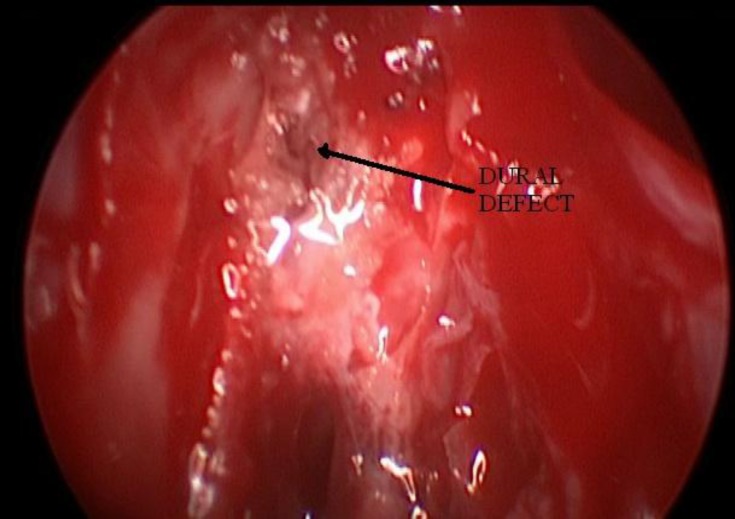
Materials and methods: A retrospective review of patients treated with endoscopic repair for CSF rhinorrhea at a tertiary care hospital in southern India from January 2002 to December 2009 identified 36 patients, the majority of them being women. The defects were closed in three layers using fat, fascia lata and nasal mucosa along with a fibrin sealant in the majority of the patients. Per-operatively, a subarachnoid drain was placed in all patients. Patients were followed up for 1 year.
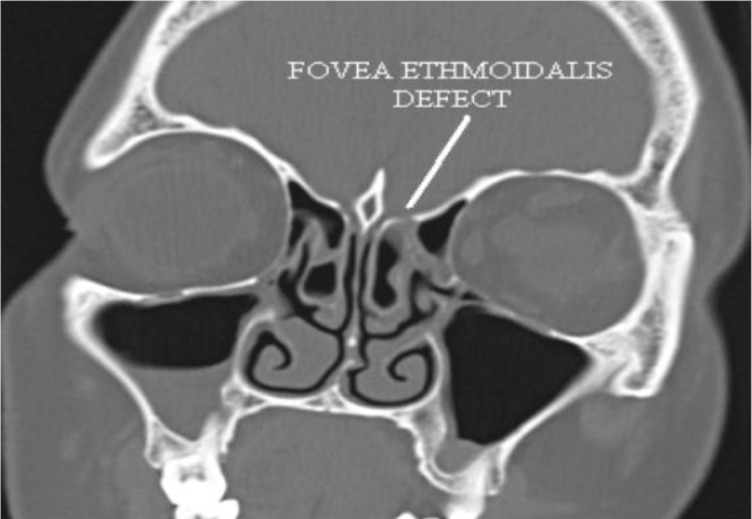
Results: Spontaneous onset of CSF rhinorrhea was noted in 61% of patients. The most common site of leak was found to be the left cribriform plate area. Hence the most common cause of CSF rhinorrhea in our study was spontaneous and the second most common was post-traumatic. Our success rate on the first attempt at endoscopic repair was 100%, with a recurrence rate of 6%. A large defect, failure of localization of the defect, or other co-morbid conditions such as chronic cough may be the most likely causes of recurrence of leak.
Conclusion: Accurate localization of the site of lesion using a high-resolution computed tomography (CT) scan with magnetic resonance imaging (MRI) and confirmation of the site of leak by intraoperative Valsalva maneuver along with multilayered closure of the dural defect and post-operative lumbar drain appear to be essential for the successful endoscopic repair of CSF rhinorrhea.
Keywords: CSF rhinorrhea; Cribriform plate; Subarachnoid Space; Transnasal Endoscopic Surgery; Valsalva Maneuver.
Figures
References
-
- Park J-I, Strelzow W, Friedman WH. Current management of cerebrospinal fluid rhinorrhoea. Laryngoscope. 1983;93:1294–300. - PubMed
-
- Banks CA, Palmer JN, Chiu AG, O'Malley BW Jr, Woodworth BA, Kennedy DW. Endoscopic closure of CSF rhinorrhea: 193 cases over 21 years. Otolaryngol Head Neck Surg. 2009;140(6):826–33. - PubMed
-
- Eljamel MS, Foy PM. Non-traumatic CSF fistulae: Clinical history and management. Br J Neurosurg. 1991;5:275–9. - PubMed
-
- Lund VJ, Savy L, Lloyd G, Howard D. Optimum imaging and diagnosis of cerebrospinal fluid rhinorrhea. J Laryngol Otol. 2000;114:988–92. - PubMed
LinkOut - more resources
Full Text Sources