


EGCG prevents PCB-126-induced endothelial cell inflammation via epigenetic modifications of NF-κB target genes in human endothelial cells
- PMID: 26878794
- PMCID: PMC4757812
- DOI: 10.1016/j.jnutbio.2015.10.003
EGCG prevents PCB-126-induced endothelial cell inflammation via epigenetic modifications of NF-κB target genes in human endothelial cells
Abstract
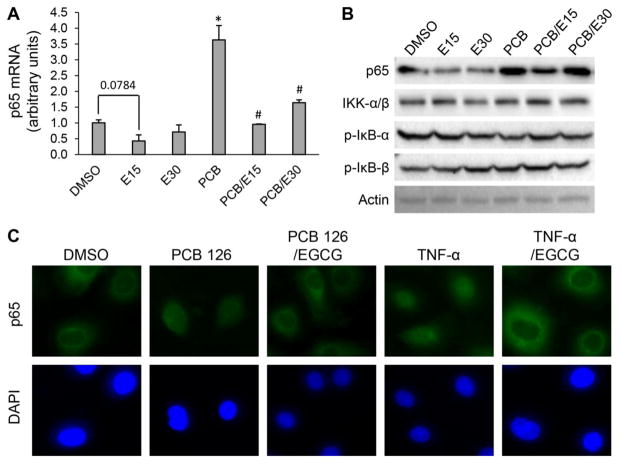
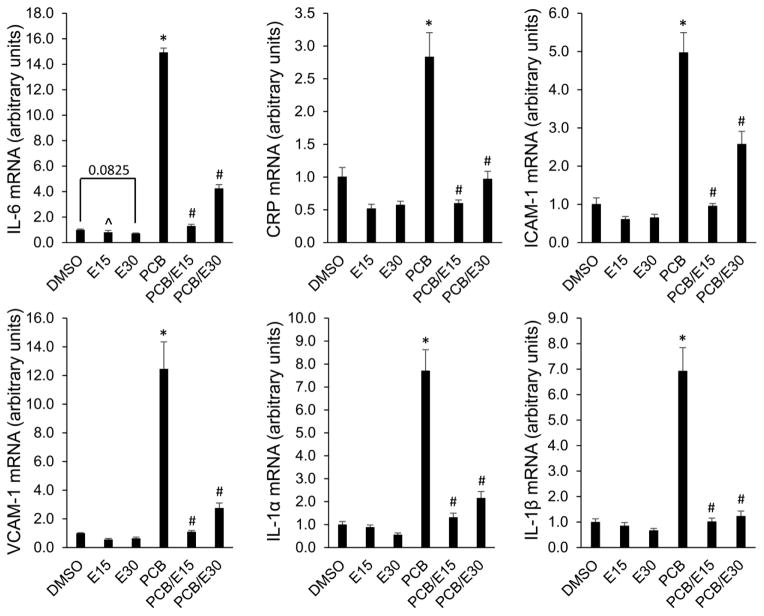
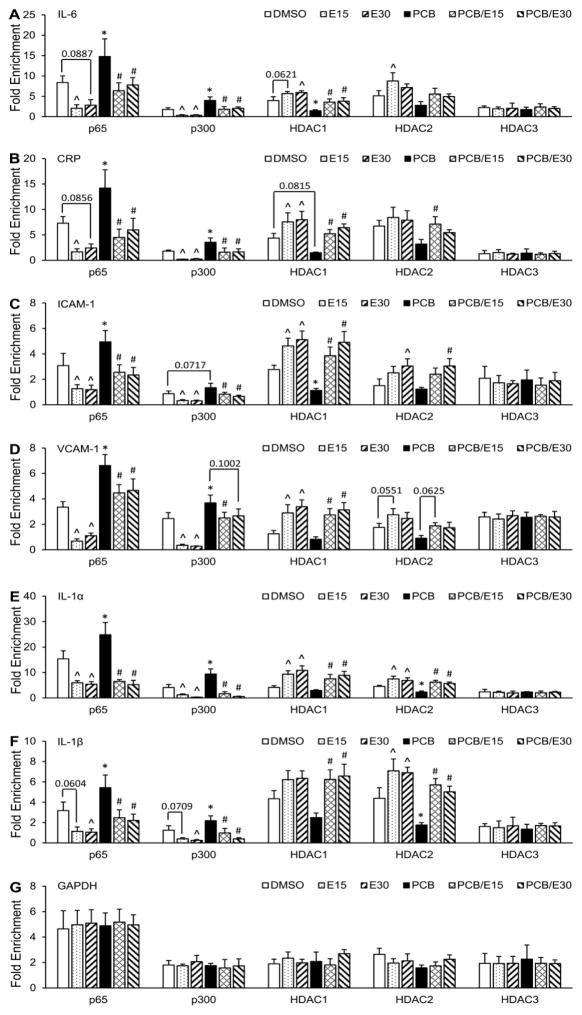
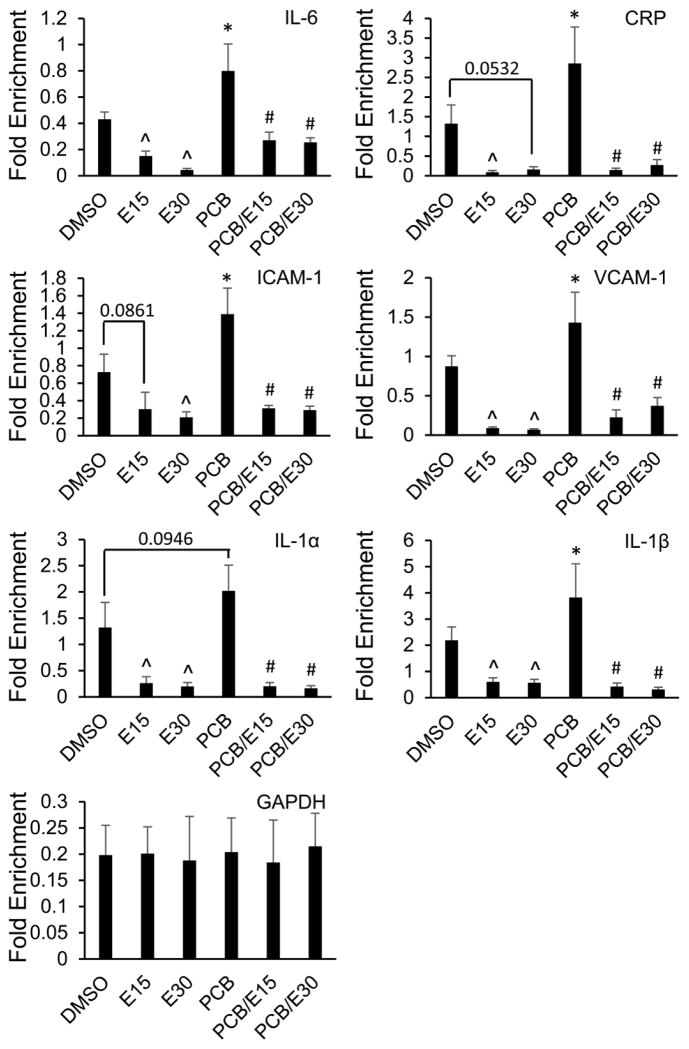
Anti-inflammatory polyphenols, such as epigallocatechin-3-gallate (EGCG), have been shown to protect against the toxicity of environmental pollutants. It is well known that bioactive food compounds such as polyphenols may exert their protection by modulating inflammatory pathways regulated through nuclear factor-kappa B (NF-κB) signaling. EGCG has been reported to inhibit NF-κB activation. We hypothesize that EGCG can protect against polychlorinated biphenyl (PCB)-induced endothelial inflammation in part through epigenetic regulation of NF-κB-regulated inflammatory genes. In order to test this hypothesis, human endothelial cells (EA.hy926) were exposed to physiologically relevant levels of coplanar PCB 126 and/or 15 or 30 μM of EGCG, followed by quantification of NF-κB subunit p65, histone acetyltransferase p300 and histone deacetylases (HDACs) accumulation through chromatin immunoprecipitation assay in the promoter region of inflammatory genes. In addition, the enrichment of the acetylated H3 was also quantified. PCB 126 exposure increased the expression of vascular inflammatory mediators, including interleukin (IL)-6, C-reactive protein, intercellular adhesion molecule-1, vascular cell adhesion molecule-1 and IL-1α/β, which were prevented by pretreatment with EGCG. This inhibitory effect by EGCG correlated with abolished nuclear import of p65, decreased chromatin binding of p65 and p300, as well as increased chromatin binding of HDAC 1/2. Furthermore, EGCG induced hypoacetylation of H3, which accounts for deactivation of downstream genes. These data suggest that EGCG-induced epigenetic modifications can decrease PCB-induced vascular toxicity.
Keywords: EGCG; HDACs; PCB 126; Vascular inflammation; p300; p65.
Copyright © 2015 Elsevier Inc. All rights reserved.
Figures
References
-
- Hansson GK, et al. Innate and adaptive immunity in the pathogenesis of atherosclerosis. Circ Res. 2002;91(4):281–91. - PubMed
-
- Libby P, Ridker PM, Maseri A. Inflammation and atherosclerosis. Circulation. 2002;105(9):1135–43. - PubMed
-
- Nakashima Y, et al. Upregulation of VCAM-1 and ICAM-1 at atherosclerosis-prone sites on the endothelium in the ApoE-deficient mouse. Arterioscler Thromb Vasc Biol. 1998;18(5):842–51. - PubMed
Publication types
MeSH terms
Substances
Grants and funding
LinkOut - more resources
Full Text Sources
Other Literature Sources
Research Materials
Miscellaneous
