


The Genetic History of Peruvian Quechua-Lamistas and Chankas: Uniparental DNA Patterns among Autochthonous Amazonian and Andean Populations
- PMID: 26879156
- PMCID: PMC5111738
- DOI: 10.1111/ahg.12145
The Genetic History of Peruvian Quechua-Lamistas and Chankas: Uniparental DNA Patterns among Autochthonous Amazonian and Andean Populations
Abstract
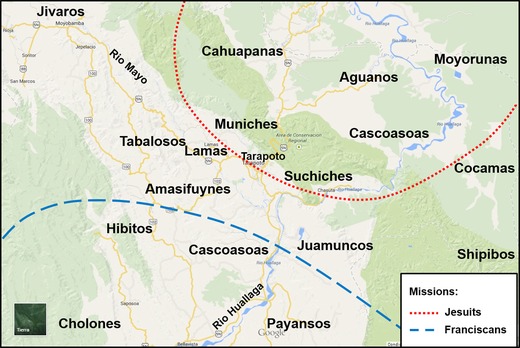
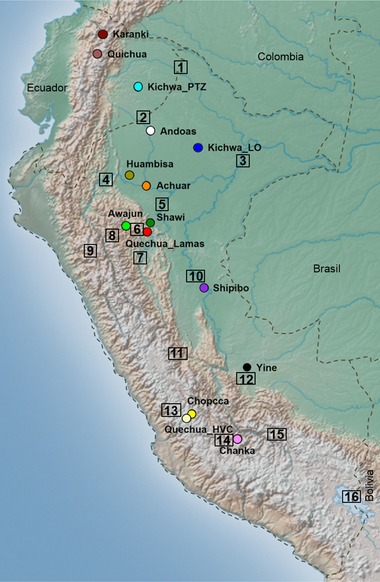
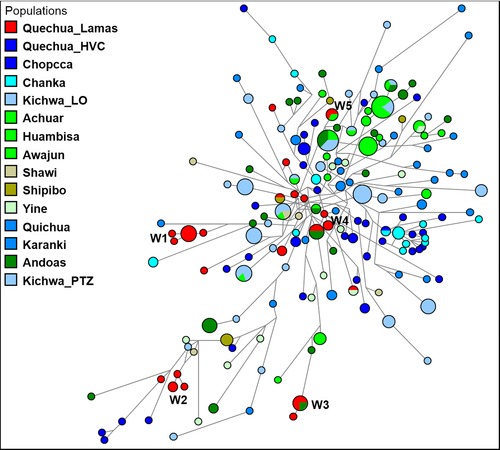
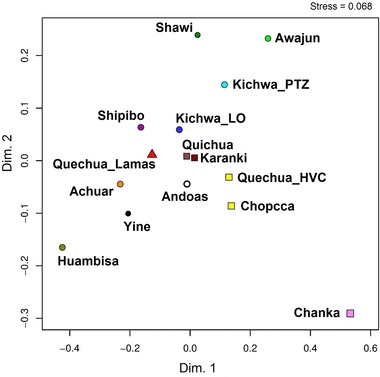
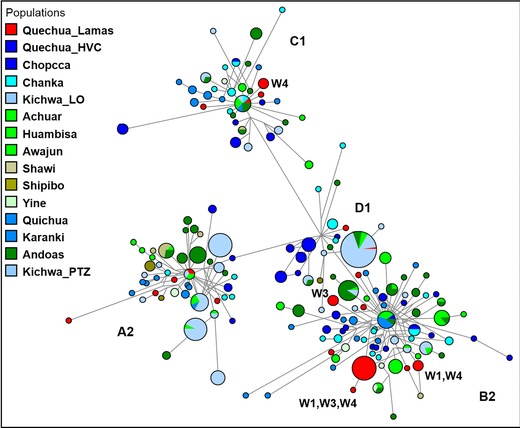
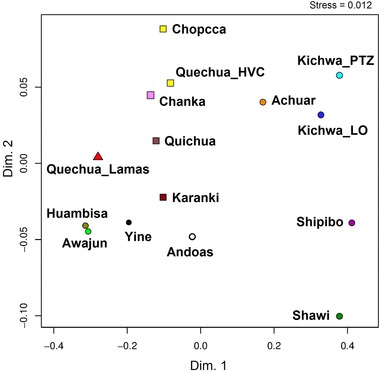
This study focuses on the genetic history of the Quechua-Lamistas, inhabitants of the Lamas Province in the San Martin Department, Peru, who speak their own distinct variety of the Quechua family of languages. It has been suggested that different pre-Columbian ethnic groups from the Peruvian Amazonia, like the Motilones or "shaven heads", assimilated the Quechua language and then formed the current native population of Lamas. However, many Quechua-Lamistas claim to be direct descendants of the Chankas, a famous pre-Columbian indigenous group that escaped from Inca rule in the Andes. To investigate the Quechua-Lamistas and Chankas' ancestries, we compared uniparental genetic profiles (17 STRs of Q-M3 Y-chromosome and mtDNA complete control region haplotypes) among autochthonous Amazonian and Andean populations from Peru, Bolivia and Ecuador. The phylogeographic and population genetic analyses indicate a fairly heterogeneous ancestry for the Quechua-Lamistas, while they are closely related to their neighbours who speak Amazonian languages, presenting no direct relationships with populations from the region where the ancient Chankas lived. On the other hand, the genetic profiles of self-identified Chanka descendants living in Andahuaylas (located in the Apurimac Department, Peru, in the Central Andes) were closely related to those living in Huancavelica and the assumed Chanka Confederation area before the Inca expansion.
Keywords: Amazonia; Andes; Chankas; Quechua-Lamistas; Y-SNPs; Y-STRs; human history; indigenous South Americans; mtDNA.
© 2016 John Wiley & Sons Ltd/University College London.
Figures
References
-
- Adelaar, W. F. H. (2013) Quechua I y Quechua II: En defensa de una distinción establecida. Rev Bras Linguist Antropol 5(1), 45–65.
-
- Andrews, R. M. , Kubacka. I. , Chinnery, P. F. , Lightowlers, R. N. , Turnbull, D. M. & Howell, N. (1999) Reanalysis and revision of the Cambridge reference sequence for human mitochondrial DNA. Nat Genet 23, 147. - PubMed
-
- Arnaiz‐Villena, A. , Moscoso, J. , Serrano‐Vela, J. I. & Martinez‐Laso, J. (2006) The uniqueness of Amerindians according to HLA genes and the peopling of the Americas. Immunología 25, 13–24.
-
- Baeta, M. , Núñez, C. , Sosa, C. , Bolea, M. , Casalod, Y. , Gonzáles‐Andrade, F. , Roewer, L. & Martínez‐Jarreta, B. (2012) Mitochondrial diversity in Amerindian Kichwa and Mestizo populations from Ecuador. Int J Legal Med 126, 299–302. - PubMed
-
- Bandelt, H. ‐J. , Forster, P. & Röhl, A. (1999) Median‐Joining networks for inferring intraspecific phylogenies. Mol Biol Evol 16, 37–48. - PubMed
Publication types
MeSH terms
Substances
LinkOut - more resources
Full Text Sources
Other Literature Sources
