Impact of the β-1 adrenergic receptor polymorphism on tolerability and efficacy of bisoprolol therapy in Korean heart failure patients: association between β adrenergic receptor polymorphism and bisoprolol therapy in heart failure (ABBA) study
- PMID: 26879662
- PMCID: PMC4773723
- DOI: 10.3904/kjim.2015.043
Impact of the β-1 adrenergic receptor polymorphism on tolerability and efficacy of bisoprolol therapy in Korean heart failure patients: association between β adrenergic receptor polymorphism and bisoprolol therapy in heart failure (ABBA) study
Abstract
Background/aims: We evaluated the association between coding region variants of adrenergic receptor genes and therapeutic effect in patients with congestive heart failure (CHF).
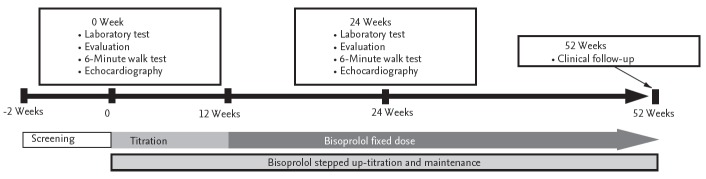
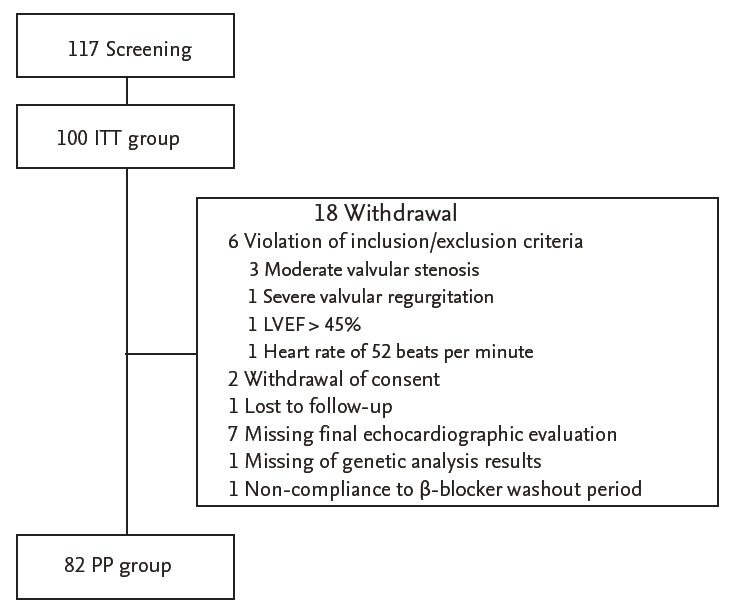
Methods: One hundred patients with stable CHF (left ventricular ejection fraction [LVEF] < 45%) were enrolled. Enrolled patients started 1.25 mg bisoprolol treatment once daily, then up-titrated to the maximally tolerable dose, at which they were treated for 1 year.
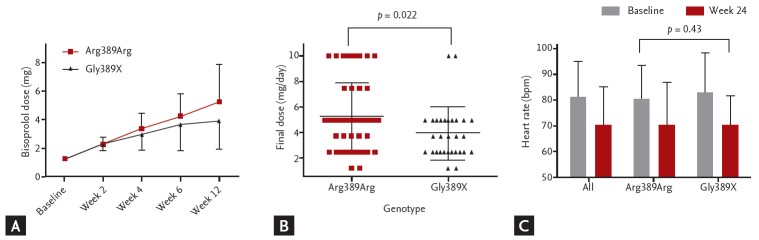
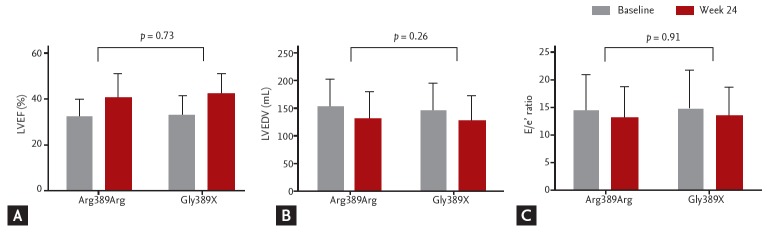
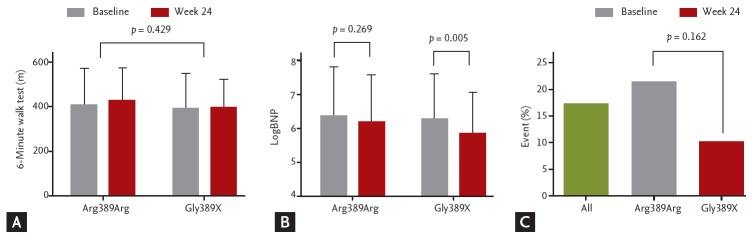
Results: Genotypic analysis was carried out, but the results were blinded to the investigators throughout the study period. At position 389 of the β-1 adrenergic receptor gene (ADRB1), the observed minor Gly allele frequency (Gly389Arg + Gly389Gly) was 0.21, and no deviation from Hardy-Weinberg equilibrium was observed in the genotypic distribution of Arg389Gly (p = 0.75). Heart rate was reduced from 80.8 ± 14.3 to 70.0 ± 15.0 beats per minute (p < 0.0001). There was no significant difference in final heart rate across genotypes. However, the Arg389Arg genotype group required significantly more bisoprolol compared to the Gly389X (Gly389Arg + Gly389Gly) group (5.26 ± 2.62 mg vs. 3.96 ± 2.05 mg, p = 0.022). There were no significant differences in LVEF changes or remodeling between two groups. Also, changes in exercise capacity and brain natriuretic peptide level were not significant. However, interestingly, there was a two-fold higher rate of readmission (21.2% vs. 10.0%, p = 0.162) and one CHF-related death in the Arg389Arg group.
Conclusions: The ADRB1 Gly389X genotype showed greater response to bisoprolol than the Arg389Arg genotype, suggesting the potential of individually tailoring β-blocker therapy according to genotype.
Keywords: Beta-blocker; Heart failure; Polymorphism; Receptors, adrenergic, beta.
Conflict of interest statement
This study was supported by a grant from Merck, Korea. The sponsor supported the supply of the investigational products, laboratory tests, and clinical research coordinator expenses.
Figures
References
-
- Rienstra M, Damman K, Mulder BA, Van Gelder IC, McMurray JJ, Van Veldhuisen DJ. Beta-blockers and outcome in heart failure and atrial fibrillation: a meta-analysis. JACC Heart Fail. 2013;1:21–28. - PubMed
-
- Lee SE, Cho HJ, Lee HY, et al. A multicentre cohort study of acute heart failure syndromes in Korea: rationale, design, and interim observations of the Korean Acute Heart Failure (KorAHF) registry. Eur J Heart Fail. 2014;16:700–708. - PubMed
-
- Small KM, Wagoner LE, Levin AM, Kardia SL, Liggett SB. Synergistic polymorphisms of beta1- and alpha2C-adrenergic receptors and the risk of congestive heart failure. N Engl J Med. 2002;347:1135–1142. - PubMed
-
- Borjesson M, Magnusson Y, Hjalmarson A, Andersson B. A novel polymorphism in the gene coding for the beta(1)-adrenergic receptor associated with survival in patients with heart failure. Eur Heart J. 2000;21:1853–1858. - PubMed
Publication types
MeSH terms
Substances
LinkOut - more resources
Full Text Sources
Other Literature Sources
Medical