


Tuberculosis Mortality and Living Conditions in Bern, Switzerland, 1856-1950
- PMID: 26881850
- PMCID: PMC4755532
- DOI: 10.1371/journal.pone.0149195
Tuberculosis Mortality and Living Conditions in Bern, Switzerland, 1856-1950
Abstract
Background: Tuberculosis (TB) is a poverty-related disease that is associated with poor living conditions. We studied TB mortality and living conditions in Bern between 1856 and 1950.
Methods: We analysed cause-specific mortality based on mortality registers certified by autopsies, and public health reports 1856 to 1950 from the city council of Bern.
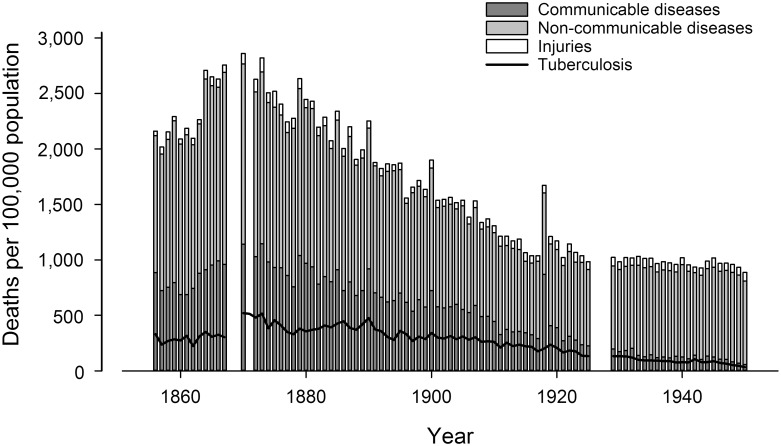
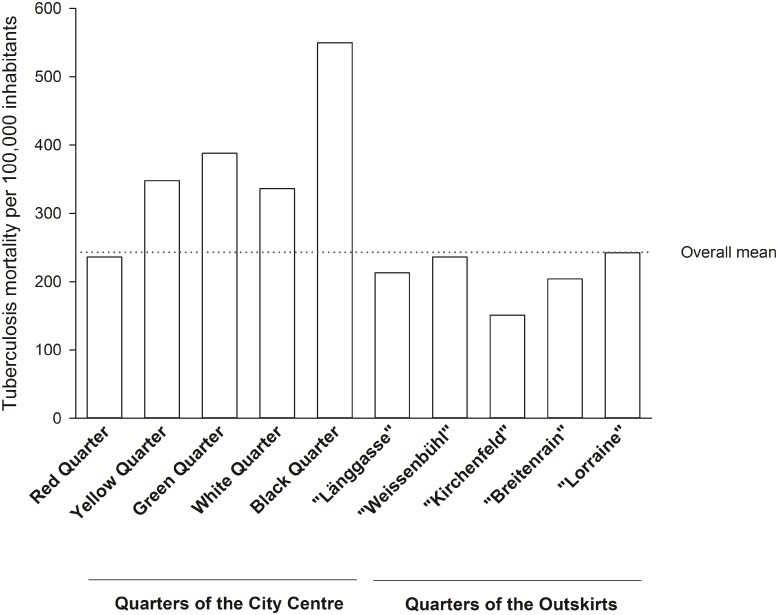
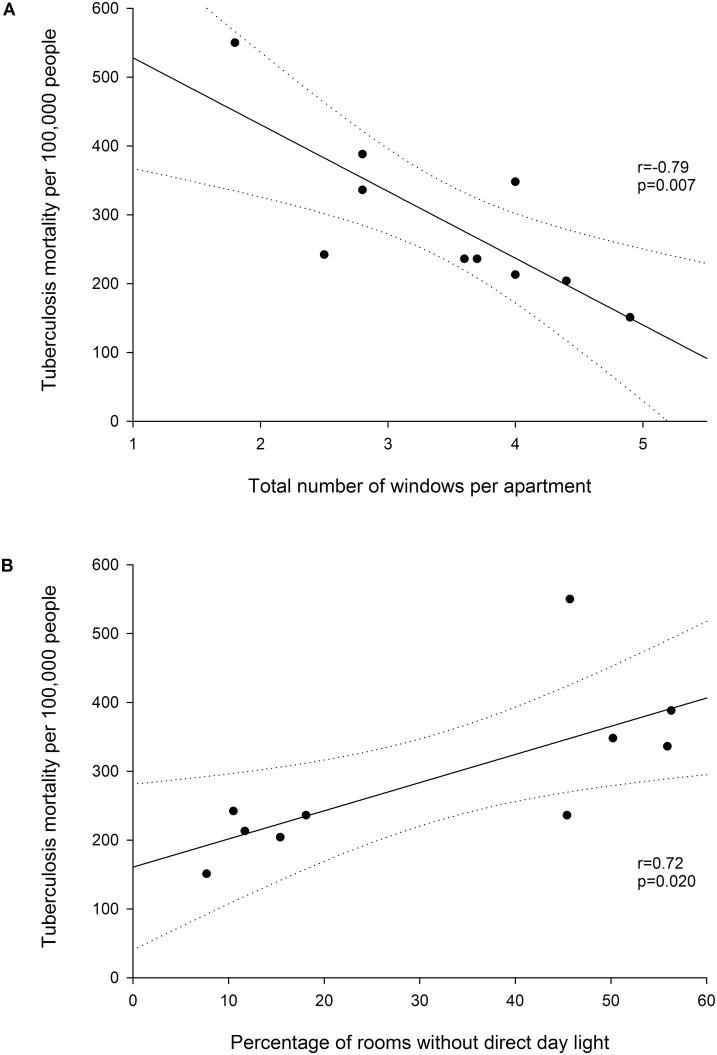
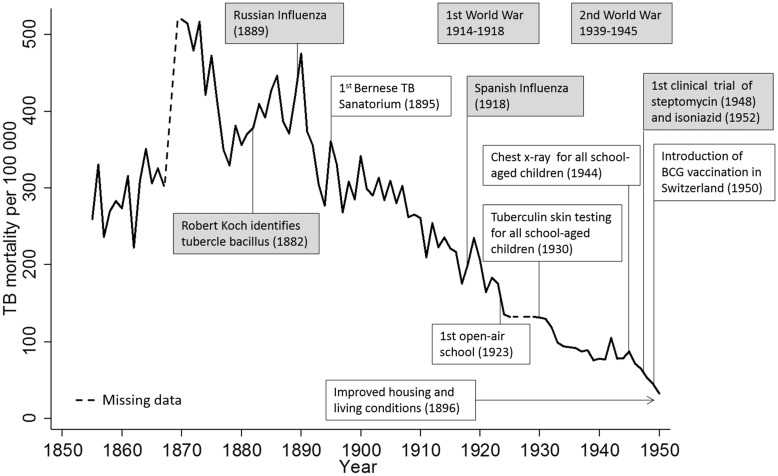
Results: TB mortality was higher in the Black Quarter (550 per 100,000) and in the city centre (327 per 100,000), compared to the outskirts (209 per 100,000 in 1911-1915). TB mortality correlated positively with the number of persons per room (r = 0.69, p = 0.026), the percentage of rooms without sunlight (r = 0.72, p = 0.020), and negatively with the number of windows per apartment (r = -0.79, p = 0.007). TB mortality decreased 10-fold from 330 per 100,000 in 1856 to 33 per 100,000 in 1950, as housing conditions improved, indoor crowding decreased, and open-air schools, sanatoria, systematic tuberculin skin testing of school children and chest radiography screening were introduced.
Conclusions: Improved living conditions and public health measures may have contributed to the massive decline of the TB epidemic in the city of Bern even before effective antibiotic treatment became finally available in the 1950s.
Conflict of interest statement
Figures
References
-
- Redeker F. Epidemiologie und Statistik der Tuberkulose. In: Hein J, Kleinschmidt H, Uehlinger E. 1st ed Stuttgart: Georg Thieme; 1958. pp. 407–98.
-
- World Health Organization. Global tuberculosis report 2014. World Health Organization Document. 2014;WHO/HTM/TB/2014.08:1–149.
-
- Wilson LG. The historical decline of tuberculosis in Europe and America: its causes and significance. J Hist Med Allied Sci. 1990;45(3):366–96. Epub 1990/07/01. . - PubMed
-
- Grigg ER. The arcana of tuberculosis with a brief epidemiologic history of the disease in the U.S.A. American review of tuberculosis. 1958;78(2):151–72 contd. Epub 1958/08/01. . - PubMed
-
- Stead W. Variation in vulnerability to tuberculosis in America today: random, or legacies of different ancestral epidemics? Int J Tuberc Lung Dis. 2001; 5(9):807–14. - PubMed
MeSH terms
LinkOut - more resources
Full Text Sources
Other Literature Sources
Medical
