


Proposed Staging System for Patients With HPV-Related Oropharyngeal Cancer Based on Nasopharyngeal Cancer N Categories
- PMID: 26884553
- PMCID: PMC4966344
- DOI: 10.1200/JCO.2015.64.6448
Proposed Staging System for Patients With HPV-Related Oropharyngeal Cancer Based on Nasopharyngeal Cancer N Categories
Abstract
Purpose: Patients with human papillomavirus (HPV)-related oropharyngeal cancer (OPC) generally present with more advanced disease but have better survival than patients with HPV-unrelated OPC. The current American Joint Commission on Cancer (AJCC)/Union for International Cancer Control (UICC) TNM staging system for OPC was developed for HPV-unrelated OPC. A new staging system is needed to adequately predict outcomes of patients with HPV-related OPC.
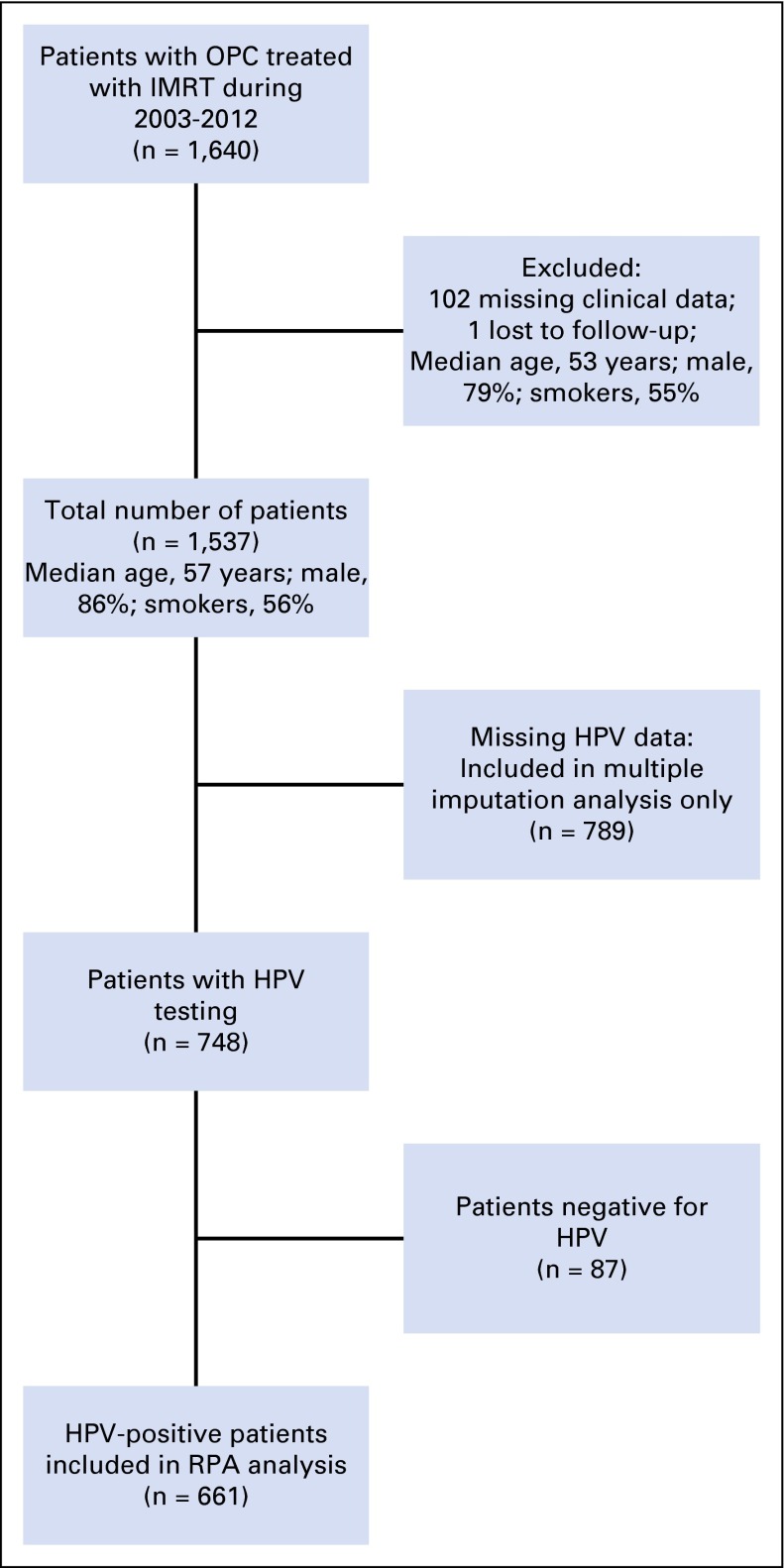
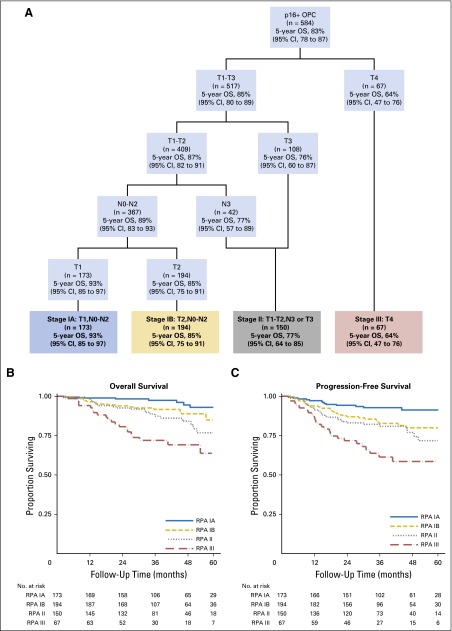
Patients and methods: Patients with newly diagnosed HPV-positive OPC (by p16 immunohistochemistry or in situ hybridization) treated at our institution from January 2003 through December 2012 were included. By using recursive partitioning analysis (RPA), we developed new stage groupings with both traditional OPC regional lymph node (N) categories and nasopharyngeal carcinoma (NPC) N categories. Survival was estimated by the Kaplan-Meier method, and the relationship between stage and survival was examined by using Cox proportional hazards regression analysis.
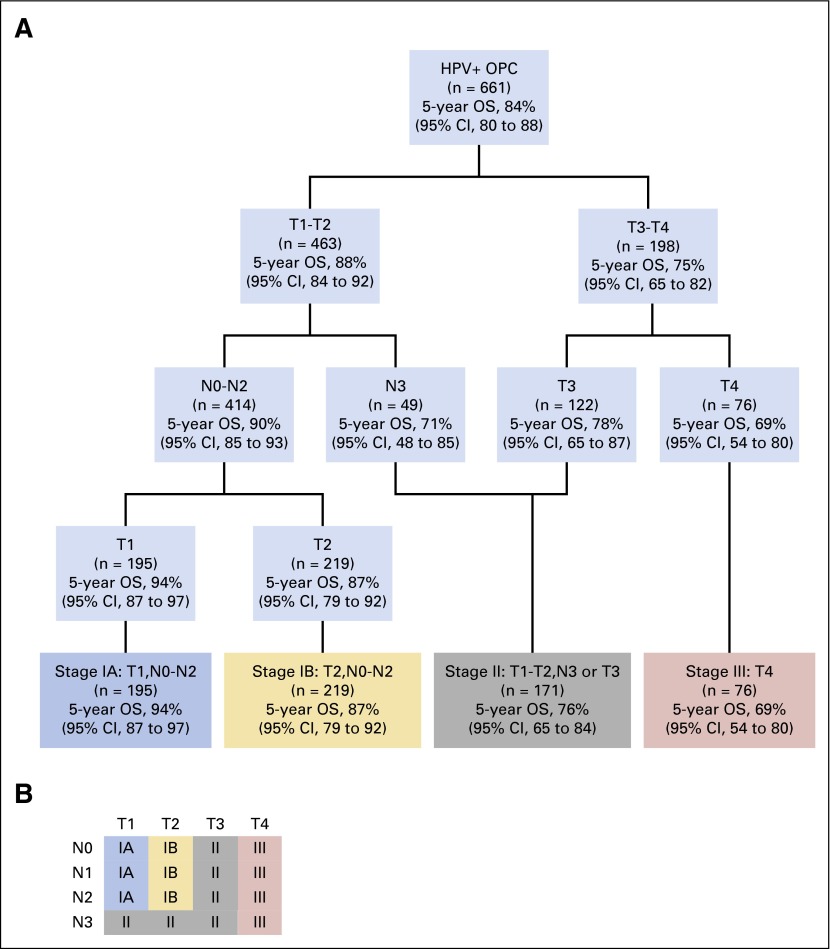
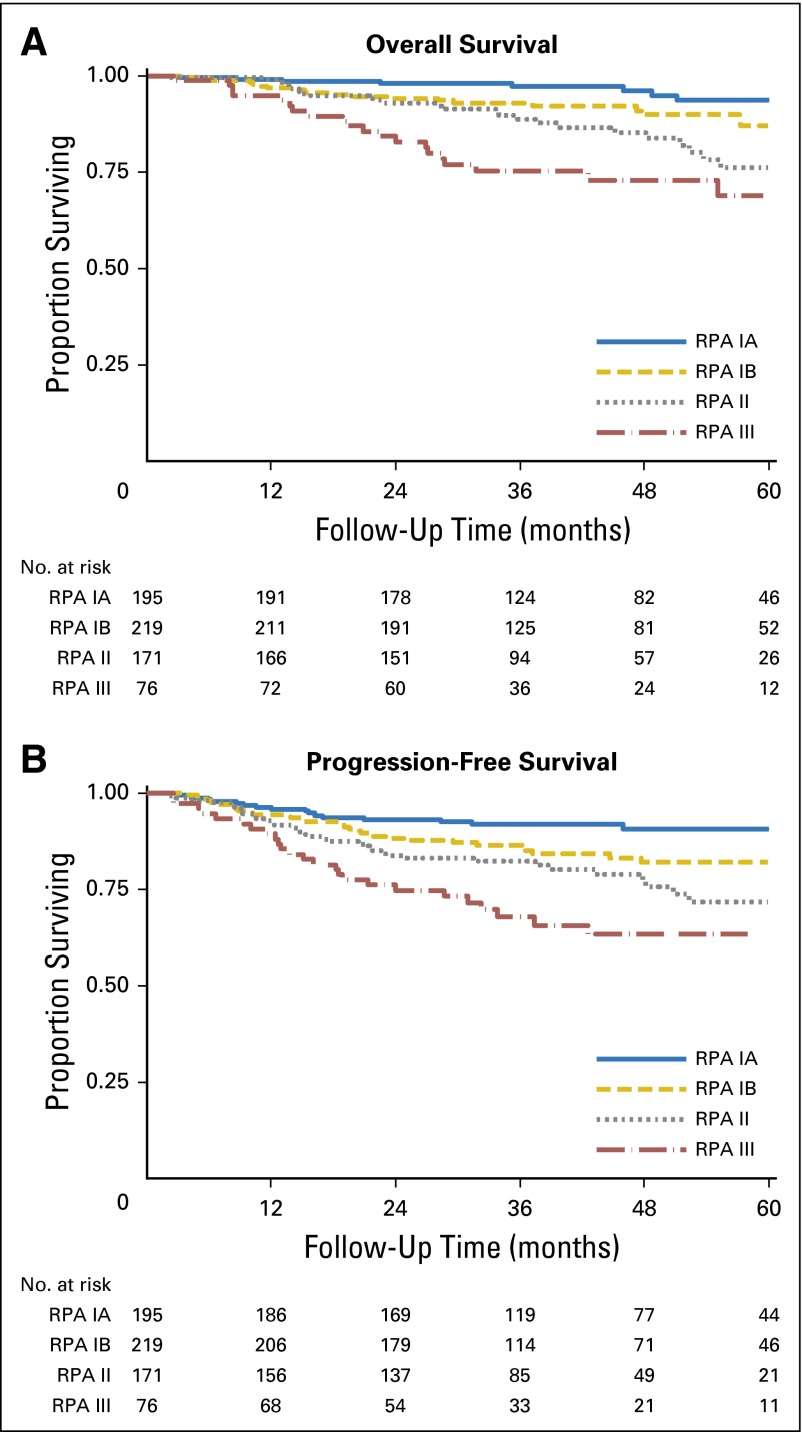
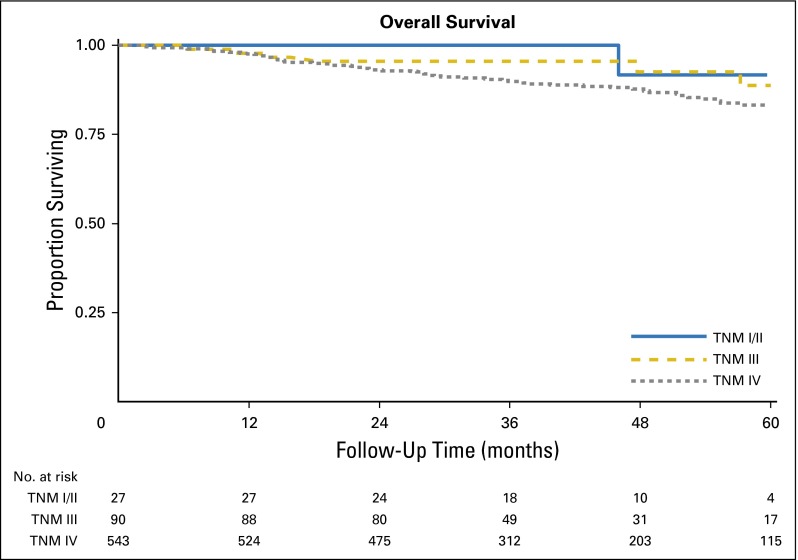
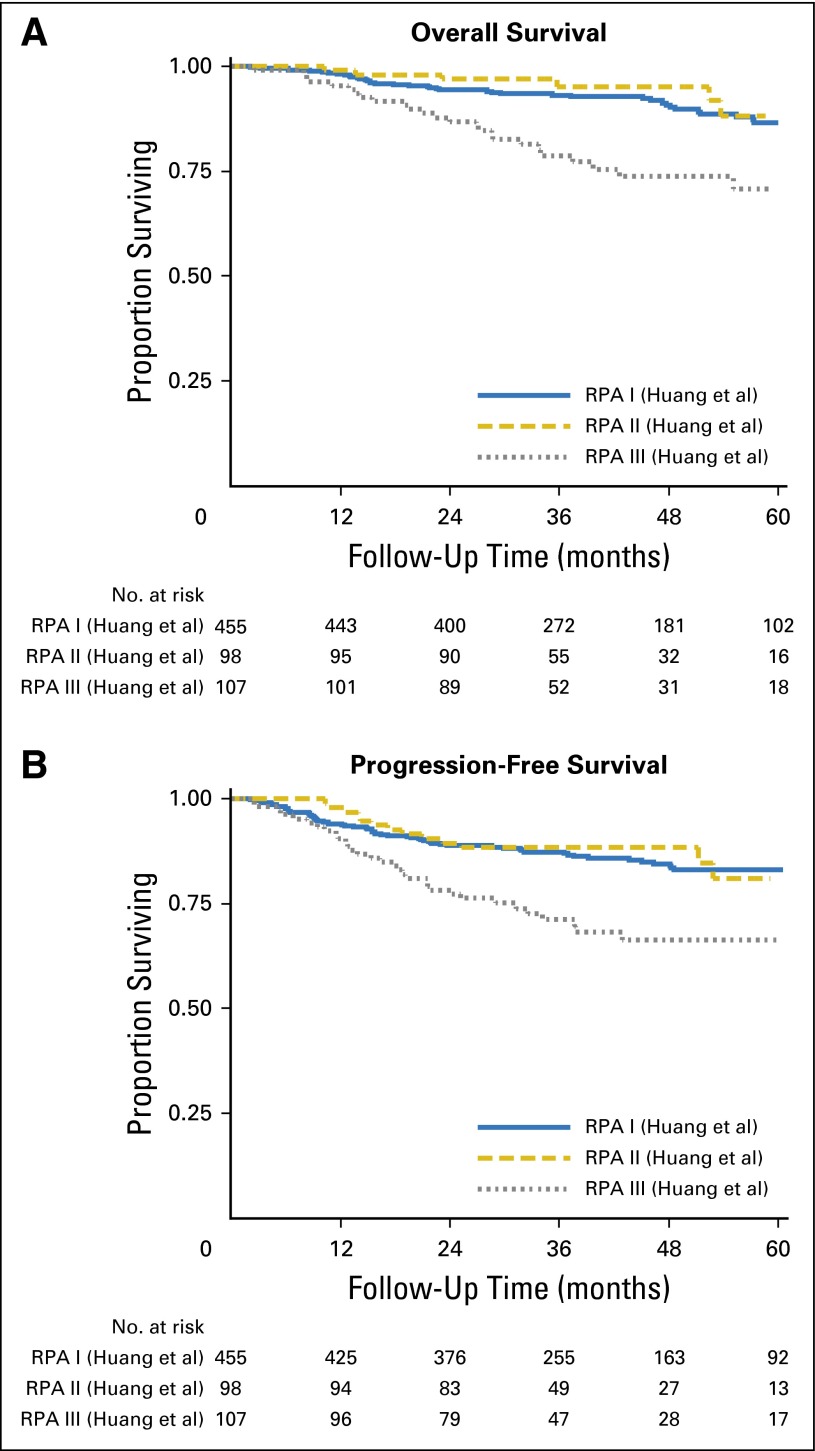
Results: A total of 661 patients with HPV-positive OPC met the inclusion criteria. With the traditional TNM staging system, there was no difference in survival between stages (P = .141). RPA with NPC N categories resulted in more balanced stage groups and better separation between groups for 5-year survival than RPA with traditional OPC N categories. With the stage groupings that were based in part on NPC N categories, the risk of death increased with increasing stage (P for trend < .001), and patients with stage III disease had five times the risk of death versus patients with stage IA disease.
Conclusion: New stage groupings that are based on primary tumor (T) categories and NPC N categories better separate patients with HPV-positive OPC with respect to survival than does the current AJCC/UICC TNM staging system. Although confirmation of our findings in other patient populations is needed, we propose consideration of NPC N categories as an alternative to the traditional OPC N categories in the new AJCC/UICC TNM staging system that is currently being developed.
© 2016 by American Society of Clinical Oncology.
Conflict of interest statement
Authors' disclosures of potential conflicts of interest are found in the article online at
Figures
Comment in
-
Human Papillomavirus and Oropharyngeal Cancer Stage.J Clin Oncol. 2016 Jun 1;34(16):1833-5. doi: 10.1200/JCO.2016.66.6081. Epub 2016 Apr 25. J Clin Oncol. 2016. PMID: 27114590 No abstract available.
References
-
- Ernster JA, Sciotto CG, O’Brien MM, et al. Rising incidence of oropharyngeal cancer and the role of oncogenic human papilloma virus. Laryngoscope. 2007;117:2115–2128. - PubMed
-
- Hammarstedt L, Dahlstrand H, Lindquist D, et al. The incidence of tonsillar cancer in Sweden is increasing. Acta Otolaryngol. 2007;127:988–992. - PubMed
-
- Fakhry C, Westra WH, Li S, et al. Improved survival of patients with human papillomavirus–positive head and neck squamous cell carcinoma in a prospective clinical trial. J Natl Cancer Inst. 2008;100:261–269. - PubMed
Publication types
MeSH terms
Grants and funding
LinkOut - more resources
Full Text Sources
Other Literature Sources
Miscellaneous
