


Status of insecticide resistance in high-risk malaria provinces in Afghanistan
- PMID: 26888409
- PMCID: PMC4758152
- DOI: 10.1186/s12936-016-1149-1
Status of insecticide resistance in high-risk malaria provinces in Afghanistan
Abstract
Background: Insecticide resistance seriously threatens the efficacy of vector control interventions in malaria endemic countries. In Afghanistan, the status of insecticide resistance is largely unknown while distribution of long-lasting insecticidal nets has intensified in recent years. The main objective of this study was thus to measure the level of resistance to four classes of insecticides in provinces with medium to high risk of malaria transmission.
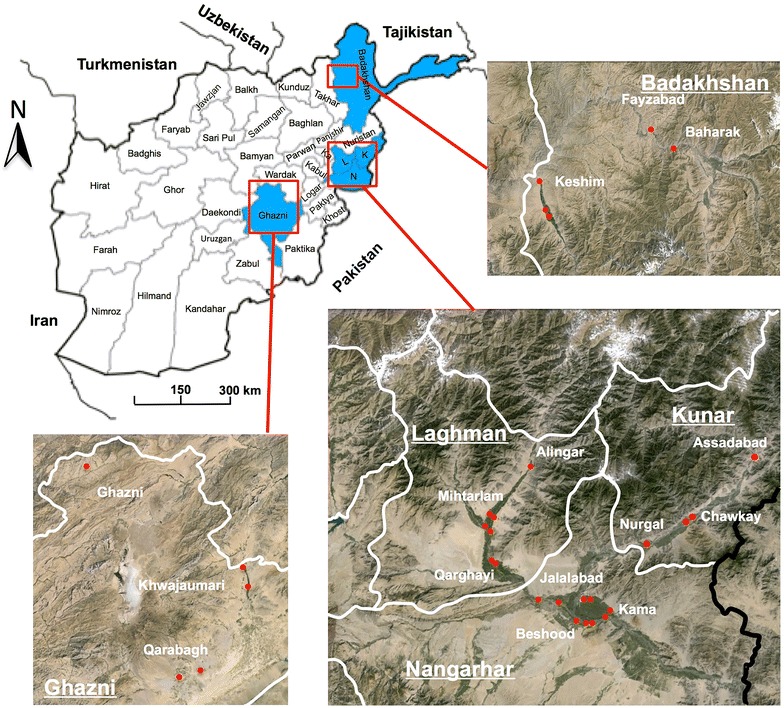
Methods: Adult female mosquitoes were reared from larvae successively collected in the provinces of Nangarhar, Kunar, Badakhshan, Ghazni and Laghman from August to October 2014. WHO insecticide susceptibility tests were performed with DDT (4 %), malathion (5 %), bendiocarb (0.1 %), permethrin (0.75 %) and deltamethrin (0.05 %). In addition, the presence of kdr mutations was investigated in deltamethrin resistant and susceptible Anopheles stephensi mosquitoes collected in the eastern provinces of Nangarhar and Kunar.
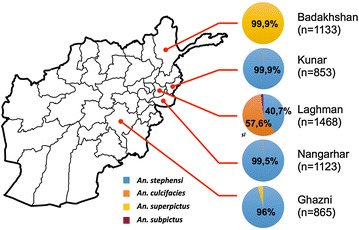
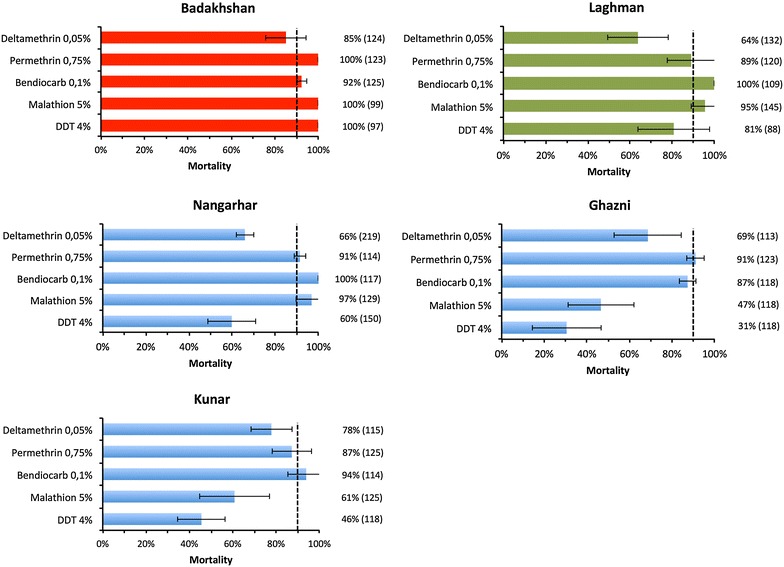
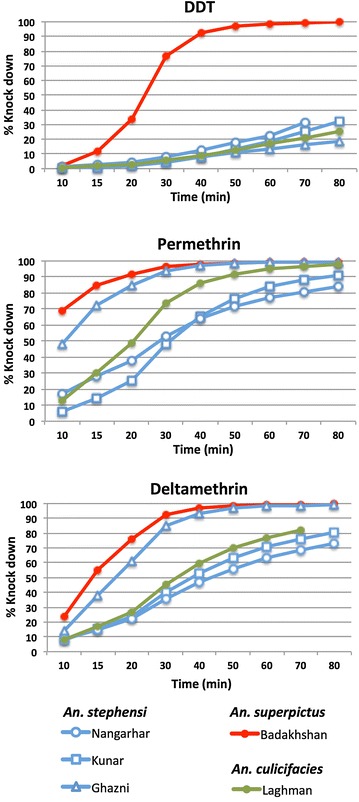
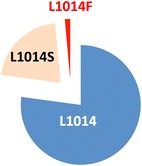
Results: Analyses of mortality rates revealed emerging resistance against all four classes of insecticides in the provinces located east and south of the Hindu Kush mountain range. Resistance is observed in both An. stephensi and Anopheles culicifacies, the two dominant malaria vectors in these provinces. Anopheles superpictus in the northern province of Badakhshan shows a different pattern of susceptibility with suspected resistance observed only for deltamethrin and bendiocarb. Genotype analysis of knock down resistance (kdr) mutations at the voltage-gated channel gene from An. stephensi mosquitoes shows the presence of the known resistant alleles L1014S and L1014F. However, a significant fraction of deltamethrin-resistant mosquitoes were homozygous for the 1014L wild type allele indicating that other mechanisms must be considered to account for the observed pyrethroid resistance.
Conclusions: This study confirms the importance of monitoring insecticide resistance for the development of an integrated vector management in Afghanistan. The validation of the kdr genotyping PCR assay applied to An. stephensi collected in Afghanistan paves the way for further studies into the mechanisms of insecticide resistance of malaria vectors in this region.
Figures
References
-
- WHO . World malaria report. Geneva: World Health Organization; 2014.
Publication types
MeSH terms
Substances
LinkOut - more resources
Full Text Sources
Other Literature Sources
Medical
Miscellaneous
