


Hepatitis C virus coinfection as a risk factor for osteoporosis and fracture
- PMID: 26890206
- PMCID: PMC6161492
- DOI: 10.1097/COH.0000000000000259
Hepatitis C virus coinfection as a risk factor for osteoporosis and fracture
Abstract
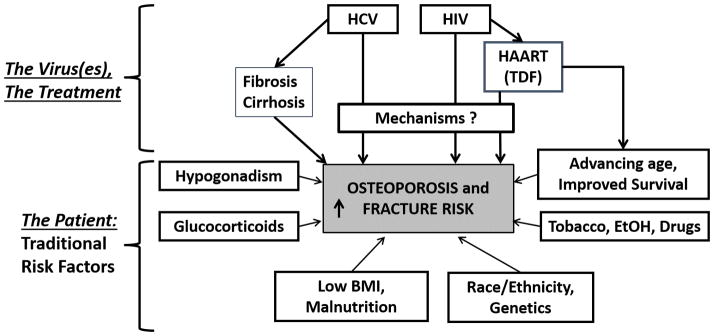
Purpose of review: With increased survival of HIV-infected patients, osteoporotic fractures have developed as a major cause of morbidity in these patients, and chronic hepatitis C virus (HCV) coinfection has emerged as a significant contributor to this increased fracture risk. The present article reviews the epidemiologic and clinical evidence for osteoporosis and increased fracture risk among HIV/HCV coinfected patients, and potential mechanisms for these outcomes with HCV coinfection.
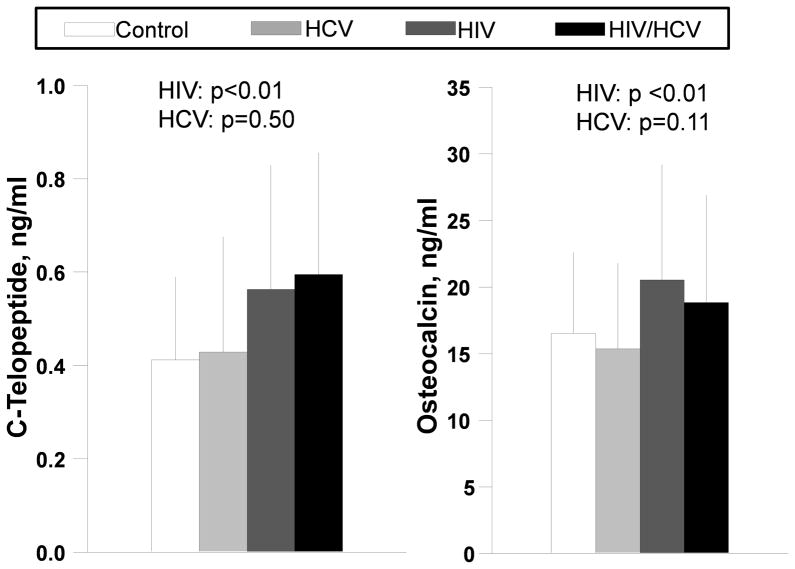
Recent findings: Epidemiologic studies suggest that HIV/HCV coinfected patients exhibit a three-fold increased fracture incidence compared with uninfected controls, and 1.2-2.4-fold increased fracture risk compared with HIV monoinfected patients. Recent reports suggest that chronic HCV coinfection is independently associated with reduced bone mineral density in HIV, but that it is not associated with significantly increased bone turnover. The deleterious impact of chronic HCV on BMD and fracture risk occurs even in the absence of advanced liver fibrosis or cirrhosis. New tools to assess bone quality, including the trabecular bone score, high-resolution peripheral quantitative computed tomography, and in-vivo microindentation, may help improve understanding of the mechanisms of HCV-associated skeletal fragility. The impact of approved antiosteoporosis medications and direct-acting antivirals for the treatment of chronic HCV infection on patients' bone health remain to be studied.
Summary: Chronic HCV infection is an independent risk factor for osteoporosis and fractures among HIV-infected patients, even before the development of cirrhosis. The underlying mechanisms are being unraveled, but major questions persist regarding the optimal evaluation and management of bone health in HIV/HCV coinfected patients.
Conflict of interest statement
Dr. Bedimo is currently receiving a grant (AI424-552) from Bristol Myers Squibb and has served on ad-hoc scientific advisory boards for BMS, Merck & Co, Theratechnologies and Gilead Sciences. The remaining authors have no conflicts of interest.
Figures
References
-
- Brown TT, Qaqish RB. Antiretroviral therapy and the prevalence of osteopenia and osteoporosis: a meta-analytic review. Aids. 2006;20:2165–2174. - PubMed
-
- Maalouf NM, Zhang S, Drechsler H, Brown GR, Tebas P, Bedimo R. Hepatitis C co-infection and severity of liver disease as risk factors for osteoporotic fractures among HIV-infected patients. J Bone Miner Res. 2013;28:2577–2583. - PubMed
-
- Sherman KE, Rouster SD, Chung RT, Rajicic N. Hepatitis C Virus prevalence among patients infected with Human Immunodeficiency Virus: a cross-sectional analysis of the US adult AIDS Clinical Trials Group. Clin Infect Dis. 2002;34:831–837. - PubMed
Publication types
MeSH terms
Grants and funding
LinkOut - more resources
Full Text Sources
Other Literature Sources
Medical
Research Materials
