


Repression of Wnt/β-catenin response elements by p63 (TP63)
- PMID: 26890356
- PMCID: PMC4845946
- DOI: 10.1080/15384101.2016.1148837
Repression of Wnt/β-catenin response elements by p63 (TP63)
Abstract
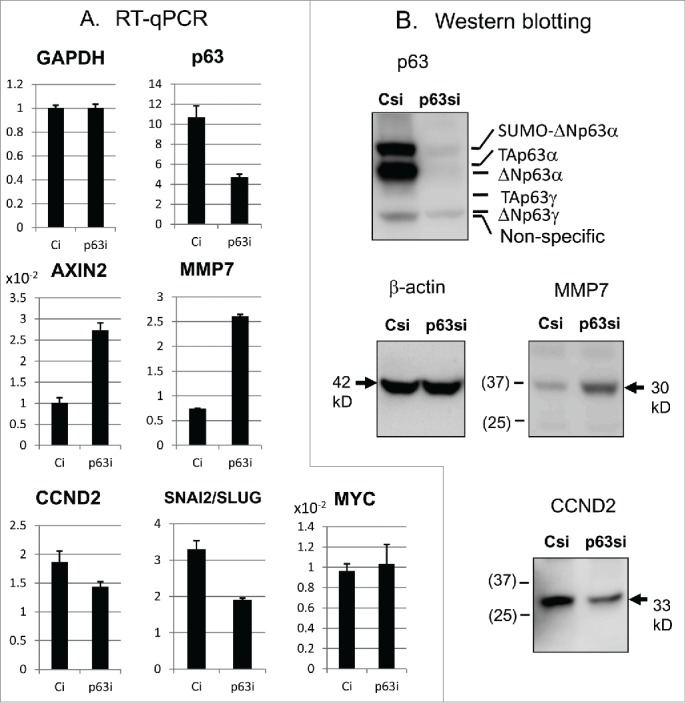
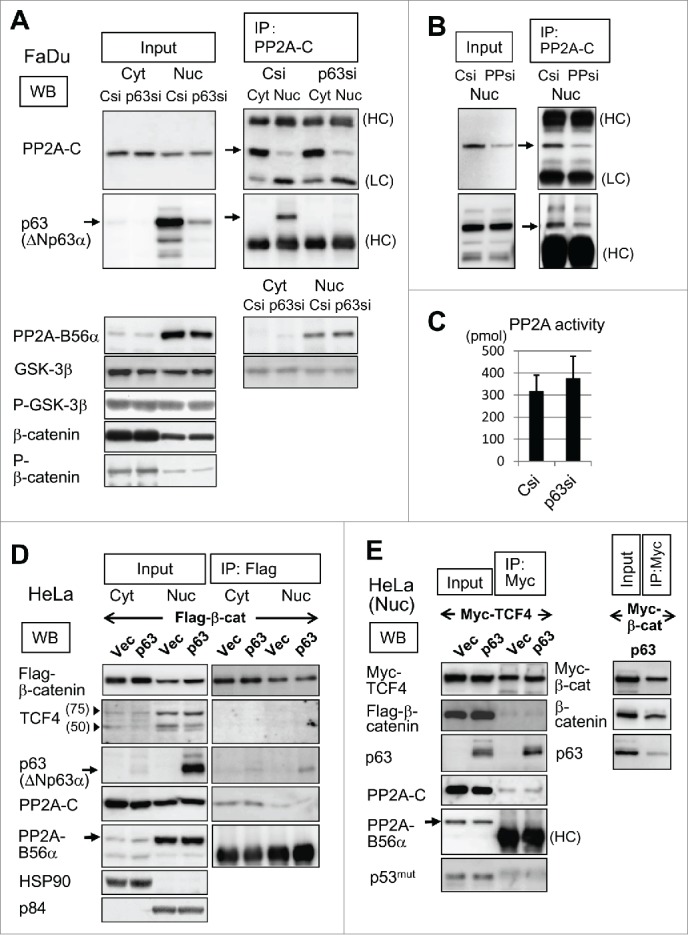
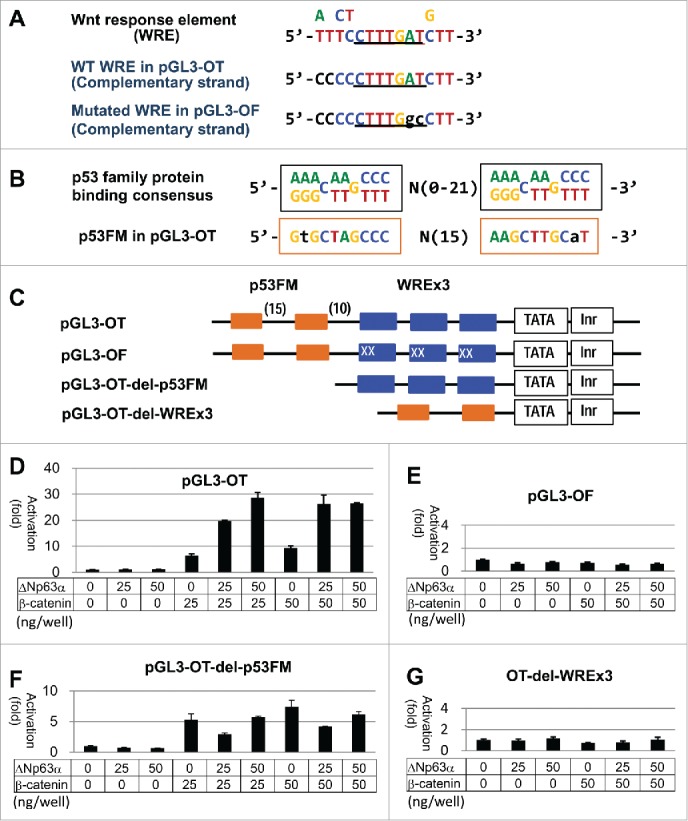
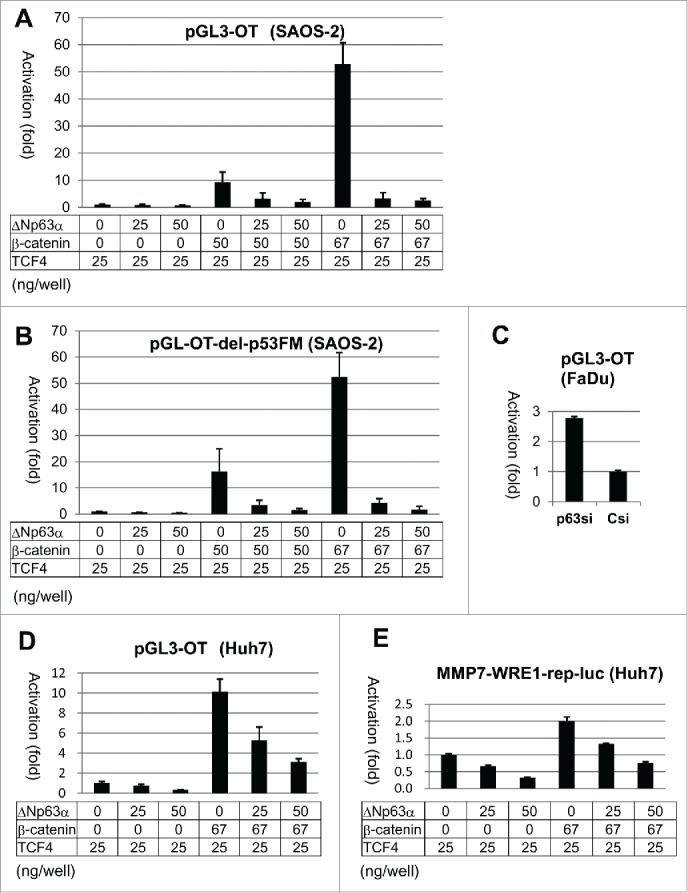
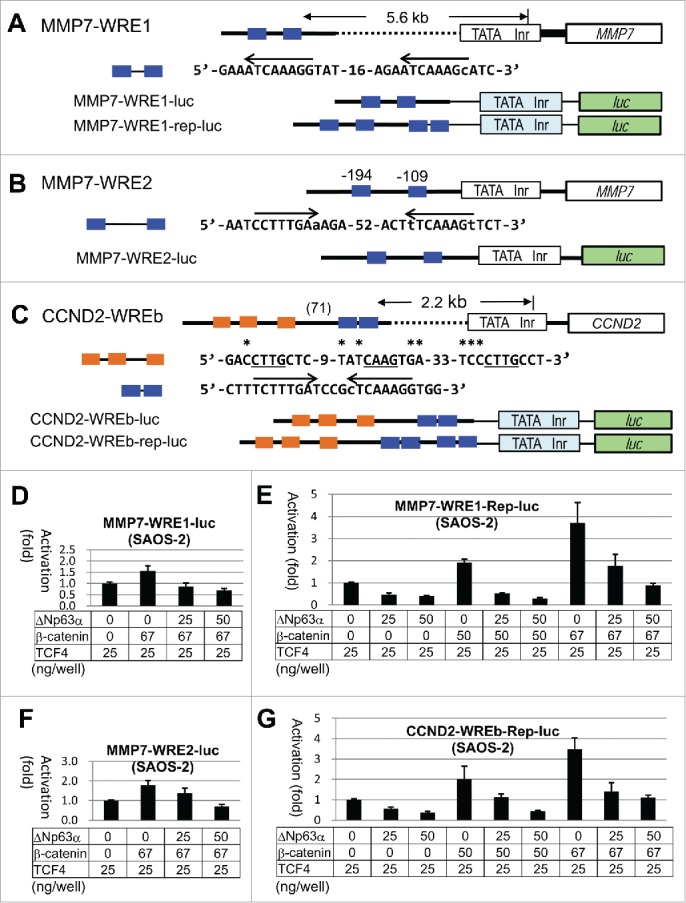
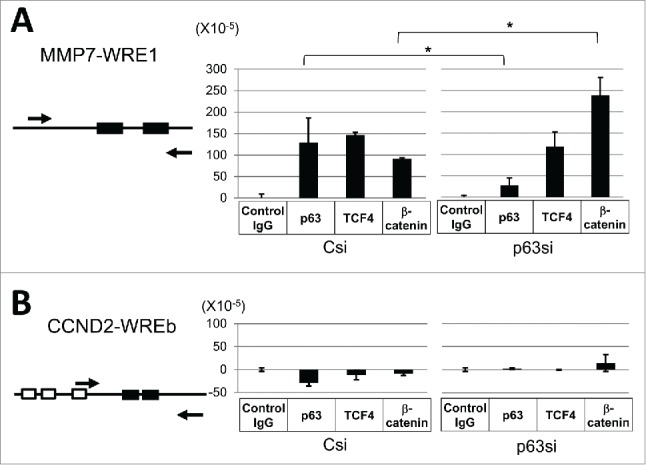
Submitted: TP63 (p63), a member of the tumor suppressor TP53 (p53) gene family, is expressed in keratinocyte stem cells and well-differentiated squamous cell carcinomas to maintain cellular potential for growth and differentiation. Controversially, activation of the Wnt/β-catenin signaling by p63 (Patturajan M. et al., 2002, Cancer Cells) and inhibition of the target gene expression (Drewelus I. et al., 2010, Cell Cycle) have been reported. Upon p63 RNA-silencing in squamous cell carcinoma (SCC) lines, a few Wnt target gene expression substantially increased, while several target genes moderately decreased. Although ΔNp63α, the most abundant isoform of p63, appeared to interact with protein phosphatase PP2A, neither GSK-3β phosphorylation nor β-catenin nuclear localization was altered by the loss of p63. As reported earlier, ΔNp63α enhanced β-catenin-dependent luc gene expression from pGL3-OT having 3 artificial Wnt response elements (WREs). However, this activation was detectable only in HEK293 cells examined so far, and involved a p53 family-related sequence 5' to the WREs. In Wnt3-expressing SAOS-2 cells, ΔNp63α rather strongly inhibited transcription of pGL3-OT. Importantly, ΔNp63α repressed WREs isolated from the regulatory regions of MMP7. ΔNp63α-TCF4 association occurred in their soluble forms in the nucleus. Furthermore, p63 and TCF4 coexisted at a WRE of MMP7 on the chromatin, where β-catenin recruitment was attenuated. The combined results indicate that ΔNp63α serves as a repressor that regulates β-catenin-mediated gene expression.
Keywords: TCF4; TP63; Wnt; p63; β-catenin.
Figures
References
-
- Yang A, Kaghad M, Wang Y, Gillett E, Fleming MD, Dotsch V, Andrews NC, Caput D, McKeon F. p63, a p53 homolog at 3q27-29, encodes multiple products with transactivating, death-inducing, and dominant-negative activities. Mol Cell 1998; 2:305-16; PMID:9774969; http://dx.doi.org/ 10.1016/S1097-2765(00)80275-0 - DOI - PubMed
-
- Pellegrini G, Dellambra E, Golisano O, Martinelli E, Fantozzi I, Bondanza S, Ponzin D, McKeon F, De Luca M. p63 identifies keratinocyte stem cells. Proc Natl Acad Sci U S A 2001; 98:3156-61; PMID:11248048; http://dx.doi.org/ 10.1073/pnas.061032098 - DOI - PMC - PubMed
-
- Osada M, Ohba M, Kawahara C, Ishioka C, Kanamaru R, Katoh I, Ikawa Y, Nimura Y, Nakagawara A, Obinata M, et al.. Cloning and functional analysis of human p51, which structurally and functionally resembles p53. Nat Med 1998; 4:839-43; PMID:9662378; http://dx.doi.org/ 10.1038/nm0798-839 - DOI - PubMed
-
- Senoo M, Pinto F, Crum CP, McKeon F. p63 Is Essential for the Proliferative Potential of Stem Cells in Stratified Epithelia. Cell 2007; 129:523-36; PMID:17482546; http://dx.doi.org/ 10.1016/j.cell.2007.02.045 - DOI - PubMed
-
- Keyes WM, Pecoraro M, Aranda V, Vernersson-Lindahl E, Li W, Vogel H, Guo X, Garcia EL, Michurina TV, Enikolopov G, et al.. ΔNp63α is an oncogene that targets chromatin remodeler lsh to drive skin stem cell proliferation and tumorigenesis. Cell Stem Cell 2011; 8:164-76; PMID:21295273; http://dx.doi.org/ 10.1016/j.stem.2010.12.009 - DOI - PMC - PubMed
Publication types
MeSH terms
Substances
LinkOut - more resources
Full Text Sources
Other Literature Sources
Research Materials
Miscellaneous
