Integrated Multiregional Analysis Proposing a New Model of Colorectal Cancer Evolution
- PMID: 26890883
- PMCID: PMC4758664
- DOI: 10.1371/journal.pgen.1005778
Integrated Multiregional Analysis Proposing a New Model of Colorectal Cancer Evolution
Erratum in
-
Correction: Integrated Multiregional Analysis Proposing a New Model of Colorectal Cancer Evolution.PLoS Genet. 2017 May 19;13(5):e1006798. doi: 10.1371/journal.pgen.1006798. eCollection 2017 May. PLoS Genet. 2017. PMID: 28542232 Free PMC article.
Abstract
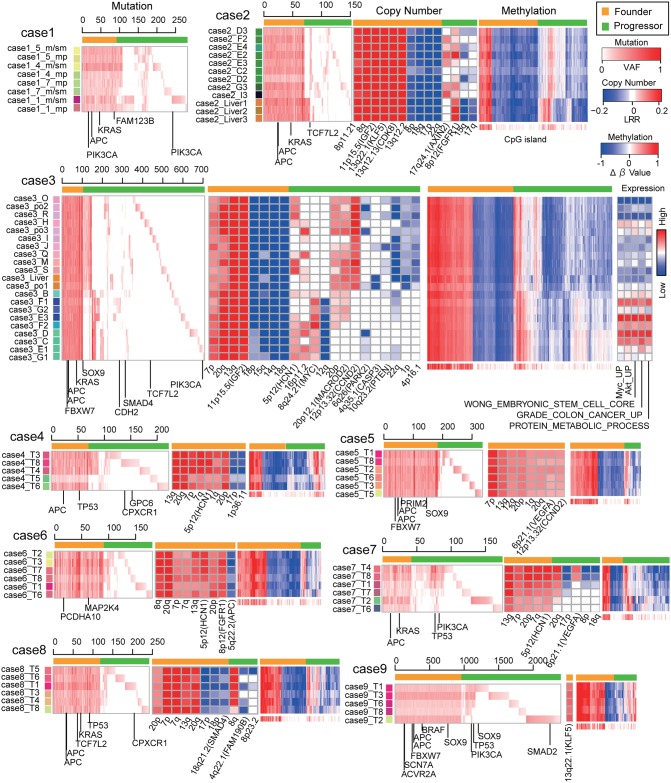
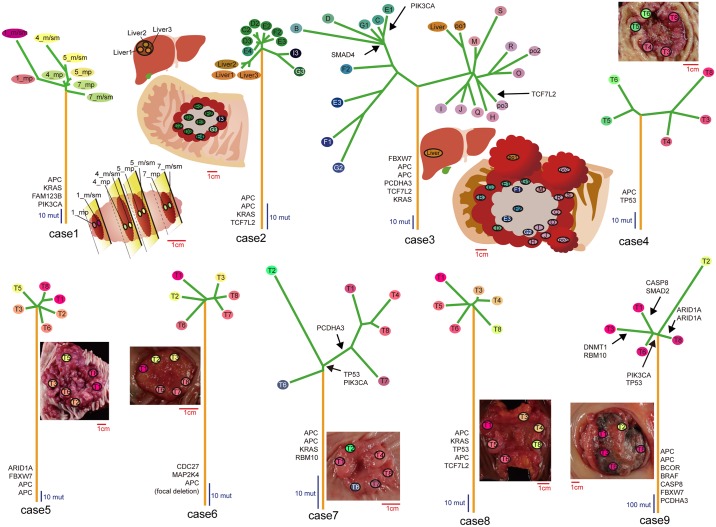
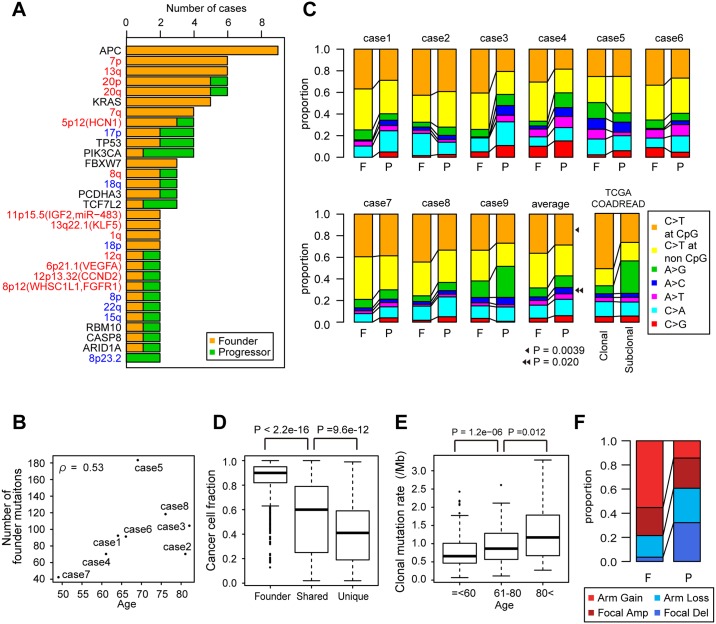
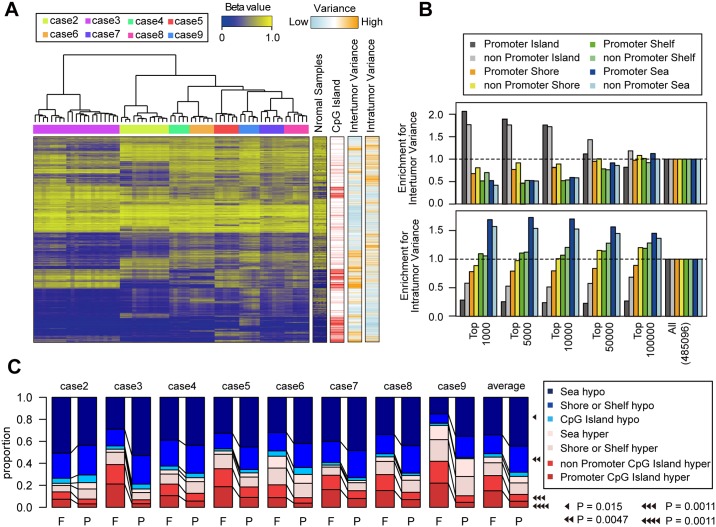
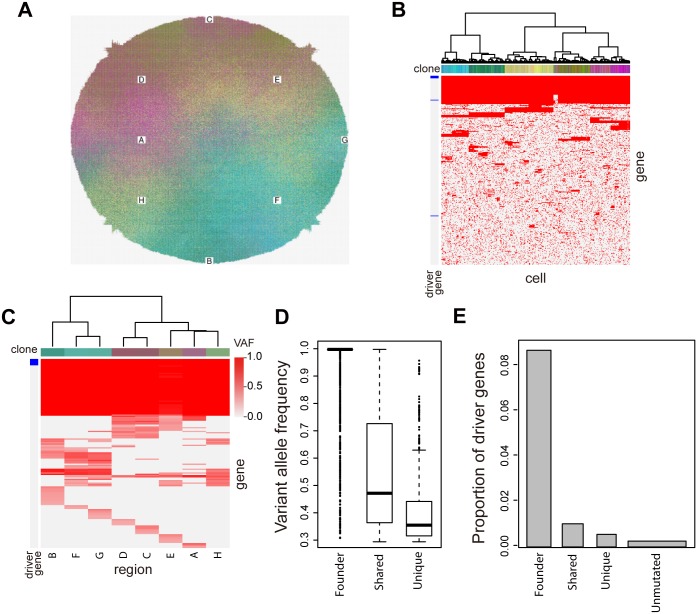
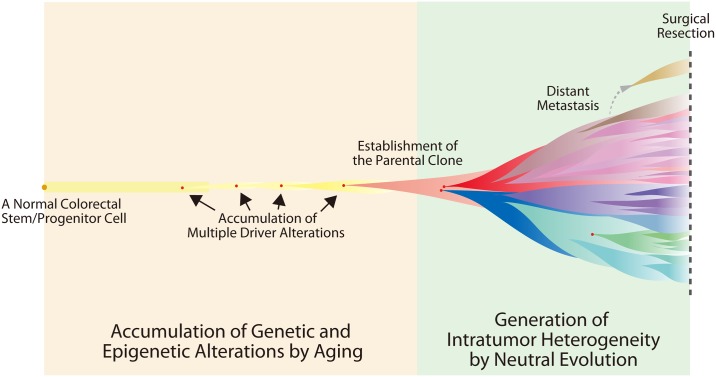
Understanding intratumor heterogeneity is clinically important because it could cause therapeutic failure by fostering evolutionary adaptation. To this end, we profiled the genome and epigenome in multiple regions within each of nine colorectal tumors. Extensive intertumor heterogeneity is observed, from which we inferred the evolutionary history of the tumors. First, clonally shared alterations appeared, in which C>T transitions at CpG site and CpG island hypermethylation were relatively enriched. Correlation between mutation counts and patients' ages suggests that the early-acquired alterations resulted from aging. In the late phase, a parental clone was branched into numerous subclones. Known driver alterations were observed frequently in the early-acquired alterations, but rarely in the late-acquired alterations. Consistently, our computational simulation of the branching evolution suggests that extensive intratumor heterogeneity could be generated by neutral evolution. Collectively, we propose a new model of colorectal cancer evolution, which is useful for understanding and confronting this heterogeneous disease.
Conflict of interest statement
The authors have declared that no competing interests exist.
Figures
References
Publication types
MeSH terms
Substances
LinkOut - more resources
Full Text Sources
Other Literature Sources
Medical
Miscellaneous