Toward the Definition of a Bipolar Prodrome: Dimensional Predictors of Bipolar Spectrum Disorders in At-Risk Youths
- PMID: 26892940
- PMCID: PMC4930393
- DOI: 10.1176/appi.ajp.2015.15040414
Toward the Definition of a Bipolar Prodrome: Dimensional Predictors of Bipolar Spectrum Disorders in At-Risk Youths
Abstract
Objective: The authors sought to assess dimensional symptomatic predictors of new-onset bipolar spectrum disorders in youths at familial risk of bipolar disorder ("at-risk" youths).
Method: Offspring 6-18 years old of parents with bipolar I or II disorder (N=359) and community comparison offspring (N=220) were recruited. At baseline, 8.4% of the offspring of bipolar parents had a bipolar spectrum disorder. Over 8 years, 14.7% of offspring for whom follow-up data were available (44/299) developed a new-onset bipolar spectrum disorder (15 with bipolar I or II disorder). Measures collected at baseline and follow-up were reduced using factor analyses, and factors (both at baseline and at the visit prior to conversion or last contact) were assessed as predictors of new-onset bipolar spectrum disorders.
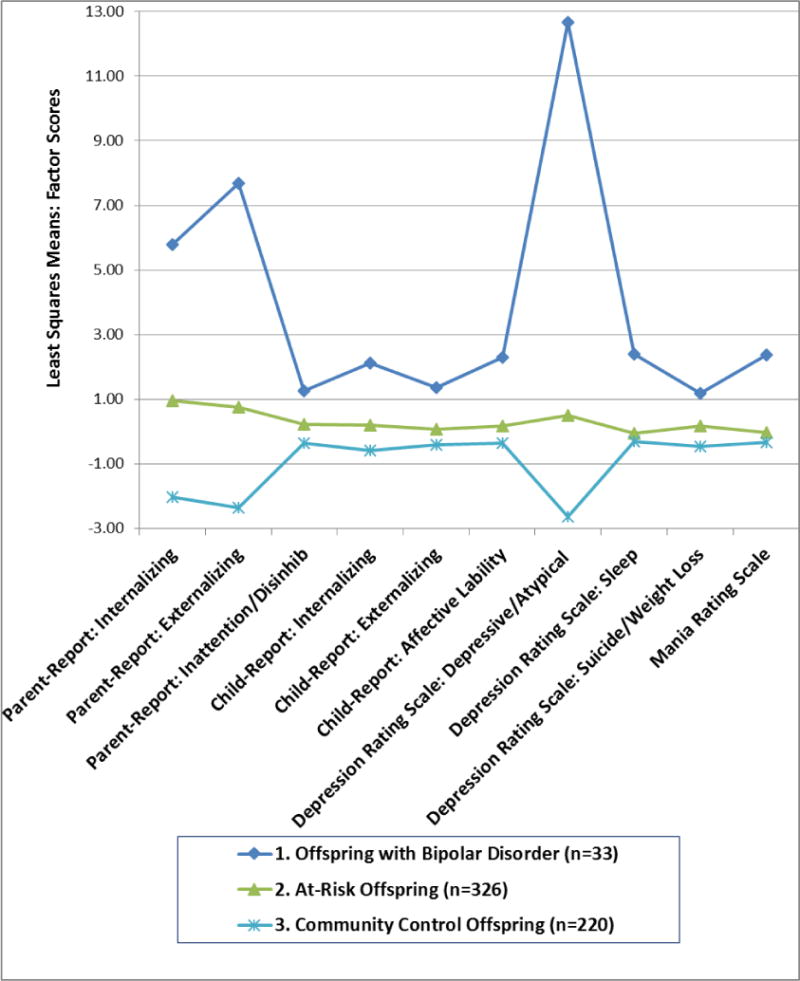
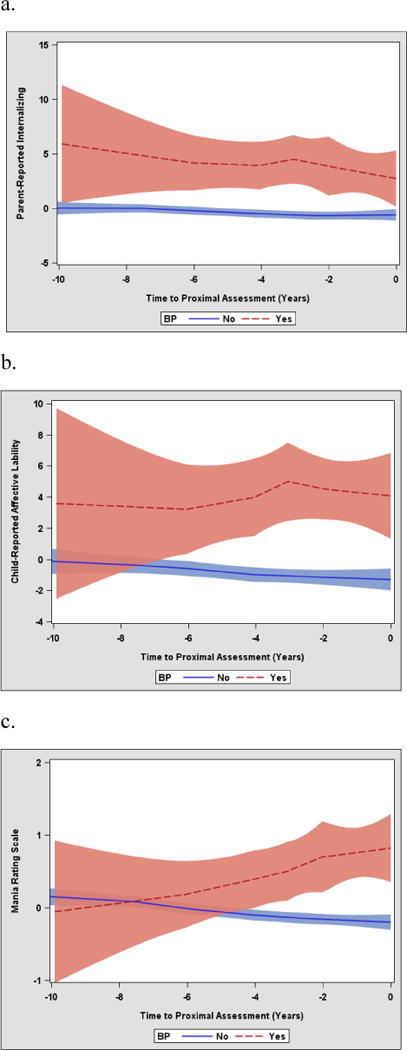
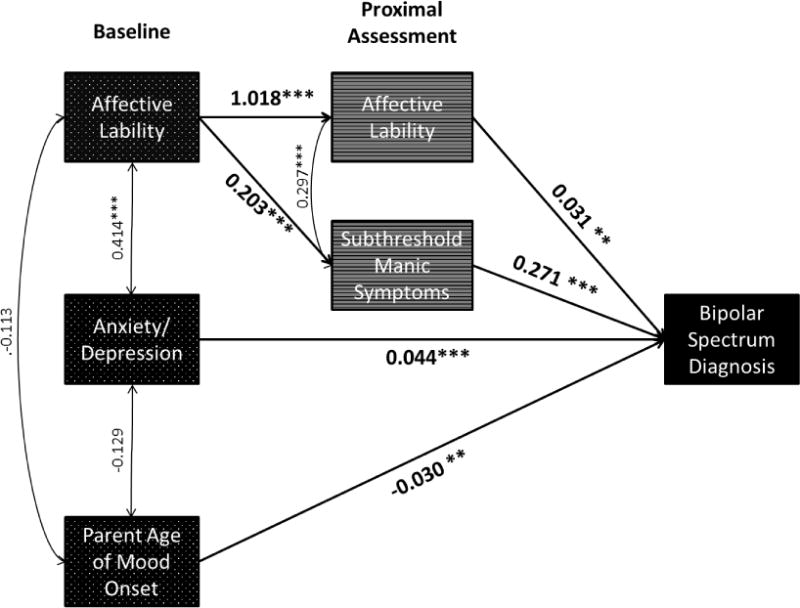
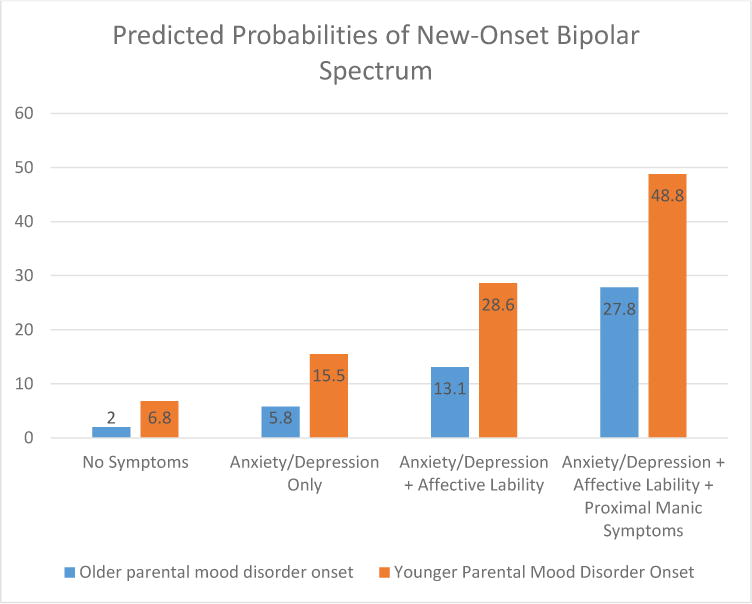
Results: Relative to comparison offspring, at-risk and bipolar offspring had higher baseline levels of anxiety/depression, inattention/disinhibition, externalizing, subsyndromal manic, and affective lability symptoms. The strongest predictors of new-onset bipolar spectrum disorders were baseline anxiety/depression, baseline and proximal affective lability, and proximal subsyndromal manic symptoms (p<0.05). While affective lability and anxiety/depression were elevated throughout follow-up in those who later developed a bipolar spectrum disorder, manic symptoms increased up to the point of conversion. A path analysis supported the hypothesis that affective lability at baseline predicts a new-onset bipolar spectrum disorder in part through increased manic symptoms at the visit prior to conversion; earlier parental age at mood disorder onset was also significantly associated with an increased risk of conversion. While youths without anxiety/depression, affective lability, and mania (and with a parent with older age at mood disorder onset) had a 2% predicted chance of conversion to a bipolar spectrum disorder, those with all risk factors had a 49% predicted chance of conversion.
Conclusions: Dimensional measures of anxiety/depression, affective lability, and mania are important predictors of new-onset bipolar spectrum disorders in at-risk youths. These symptoms emerged from among numerous other candidates, underscoring the potential clinical and research utility of these findings.
Conflict of interest statement
The other authors report no financial relationships with commercial interests.
Figures
References
-
- Berk M, Dodd S, Callaly P, Berk L, Fitzgerald P, de Castella AR, et al. History of illness prior to a diagnosis of bipolar disorder or schizoaffective disorder. J Affect Disord. 2007;103(1–3):181–6. - PubMed
-
- Hirschfeld RM, Lewis L, Vornik LA. Perceptions and impact of bipolar disorder: how far have we really come? Results of the national depressive and manic-depressive association 2000 survey of individuals with bipolar disorder. J Clin Psychiatry. 2003;64(2):161–74. - PubMed
-
- Egeland JA, Hostetter AM, Pauls DL, Sussex JN. Prodromal symptoms before onset of manic-depressive disorder suggested by first hospital admission histories. J Am Acad Child Adolesc Psychiatry. 2000;39(10):1245–52. - PubMed
-
- Kupfer DJ, Frank E, Grochocinski VJ, Cluss PA, Houck PR, Stapf DA. Demographic and clinical characteristics of individuals in a bipolar disorder case registry. J Clin Psychiatry. 2002;63(2):120–5. - PubMed
MeSH terms
Grants and funding
LinkOut - more resources
Full Text Sources
Other Literature Sources
Medical