


Increased oncogenic microRNA-18a expression in the peripheral blood of patients with prostate cancer: A potential novel non-invasive biomarker
- PMID: 26893719
- PMCID: PMC4734205
- DOI: 10.3892/ol.2015.4014
Increased oncogenic microRNA-18a expression in the peripheral blood of patients with prostate cancer: A potential novel non-invasive biomarker
Abstract
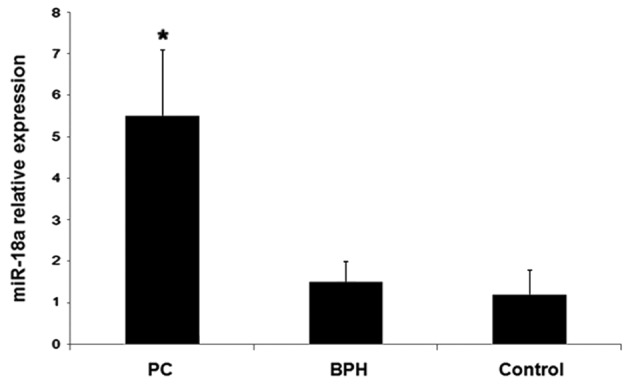
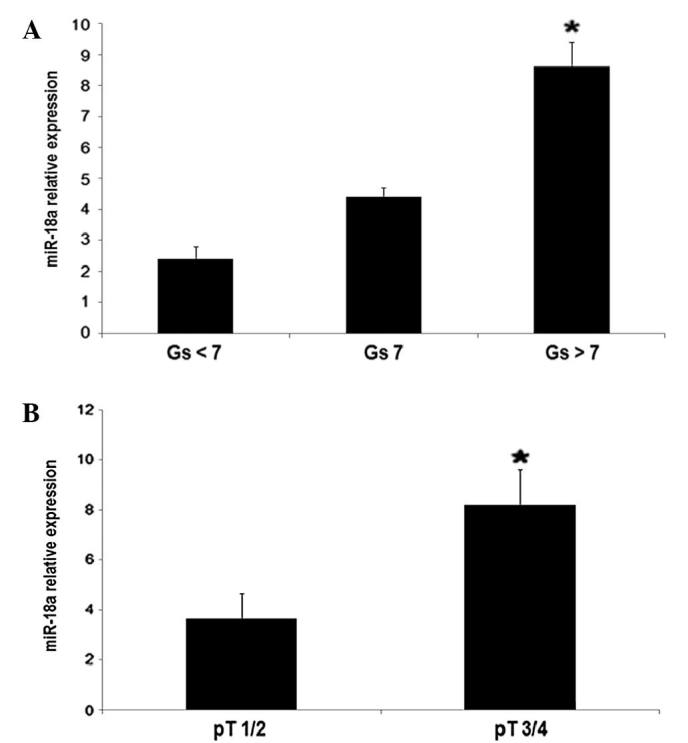
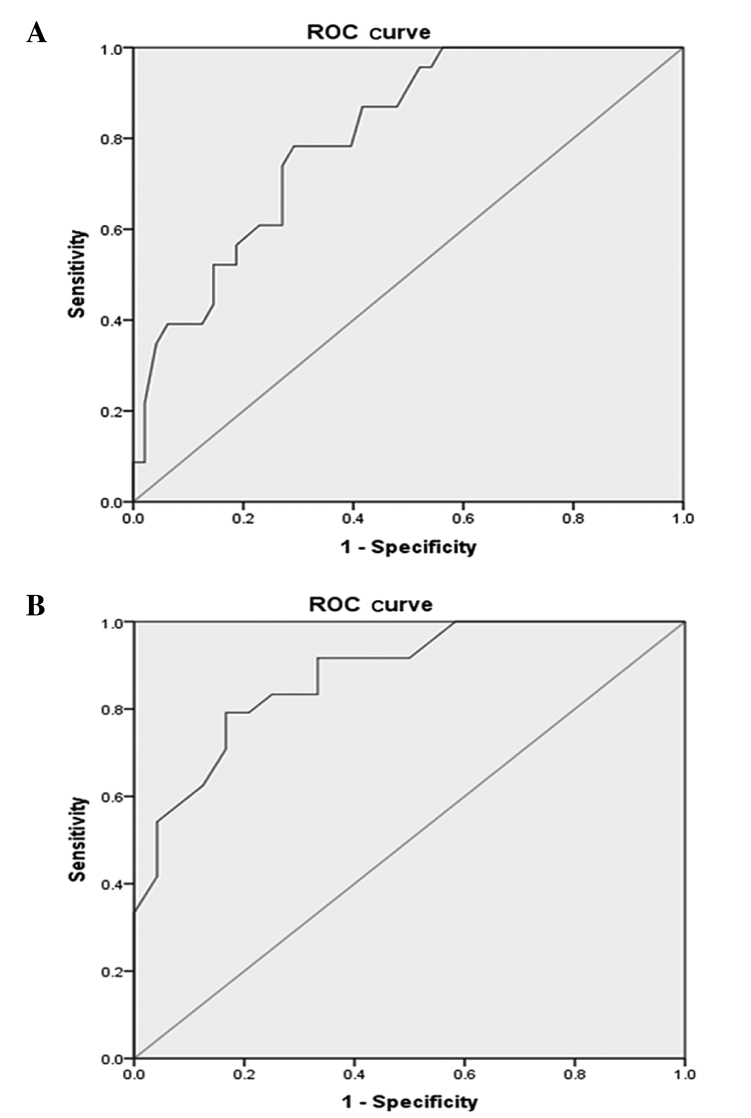
MicroRNAs have been demonstrated to be stably detectable in peripheral blood, thus representing important sources of non-invasive biomarkers of various diseases, including cancer. Recently, microRNA-18a (miR-18a) has been revealed to be highly expressed in prostate cancer (PC) tissues, acting as an oncogenic miRNA. The present study evaluated miR-18a expression in the peripheral blood of patients with PC, patients with benign prostatic hyperplasia (BPH), and healthy individuals, to assess the feasibility of using peripheral blood miR-18a as a potential non-invasive biomarker for PC. Total RNA was extracted from peripheral whole blood samples from 24 PC patients, 24 BPH patients and 23 healthy control individuals. The expression of miR-18a was assessed by reverse transcription quantitative polymerase chain reaction. The results revealed that miR-18a expression was significantly higher in PC patients than in BPH patients and healthy controls [fold change (mean ± standard deviation), 5.5±1.4 for PC, 1.5±0.5 for BPH and 1.2±0.6 for controls; P<0.005]. Higher miR-18a expression was strongly associated with PC [odds ratio (OR), 4.602; 95% confidence interval (CI), 2.194-9.654; P=0.001], but was not significantly associated with BPH (OR, 1.2; 95% CI, 0.7-2.02; P=0.332). Despite the small number of patients, which limits the statistical power of the study, higher miR-18a expression was observed to be significantly correlated with certain clinicopathological parameters, including Gleason score >7 and pathological tumor stage 3/4 (P<0.005). A receiver operating characteristic (ROC) analysis revealed that miR-18a discriminated PC patients from BPH patients and healthy controls [area under the curve (AUC), 0.805; 95% CI, 0.704-0.906). Furthermore, use of the ROC curve to discriminate PC from BPH patients yielded an AUC of 0.878 (95% CI, 0.783-0.972). In summary, the present results indicate that miR-18a expression is significantly increased in peripheral blood of patients with PC compared with that of BPH patients and healthy individuals, and that higher miR-18a expression is associated with progression of PC. Peripheral blood oncogenic miR-18a may serve as a potential novel non-invasive biomarker for PC that also facilitates discrimination between PC and BPH.
Keywords: benign prostatic hyperplasia; biomarker; microRNA; peripheral blood miR-18; prostate cancer.
Figures
References
LinkOut - more resources
Full Text Sources
Other Literature Sources