


The Cure Rate after Placebo or No Therapy in American Cutaneous Leishmaniasis: A Systematic Review and Meta-Analysis
- PMID: 26894430
- PMCID: PMC4760744
- DOI: 10.1371/journal.pone.0149697
The Cure Rate after Placebo or No Therapy in American Cutaneous Leishmaniasis: A Systematic Review and Meta-Analysis
Abstract
Introduction: There are few drugs with proven efficacy in cutaneous leishmaniasis (CL), and pentavalent antimonial derivatives are still the main first-line therapeutic agents worldwide, despite their recognized high toxicities. Randomized controlled clinical trials assessing the efficacy and safety of new therapeutic modalities are of high priority, and the definition of the design of such trials raises debate about the use of placebo as a comparator. To support the use of placebo as a comparator, two main points need to be addressed: 1--the cure rate without any therapeutic intervention and 2--the damage caused by CL and its impact on patients.
Objective: The aim of this study was to systematically assess the spontaneous cure rate for American CL and to broaden the discussion about placebo use in CL trials.
Methods: The PRISMA guidelines for systematic reviews and the Cochrane manual were followed. The sources used were the PubMed and LILACS databases. Studies were included if they reported cure rates using placebo or no treatment in American CL.
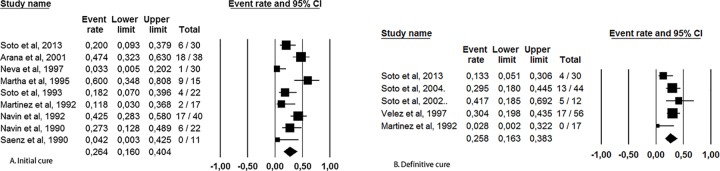
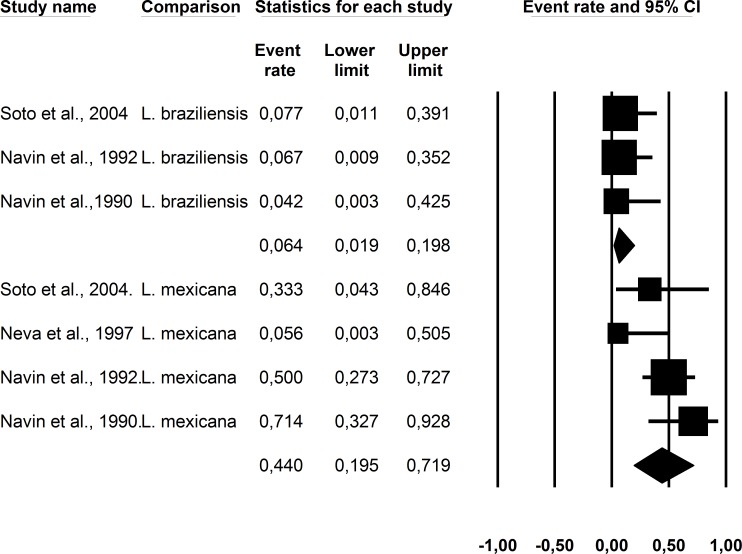
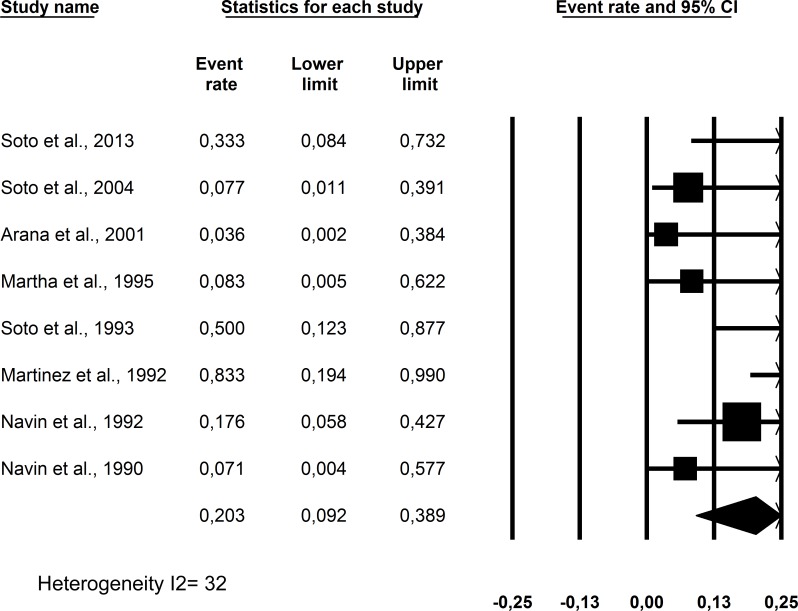
Results: Thirteen studies of a total of 352 patients were ultimately included in this review. The summarized global cure rates for all Leishmania species according to the intention-to-treat analyses performed at approximately three ("initial cure") and nine ("definitive cure") months after "no treatment" or placebo use were 26% (CI95%: 16 to 40%) and 26% (CI95%:16 to 38%), respectively. Notably, a significantly lower cure rate was observed for L. braziliensis infection (6.4%, CI95%:0.2 to 20%) than for L. mexicana infection (44%, CI95%:19 to 72%), p = 0.002. Of note, relapse occurred in 20% of patients with initial healing (CI95%:9.2 to 38.9%).
Conclusion: These results clearly demonstrate a low spontaneous cure rate following no-treatment or placebo use, confirming that this strategy for the control group in CL studies expose patients to greater morbidity, especially for CL caused by L. braziliensis. Therefore, from this point, the crucial question to consider regarding placebo use is the seriousness of the suffering caused by this disease.
Conflict of interest statement
Figures
References
-
- World Health Organization (WHO). Report of the Fifth Consultatve Meeting on HIVLeishmania Co-infection. Addis Ababa, 20–22 March 2007. Available: http://www.who.int/leishmaniasis/resources/Leishmaniasis_hiv_coinfection...
Publication types
MeSH terms
Substances
LinkOut - more resources
Full Text Sources
Other Literature Sources
