


Mechanisms of Bacterial (Serratia marcescens) Attachment to, Migration along, and Killing of Fungal Hyphae
- PMID: 26896140
- PMCID: PMC4836416
- DOI: 10.1128/AEM.04070-15
Mechanisms of Bacterial (Serratia marcescens) Attachment to, Migration along, and Killing of Fungal Hyphae
Abstract
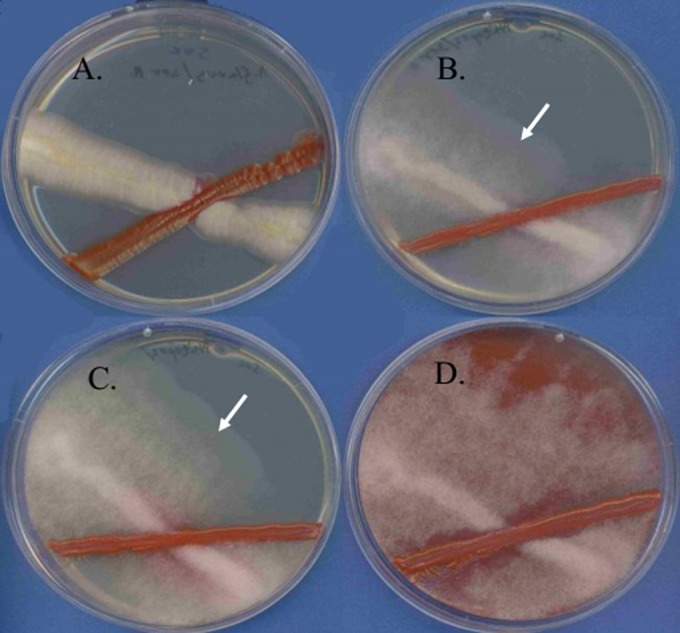
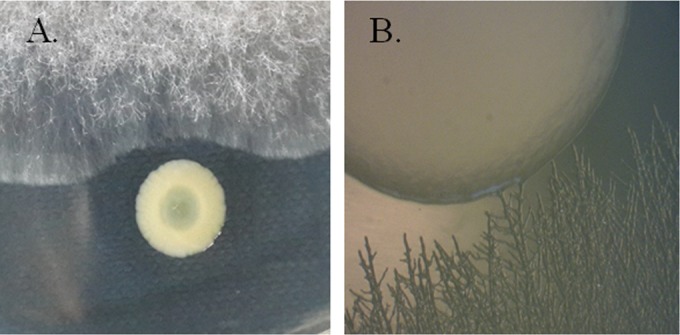
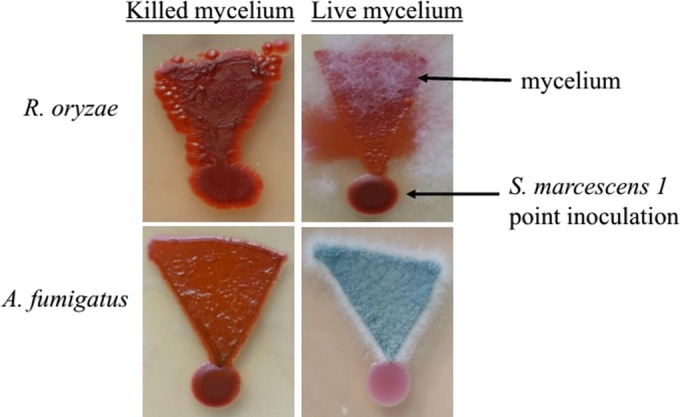
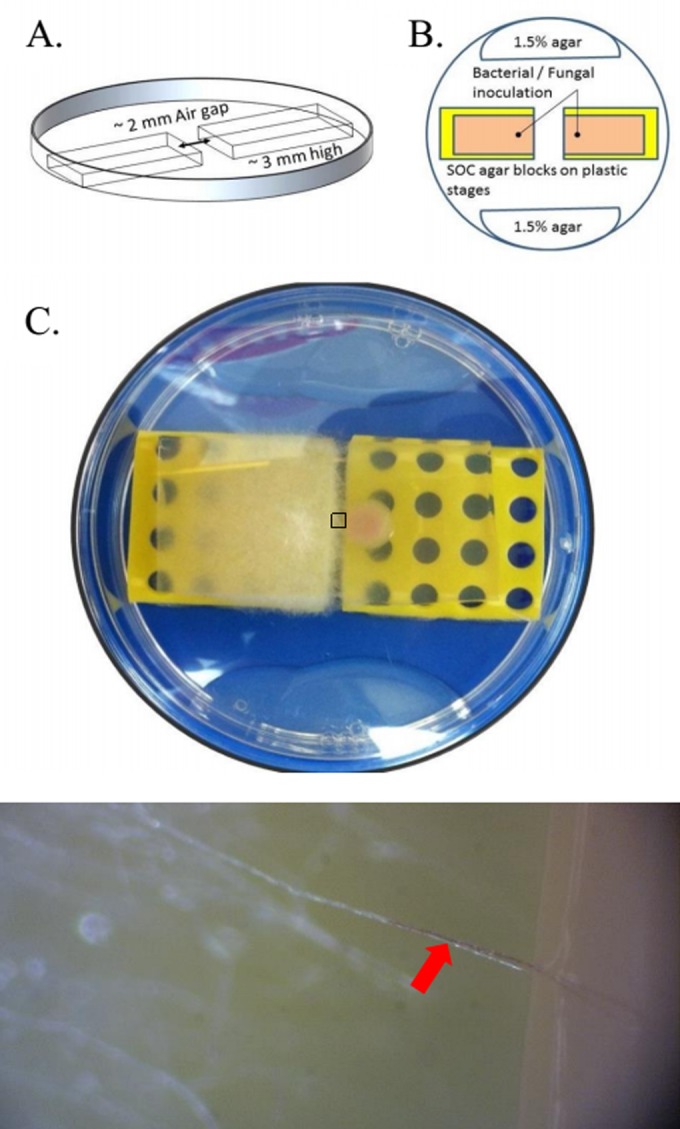
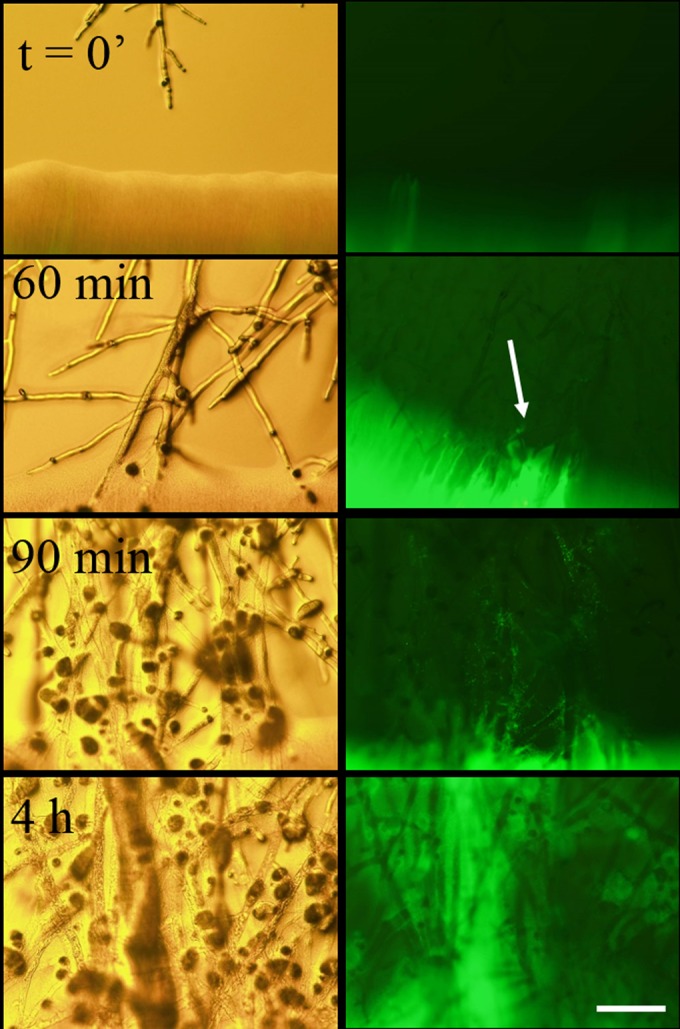
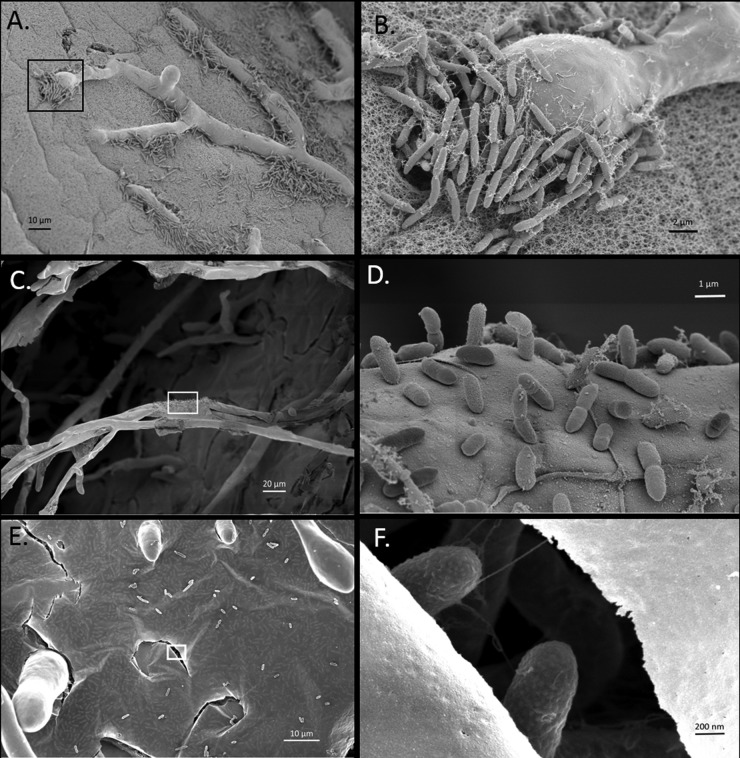
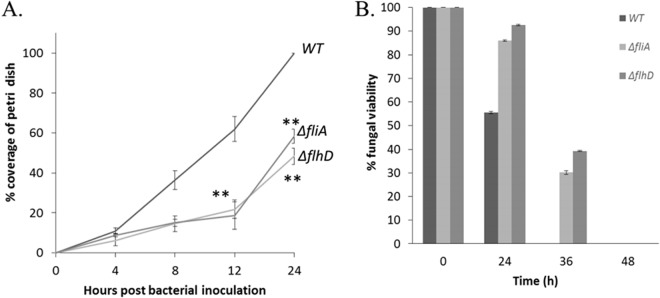
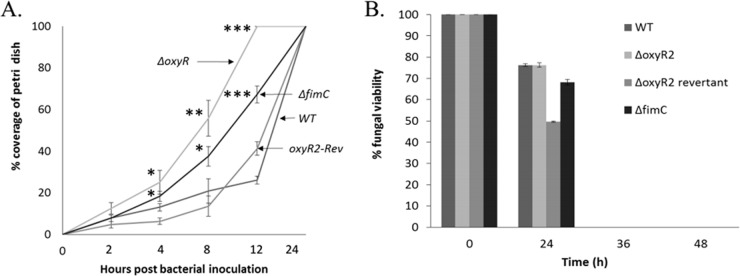
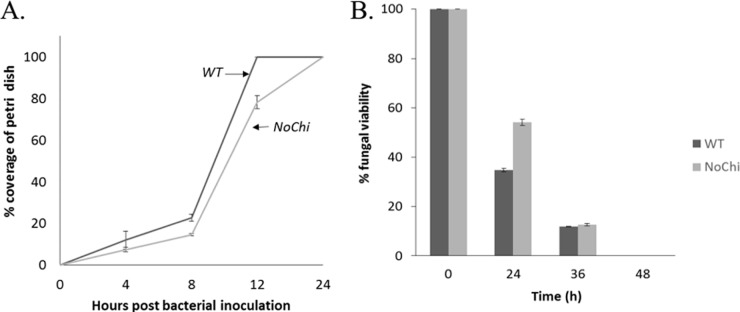
We have found a remarkable capacity for the ubiquitous Gram-negative rod bacterium Serratia marcescens to migrate along and kill the mycelia of zygomycete molds. This migration was restricted to zygomycete molds and several basidiomycete species. No migration was seen on any molds of the phylum Ascomycota. S. marcescens migration did not require fungal viability or surrounding growth medium, as bacteria migrated along aerial hyphae as well.S. marcescens did not exhibit growth tropism toward zygomycete mycelium. Bacterial migration along hyphae proceeded only when the hyphae grew into the bacterial colony. S. marcescens cells initially migrated along the hyphae, forming attached microcolonies that grew and coalesced to generate a biofilm that covered and killed the mycelium. Flagellum-defective strains of S. marcescens were able to migrate along zygomycete hyphae, although they were significantly slower than the wild-type strain and were delayed in fungal killing. Bacterial attachment to the mycelium does not necessitate type 1 fimbrial adhesion, since mutants defective in this adhesin migrated equally well as or faster than the wild-type strain. Killing does not depend on the secretion of S. marcescens chitinases, as mutants in which all three chitinase genes were deleted retained wild-type killing abilities. A better understanding of the mechanisms by which S. marcescens binds to, spreads on, and kills fungal hyphae might serve as an excellent model system for such interactions in general; fungal killing could be employed in agricultural fungal biocontrol.
Copyright © 2016, American Society for Microbiology. All Rights Reserved.
Figures
References
-
- Furuno S, Pazolt K, Rabe C, Neu TR, Harms H, Wick LY. 2010. Fungal mycelia allow chemotactic dispersal of polycyclic aromatic hydrocarbon-degrading bacteria in water-unsaturated systems. Environ Microbiol 12:1391–1398. - PubMed
Publication types
MeSH terms
Substances
Grants and funding
LinkOut - more resources
Full Text Sources
Other Literature Sources
Medical
