Review
. 2016 Aug:40:1-8.
doi: 10.1016/j.copbio.2016.02.001. Epub 2016 Feb 18.

Biomaterials for enhancing anti-cancer immunity

Affiliations
Review

Biomaterials for enhancing anti-cancer immunity

Sandeep T Koshy et al. Curr Opin Biotechnol. 2016 Aug.

Abstract

Cancer immunotherapy is becoming a standard approach to treat many cancers. However, shortcomings of current methods limit therapeutic benefit in many patients. Rationally designed biomaterial strategies to deliver immune modulatory drugs can potentially show improved safety profiles, while providing multifunctional and spatiotemporally controlled signals to immune cells to improve their anti-cancer activity. This brief review describes biomaterials-based strategies that enhance immune cell function at various tissue sites to improve anti-cancer immunity. Continued collaboration between bioengineers, immunologists, industry, and clinicians is required for biomaterial-based immunotherapy strategies to continue moving to the clinic.


Figures

Figure 1
Figure 1. Examples of biomaterial-based cancer immunotherapy strategies at various tissue sites
i) Scaffolds delivered to peripheral tissues can be used as niches to program immune cell function. ii) Lymph node-draining nanoparticles (NPs) can efficiently traffic vaccine components to lymph nodes. (iii) Immune cells modified with drug-releasing nanoparticles can show enhanced function in the tumor microenvironment.
Figure 2
Figure 2. Porous scaffolds for dendritic cell programming in the periphery
A subcutaneously-delivered porous biomaterial scaffold that releases a chemoattractant recruits naïve dendritic cells (DCs) into its void space. Scaffold-resident DCs are exposed to tumor antigens and adjuvants, resulting in increased presentation of peptides on major histocompatibility complex (MHC-peptide) and phenotypic maturation. Mature DCs traffic out of the scaffold to lymph nodes where they can stimulate anti-tumor immunity.
Figure 3
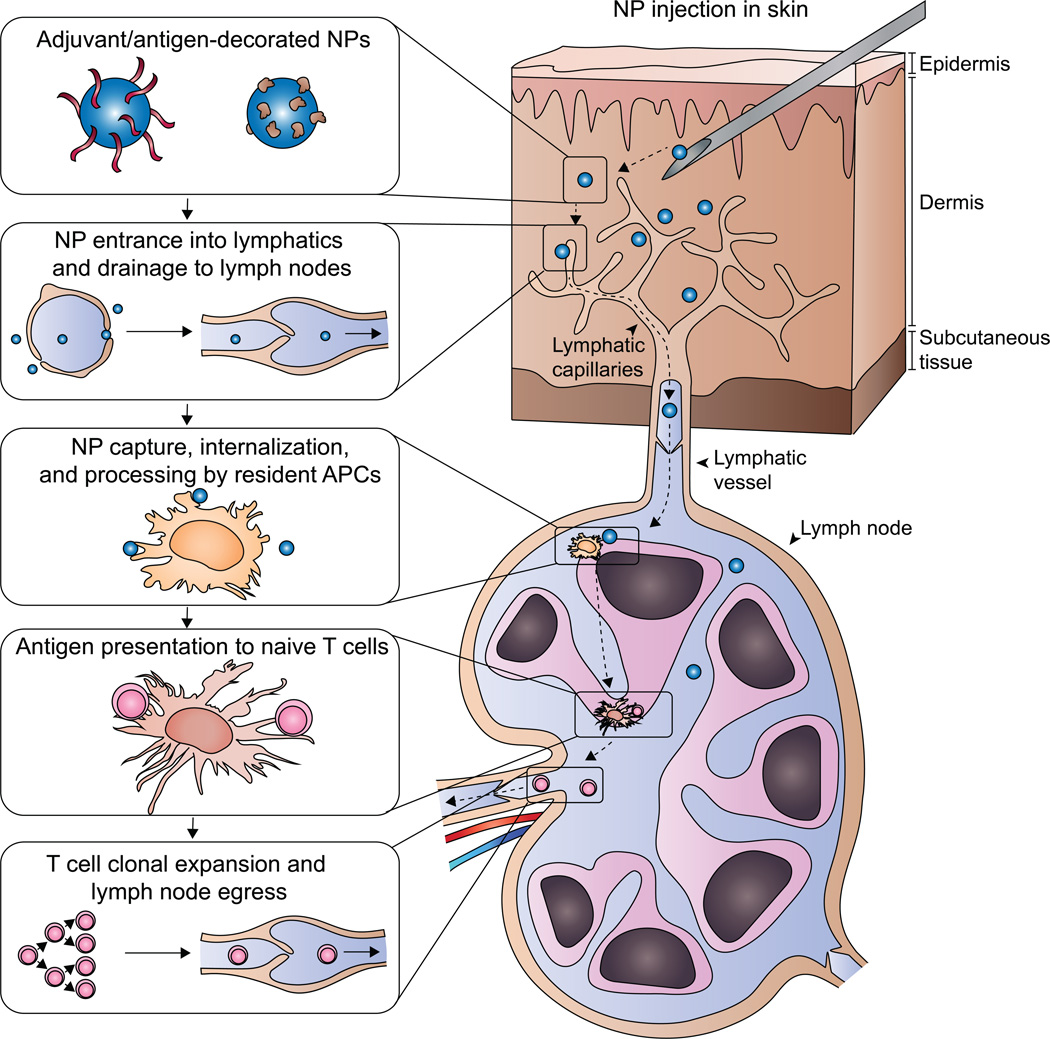
Figure 3. Lymph-node draining nanoparticles for improved vaccine delivery
Nanoparticles (NPs) are decorated with tumor antigens and adjuvants. After injection in the skin, NPs of the appropriate physical properties enter into lymphatic capillaries and drain to the lymph node. Resident antigen presenting cells (APCs) efficiently take up and process the NPs and present tumor antigens to naïve T cells. Stimulation of naïve anti-tumor T cell clones by their cognate antigen results in clonal expansion and trafficking out of the lymph node to the tumor site.
Figure 4
Figure 4. Modulating T cell and dendritic cell function in the tumor microenvironment
A) Adoptively transferred T cells can have drug-releasing nanoparticles (NPs) conjugated to their cell membrane. Local release of inhibitors of T cell suppressive pathways by the NPs can provide autocrine signaling that improves T cell activity in the tumor microenvironment (TME). B) Nanoparticles decorated with dendritic cell (DC)-stimulating ligands can convert tumor-antigen loaded DCs in the TME from an immature state to a mature phenotype capable of stimulating anti-tumor T cells.

References

    1. Schreiber RD, Old LJ, Smyth MJ. Cancer Immunoediting: Integrating Immunity’s roles in cancer suppression and promotion. Science. 2011;331:1565–1570. - PubMed
    1. Mellman I, Coukos G, Dranoff G. Cancer immunotherapy comes of age. Nature. 2011;480:480–489. - PMC - PubMed
    1. Sharma P, Allison J. Immune checkpoint targeting in cancer therapy: toward combination strategies with curative potential. Cell. 2015;161:205–214. - PMC - PubMed
    1. Topalian S, Drake C, Pardoll D. Immune checkpoint blockade: a common denominator approach to cancer therapy. Cancer Cell. 2015;27:450–461. - PMC - PubMed
    1. Rosenberg SA, Restifo NP. Adoptive cell transfer as personalized immunotherapy for human cancer. Science. 2015;348:62–68. - PMC - PubMed

MeSH terms

Substances