


Intimate partner violence and HIV-positive women's non-adherence to antiretroviral medication for the purpose of prevention of mother-to-child transmission in Lusaka, Zambia
- PMID: 26896876
- PMCID: PMC4788551
- DOI: 10.1016/j.socscimed.2016.02.011
Intimate partner violence and HIV-positive women's non-adherence to antiretroviral medication for the purpose of prevention of mother-to-child transmission in Lusaka, Zambia
Abstract
Background: Prevention of mother-to-child transmission (PMTCT) depends critically on HIV-positive women's adherence to antiretroviral drugs during and after pregnancy. Adherence among pregnant and breastfeeding women remains a challenge across sub-Saharan Africa. Power dynamics within couples, such as intimate partner violence, has largely been neglected in research regarding PMTCT adherence.
Objective: This study aims to determine if there is a relationship between intimate partner violence and non-adherence to PMTCT.
Methods: In 2014, using a verbally administered cross-sectional survey at a large public health clinic in Lusaka, Zambia, 320 HIV-positive postpartum women, who were currently married or living with a man, provided information on their drug adherence during and after pregnancy, as well as relationship dynamics. Adherence was defined as the woman reporting she took or gave to the infant at least 80% of prescribed medication doses.
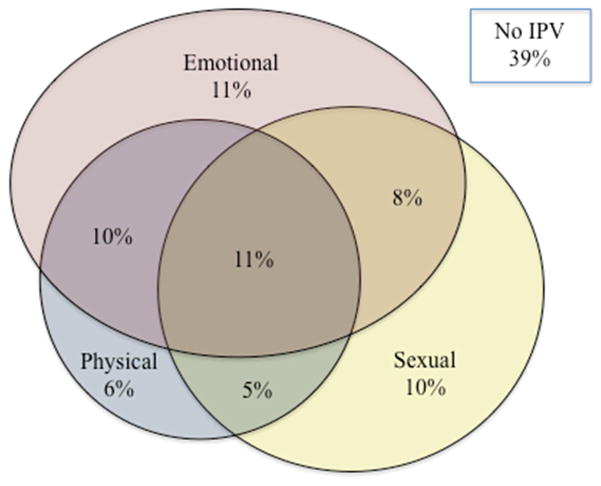
Results: Experiencing intimate partner violence was associated with decreased odds of adherence to PMTCT during and after pregnancy. Different forms of violence affected PMTCT adherence differentially. Physical violence had a less pronounced effect on non-adherence than emotional and sexual violence. A dose-response relationship between intimate partner violence and non-adherence was also observed.
Conclusions: Intimate partner violence is associated with non-adherence to PMTCT during and after pregnancy, which deserves increased attention in the effort to eliminate mother-to-child transmission of HIV.
Keywords: Antiretroviral adherence; HIV; Intimate partner violence; Prevention of mother-to-child transmission; Sub-Saharan Africa; Zambia.
Copyright © 2016 Elsevier Ltd. All rights reserved.
Figures
References
-
- Abramsky T, Watts CH, Garcia-Moreno C, Devries K, Kiss L, Ellsberg M, … Heise L. What factors are associated with recent intimate partner violence? findings from the WHO multi-country study on women’s health and domestic violence. BMC Public Health. 2011;11:109. doi: 10.1186/1471-2458-11-109. - DOI - PMC - PubMed
-
- Besser M. Preventing mother-to-child HIV transmission in Africa using new paradigms in health care delivery. 2010 Retrieved from http://www.m2m.org/media/publications.html.
Publication types
MeSH terms
Substances
Grants and funding
LinkOut - more resources
Full Text Sources
Other Literature Sources
Medical
