


Phytotherapeutic interventions in the management of biochemically recurrent prostate cancer: a systematic review of randomised trials
- PMID: 26898239
- PMCID: PMC8631186
- DOI: 10.1111/bju.13361
Phytotherapeutic interventions in the management of biochemically recurrent prostate cancer: a systematic review of randomised trials
Abstract
Objective: To evaluate the evidence from randomised trials for the efficacy and safety of phytotherapeutic interventions in the management of biochemically recurrent (BCR) prostate cancer, indicated by prostate-specific antigen (PSA) progression, numbers progressing to/time to initiation of androgen-deprivation therapy or salvage therapy.
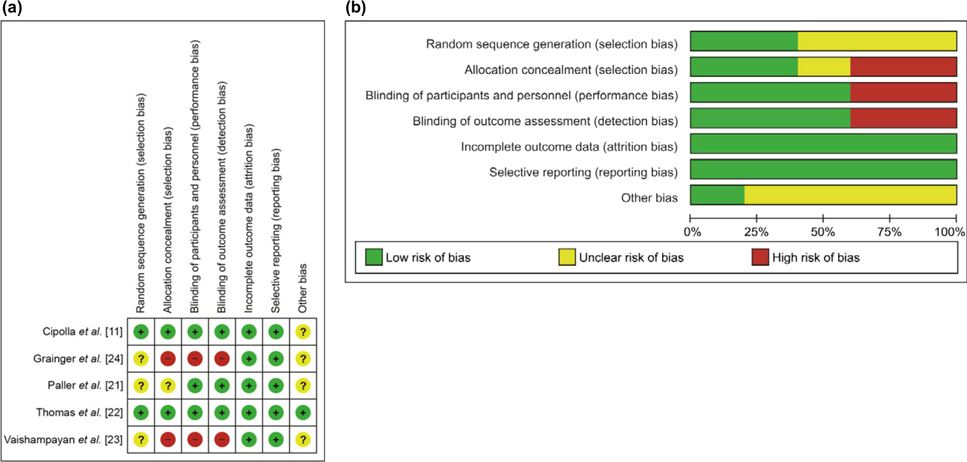
Patients and methods: MEDLINE (Ovid), EMBASE (Ovid), AMED (Ovid), CINAHL (EBSCO) and the Cochrane Library databases were searched. Clinical trials investigating phytotherapeutic interventions as dietary supplements or dietary components, including multi-component herbal formulations, in men with BCR prostate cancer were located. Eight of nine authors contacted for further information responded. Methodological quality was assessed using the Cochrane Collaboration's risk of bias assessment tool. The Preferred Reporting Items for Systematic Reviews and Meta-Analyses (PRISMA) statement for reporting systematic reviews was followed.
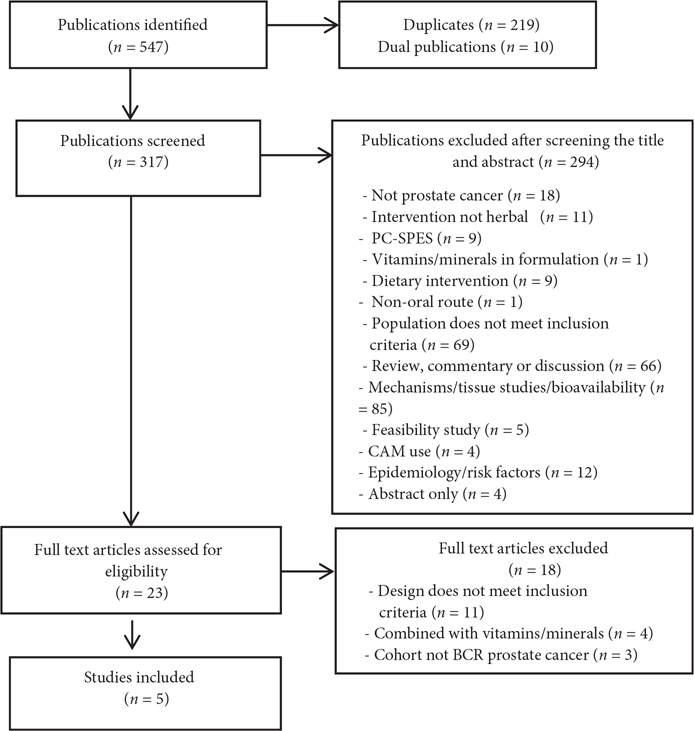
Results: Of 23 full-text articles assessed for eligibility, five met the criteria for inclusion. Two studies were placebo controlled; two were active control trials; and one a high-/low-dose trial. The interventions were administered as isolated phytochemicals (sulphoraphane), phytotherapeutic extracts [Pomi-T (pomegranate, turmeric, green tea and broccoli sprout extract), soy, lycopene, and POMx (pomegranate extract)], or plant-derived dietary items (soy and lycopene). All studies found serum PSA levels to stabilise, decrease or rise more slowly in a significant number of men, and three studies reported stabilising or lengthening of PSA-doubling time. Studies were generally of good quality, but sample sizes were predominantly small, and durations short.
Conclusions: High-quality studies in this area are lacking. Sulphoraphane, lycopene, soy isoflavones, POMx, and Pomi-T are safe and well tolerated. There is limited evidence that they can affect PSA dynamics. No recommendation can be made for the use of these agents in managing prostate cancer morbidity and mortality until high-quality, fully powered studies are available. Recommendations are made for improving reproducibility and translation of findings with regard to study population, study endpoints, design, and the reporting of phytotherapeutic interventions.
Keywords: biochemical recurrence; clinical trials; herbal medicine; phytotherapy; prostate cancer; systematic review.
© 2016 The Authors BJU International © 2016 BJU International Published by John Wiley & Sons Ltd.
Conflict of interest statement
Conflict of Interest
Prof. Kerry Bone works as a consultant director of Research and Development for MediHerb (Integria) Australia, manufacturers of herbal medicines. He and Dr Diana van Die are in-laws.
Figures
References
-
- Klotz LH. PSA recurrence: definitions, PSA kinetics, and identifying patients at risk. Can J Urol 2006; 13(Suppl. 2): 43–7 - PubMed
-
- Freedland SJ, Humphreys EB, Mangold LA et al. Risk of prostate cancer-specific mortality following biochemical recurrence after radical prostatectomy. JAMA 2005; 294: 433–9 - PubMed
Publication types
MeSH terms
Substances
Grants and funding
LinkOut - more resources
Full Text Sources
Other Literature Sources
Medical
Research Materials
Miscellaneous
