


Dentinal Tubule Penetration of Tricalcium Silicate Sealers
- PMID: 26898564
- PMCID: PMC4803520
- DOI: 10.1016/j.joen.2015.12.012
Dentinal Tubule Penetration of Tricalcium Silicate Sealers
Abstract
Introduction: The treatments for which mineral trioxide aggregate (MTA)-based materials can be used in dentistry are expanding. Smaller particle size and easier handling properties have allowed the advent of tricalcium silicate sealers including EndoSequence BC Sealer (Brasseler USA, Savannah, GA), QuickSet2 (Avalon Biomed, Bradenton, FL), NeoMTA Plus (Avalon Biomed), and MTA Fillapex (Angelus, Londrina, Brazil). The objective of this study was to measure the tubule penetration with these sealers using continuous wave (CW) and single-cone (SC) obturation techniques.
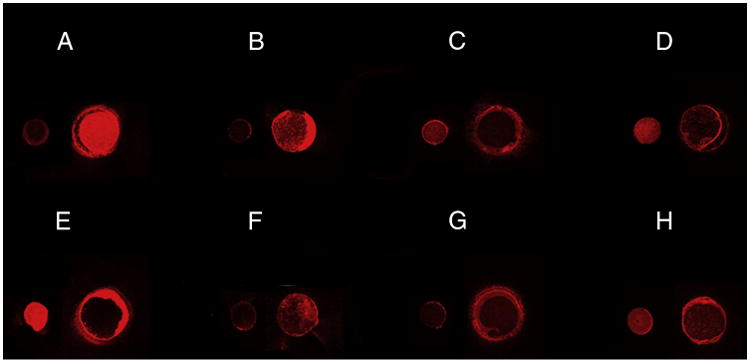
Methods: Eighty single-rooted teeth were randomly divided into 8 groups of 10 and obturated with 1 of the previously mentioned sealers mixed with trace amounts of rhodamine using either the CW or SC technique. Teeth were sectioned at 1 mm and 5 mm from the apex and examined under a confocal laser microscope. The percentage of sealer penetration and the maximum sealer penetration were measured.
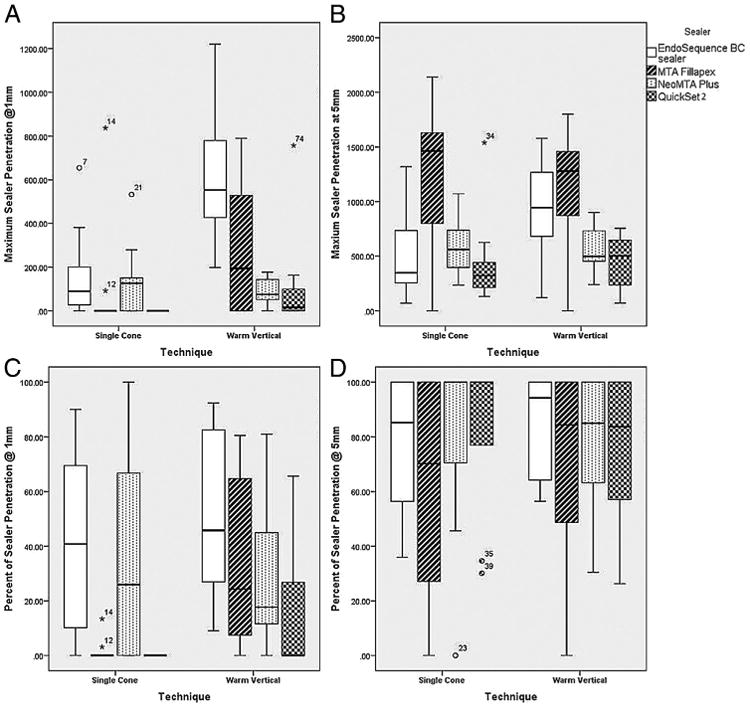
Results: The tricalcium silicate sealers penetrated tubules as deep as 2000 μm (2 mm). The percentage of sealer penetration was much higher 5 mm from the apex, with many specimens having 100% penetration for both SC and warm vertical techniques. MTA Fillapex, a resin-based sealer with less than 20% MTA particles, had significantly greater tubule penetration with a warm vertical technique versus the SC technique at the 1-mm level.
Conclusions: Within the limitations of this study, the CW and SC techniques produced similar tubule penetration at both the 1-mm and the 5-mm level with the tricalcium silicate sealers BC Sealer, QuickSet2, and NeoMTA Plus.
Keywords: BC Sealer; NeoMTA Plus; QuickSet2; tricalcium silicate sealers; tubule penetration.
Copyright © 2016 American Association of Endodontists. Published by Elsevier Inc. All rights reserved.
Conflict of interest statement
The authors deny any conflicts of interest related to this study.
Figures
References
-
- Parirokh M, Torabinejad M. Mineral trioxide aggregate: a comprehensive literature review–part III: clinical applications, drawbacks, and mechanism of action. J Endod. 2010;36:400–13. - PubMed
-
- Torabinejad M, Chivian N. Clinical applications of mineral trioxide aggregate. J Endod. 1999;25:197–205. - PubMed
-
- Camilleri J. Sealers and warm gutta-percha obturation techniques. J Endod. 2015;41:72–8. - PubMed
-
- DeLong C, He J, Woodmansey KF. The effect of obturation technique on the push-out bond strength of calcium silicate sealers. J Endod. 2015;41:385–8. - PubMed
Publication types
MeSH terms
Substances
Grants and funding
LinkOut - more resources
Full Text Sources
Other Literature Sources
Miscellaneous
