Inflammatory Bowel Disease
- PMID: 26900160
- PMCID: PMC4782273
- DOI: 10.3238/arztebl.2016.0072
Inflammatory Bowel Disease
Abstract
Background: Inflammatory bowel diseases are common in Europe, with prevalences as high as 1 in 198 persons (ulcerative colitis) and 1 in 310 persons (Crohn's disease).
Methods: This review is based on pertinent articles retrieved by a search in PubMed and in German and European guidelines and Cochrane reviews of controlled trials.
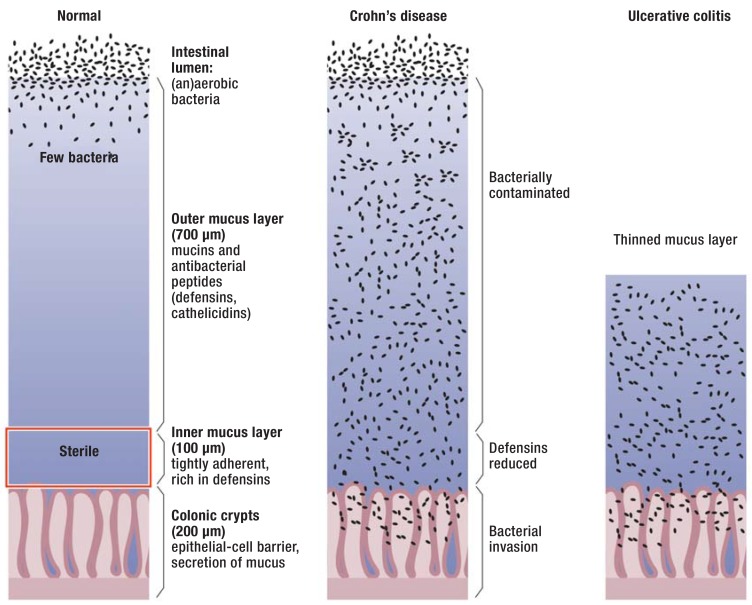
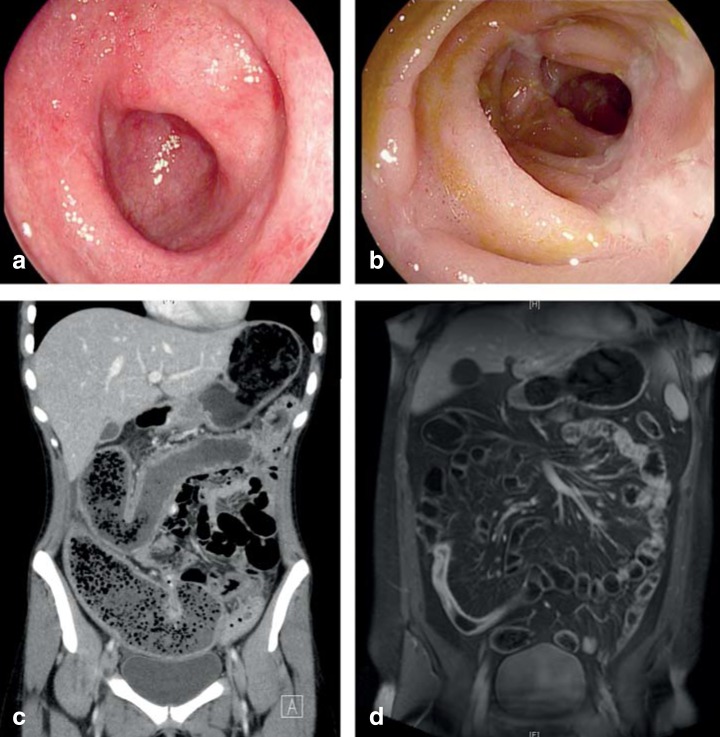
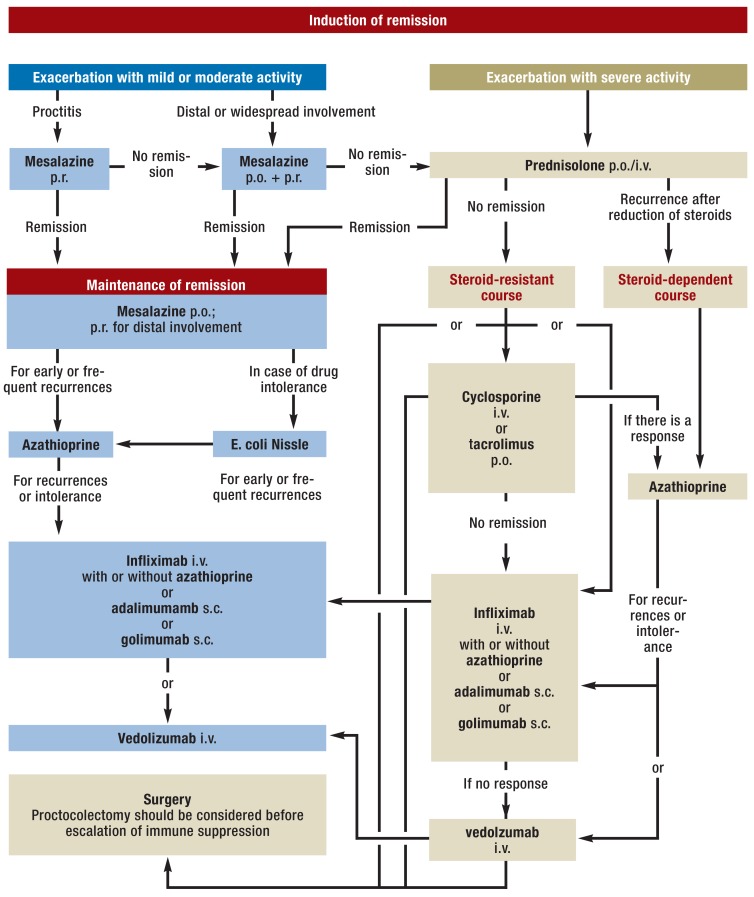
Results: Typically, the main clinical features of inflammatory bowel diseases are diarrhea, abdominal pain, and, in the case of ulcerative colitis, peranal bleeding. These diseases are due to a complex immunological disturbance with both genetic and environmental causes. A defective mucosal barrier against commensal bowel flora plays a major role in their pathogenesis. The diagnosis is based on laboratory testing, ultrasonography, imaging studies, and, above all, gastrointestinal endoscopy. Most patients with Crohn's disease respond to budesonide or systemic steroids; aminosalicylates are less effective. Refractory exacerbations may be treated with antibodies against tumor necrosis factor (TNF) or, more recently, antibodies against integrin, a protein of the cell membrane. In ulcerative colitis, aminosalicylates are given first; if necessary, steroids or antibodies against TNF-α or integrin are added. Maintenance therapy to prevent further relapses often involves immunosuppression with thiopurines and/or antibodies. Once all conservative treatment options have been exhausted, surgery may be necessary.
Conclusion: The treatment of chronic inflammatory bowel diseases requires individually designed therapeutic strategies and the close interdisciplinary collaboration of internists and surgeons.
Figures

Comment in
-
Psychosomatic Aspects.Dtsch Arztebl Int. 2016 Jul 1;113(26):462. doi: 10.3238/arztebl.2016.0462a. Dtsch Arztebl Int. 2016. PMID: 27412994 Free PMC article. No abstract available.
References
-
- Stange EF. Stuttgart: Schattauer Verlag; 2015. Entzündliche Darmerkrankungen.
-
- Molodecky NA, Soon IS, Rabi DM, et al. Increasing incidence and prevalence of the inflammatory bowel diseases with time, based on systematic review. Gastroenterology. 2012;142:46–54. - PubMed
-
- Preiss JC, Bokemeyer B, Buhr HJ, et al. Updated German clinical practice guideline on „Diagnosis and treatment of Crohn’s disease“. Z Gastroenterol. 2014;52:1431–1484. - PubMed
-
- Dignass A, Preiss JC, Aust DE, et al. Updated German guideline on diagnosis and treatment of ulcerative colitis. Z Gastroenterol. 2011;49:1276–1341. - PubMed
Publication types
MeSH terms
Substances
LinkOut - more resources
Full Text Sources
Other Literature Sources
Medical