. 2016 Feb 22;12(2):e1005880.
doi: 10.1371/journal.pgen.1005880. eCollection 2016 Feb.

Identification of Novel Candidate Genes for Early-Onset Colorectal Cancer Susceptibility

Affiliations

Identification of Novel Candidate Genes for Early-Onset Colorectal Cancer Susceptibility

Richarda M de Voer et al. PLoS Genet. .

Abstract

Approximately 25-30% of colorectal cancer (CRC) cases are expected to result from a genetic predisposition, but in only 5-10% of these cases highly penetrant germline mutations are found. The remaining CRC heritability is still unexplained, and may be caused by a hitherto-undefined set of rare variants with a moderately penetrant risk. Here we aimed to identify novel risk factors for early-onset CRC using whole-exome sequencing, which was performed on a cohort of CRC individuals (n = 55) with a disease onset before 45 years of age. We searched for genes that were recurrently affected by rare variants (minor allele frequency ≤ 0.001) with potentially damaging effects and, subsequently, re-sequenced the candidate genes in a replication cohort of 174 early-onset or familial CRC individuals. Two functionally relevant genes with low frequency variants with potentially damaging effects, PTPN12 and LRP6, were found in at least three individuals. The protein tyrosine phosphatase PTP-PEST, encoded by PTPN12, is a regulator of cell motility and LRP6 is a component of the WNT-FZD-LRP5-LRP6 complex that triggers WNT signaling. All variants in LRP6 were identified in individuals with an extremely early-onset of the disease (≤30 years of age), and two of the three variants showed increased WNT signaling activity in vitro. In conclusion, we present PTPN12 and LRP6 as novel candidates contributing to the heterogeneous susceptibility to CRC.


Conflict of interest statement

The authors have declared that no competing interests exist.

Figures
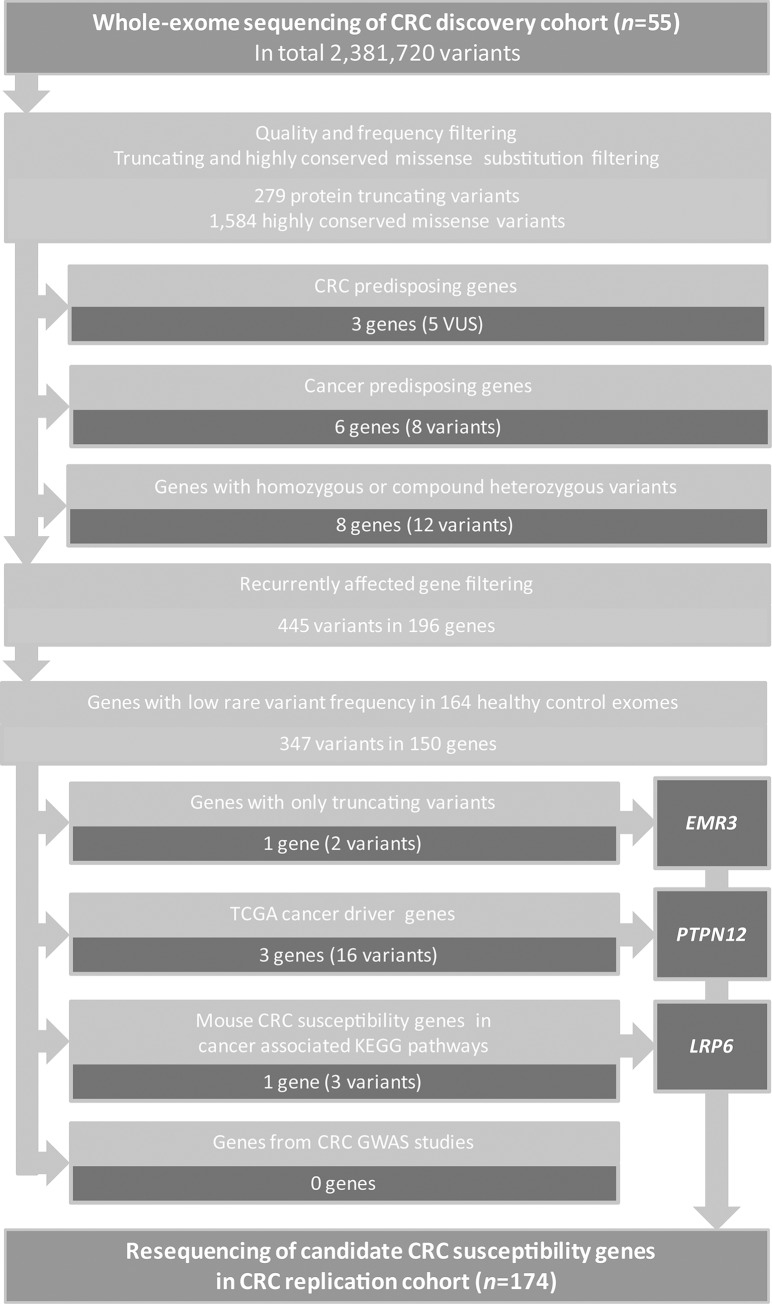
Fig 1
Fig 1. Study design, variant filtering and candidate gene prioritization.
Whole-exome sequencing was performed on germline DNA of 55 early-onset CRC cases. The exome data were first filtered for quality and frequency, followed by filtering for protein truncating and highly conserved missense variants. Next, we removed all known loss-of-function-tolerant genes from this list and searched for known and novel CRC predisposing gene variants.[12,13,57] An additional filtering was applied to identify genes that were affected by two or more potentially pathogenic variants and to remove genes that are frequently affected by protein-truncating or highly conserved missense variants in healthy controls. The remaining set of recurrent variants was filtered for (i) genes recurrently affected by protein truncating variants; (ii) cancer driver genes in CRC [23]; (iii) genes identified as CRC susceptibility genes in mice [29,30] and involved in cancer-related KEGG pathways [hsa04310 (WNT signaling), hsa04350 (TGF-beta signaling), hsa03430 (mismatch repair), hsa03410 (base excision repair), hsa03420 (nucleotide excision repair), map03450 (non-homologous end-joining), hsa03460 (Fanconi anemia), and hsa05200 (pathways in cancer)] (iv) genes identified in CRC GWAS studies [–7,32]. Genes that remained after these filter steps were selected for re-sequencing in a replication cohort of 174 CRC cases. CRC: colorectal cancer; VUS: variant of unknown significance.
Fig 2
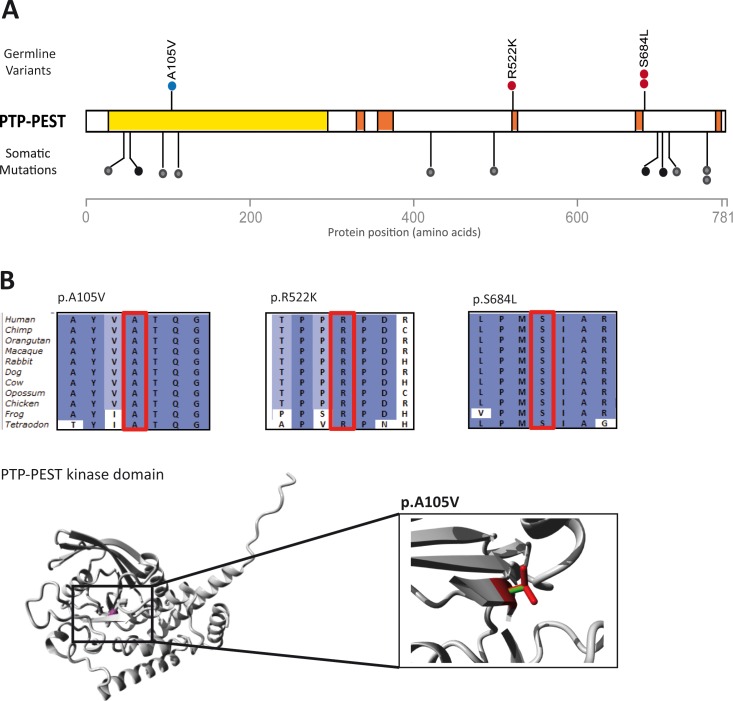
Fig 2. Rare variants in PTPN12 encoding PTP-PEST in four cases.
(A) Distribution of missense variants identified in the CRC discovery cohort (red dots) and CRC replication cohort (blue dots) in PTP-PEST. Somatic PTPN12 mutations identified in colorectal tumors [24] are indicated with black (missense) and green (protein truncating) dots. The kinase domain is shown in yellow and the proline-rich-regions are shown in orange. (B) Amino acid conservation of the three regions with missense variants (indicated with the red box) among 11 species, and the 3D protein structure of the kinase domain with the p.A105V variant. The close up shows the structural difference between the mutant (red) and wild-type (green) residue. The mutant residue at position 105 is bigger and may cause bumps during protein folding. The mutant residue at position 522 is smaller, which can result in loss of interactions. The mutant residue at position 684 is more hydrophobic than the wild-type residue, this may disturb correct protein folding.
Fig 3
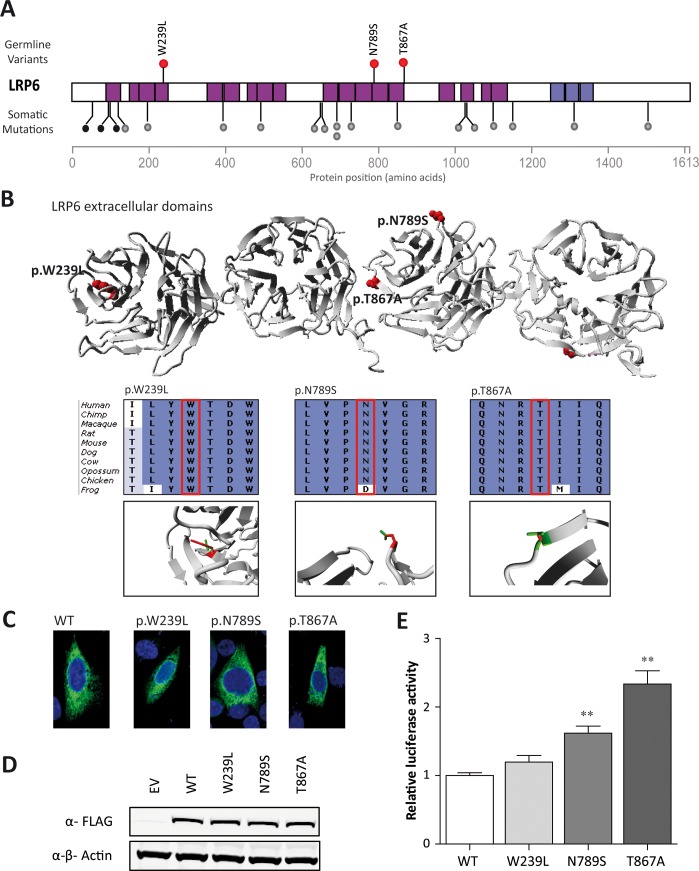
Fig 3. Rare variants in LRP6 in three cases.
(A) Distribution of missense LRP6 variants identified in the CRC discovery cohort (red dots). Somatic LRP6 mutations identified in colorectal tumors [24] are indicated with grey (missense) and black (protein truncating) dots. Structural domains include the β-propeller domains that are used to form the receptor complex (pink bars), and the transmembrane domain (purple). (B) 3D protein structure of the β-propeller domains of LRP6 with the positions of the identified missense variants in red. Insets show conservation of the region in which the missense variants (indicated with the red box) are located with, underneath, close ups of the local 3D protein structure with mutant (red) and wild-type (green) residues. The mutant residue at position 239 is predicted to disturb the protein structure (project HOPE; http://www.cmbi.ru.nl/hope/). The mutant residue at position 789 is much smaller than the wild-type residue and may disturb the binding of Dickkopf-1. Residue 867 is located on the surface of the protein and the mutant residues are not expected to disturb protein structure, but may influence protein binding. (C) Immunofluorescence analyses of LRP6 wild-type and mutant proteins showing similar subcellular localizations. (D) LRP6 protein expression levels normalized to β-actin are similar between wild-type and mutant LRP6. (E) TOPflash analyses of wild-type and mutant LRP6 to determine their effects on the WNT signaling pathway. Luciferase activity was normalized to control and wild-type constructs. Both p.N789S and p.T867A mutants reveal a significant increase in activation compared to the wild-type LRP6 protein. Experiments were performed three times in triplicate. **P <0.001; error bars represent the standard error of the mean.

References

    1. Lynch HT, de la Chapelle A. (2003) Hereditary colorectal cancer. N Engl J Med 348:919–932. - PubMed
    1. De la Chapelle A. (2004) Genetic predisposition to colorectal cancer. Nat Rev Cancer 4:769–780. - PubMed
    1. Weren RD, Ligtenberg MJ, Kets CM, de Voer RM, Verwiel ET, et al. (2015) A germline homozygous mutation in the base-excision repair gene NTHL1 causes adenomatous polyposis and colorectal cancer. Nat Genet. 47:668–671. 10.1038/ng.3287 - DOI - PubMed
    1. Palles C, Cazier JB, Howarth KM, Domingo E, Jones AM, et al. (2013) Germline mutations affecting the proofreading domains of POLE and POLD1 predispose to colorectal adenomas and carcinomas. Nat Genet 45:136–144. 10.1038/ng.2503 - DOI - PMC - PubMed
    1. Dunlop MG, Dobbins SE, Farrington SM, Jones AM, Palles C, et al. (2012) Common variation near CDKN1A, POLD3 and SHROOM2 influences colorectal cancer risk. Nat Genet 44:770–776. 10.1038/ng.2293 - DOI - PMC - PubMed

Publication types

MeSH terms

Substances