Clinical Trial
. 2016 Feb 22;11(2):e0150039.
doi: 10.1371/journal.pone.0150039. eCollection 2016.

The Effect of an Acute Bout of Moderate-Intensity Aerobic Exercise on Motor Learning of a Continuous Tracking Task

Affiliations
Clinical Trial

The Effect of an Acute Bout of Moderate-Intensity Aerobic Exercise on Motor Learning of a Continuous Tracking Task

Nicholas J Snow et al. PLoS One. .

Abstract

Introduction: There is evidence for beneficial effects of acute and long-term exercise interventions on several forms of memory, including procedural motor learning. In the present study we examined how performing a single bout of continuous moderate intensity aerobic exercise would impact motor skill acquisition and retention in young healthy adults, compared to a period of rest. We hypothesized that exercise would improve motor skill acquisition and retention, compared to motor practice alone.

Materials and methods: Sixteen healthy adults completed sessions of aerobic exercise or seated rest that were immediately followed by practice of a novel motor task (practice). Exercise consisted of 30 minutes of continuous cycling at 60% peak O2 uptake. Twenty-four hours after practice, we assessed motor learning with a no-exercise retention test (retention). We also quantified changes in offline motor memory consolidation, which occurred between practice and retention (offline). Tracking error was separated into indices of temporal precision and spatial accuracy.

Results: There were no differences between conditions in the timing of movements during practice (p = 0.066), at retention (p = 0.761), or offline (p = 0.966). However, the exercise condition enabled participants to maintain spatial accuracy during practice (p = 0.477); whereas, following rest performance diminished (p = 0.050). There were no significant differences between conditions at retention (p = 0.532) or offline (p = 0.246).

Discussion: An acute bout of moderate-intensity aerobic exercise facilitated the maintenance of motor performance during skill acquisition, but did not influence motor learning. Given past work showing that pairing high intensity exercise with skilled motor practice benefits learning, it seems plausible that intensity is a key modulator of the effects of acute aerobic exercise on changes in complex motor behavior. Further work is necessary to establish a dose-response relationship between aerobic exercise and motor learning.


Conflict of interest statement

Competing Interests: The authors have declared that no competing interests exist.

Figures

Fig 1
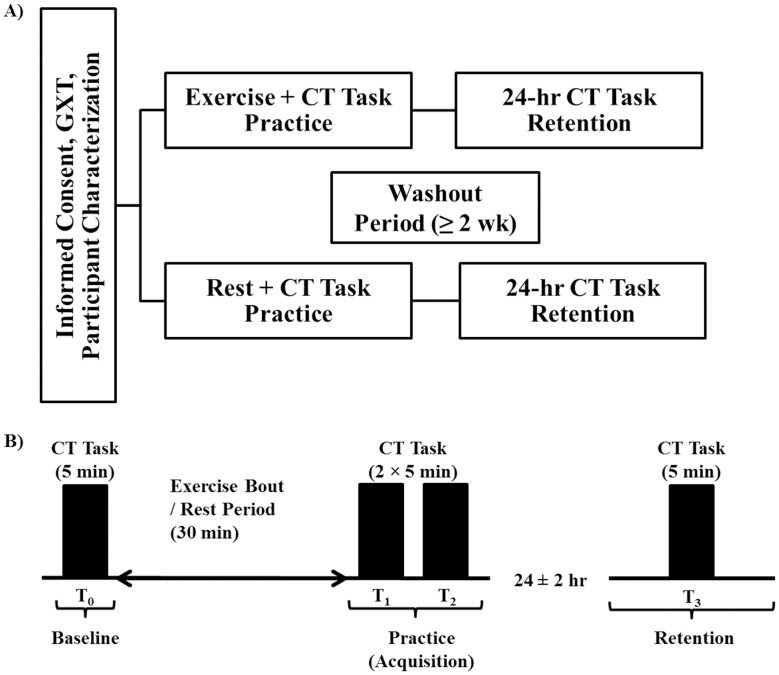
Fig 1. Diagrammatic representation of study design.
The present study utilized a crossover design with repeated measures. A) Participants provided informed consent, underwent a graded exercise test (GXT) to exhaustion, and completed several screening and characterization questionnaires during the first experimental session. Participants were then pseudo-randomized to two experimental conditions including moderate-intensity aerobic exercise (based on GXT results) or seated rest prior to continuous tracking (CT) task practice. The CT task practice sessions were each followed by no-exercise retention test 24 ± 2 hours later. Experimental conditions were separated by a washout period of ≥ 2 weeks. B) During CT task practice sessions participants completed a single 5-minute tracking block (10 × 30-second trials) at baseline (T0). Thereafter, participants completed either 30 minutes of moderate-intensity cycling or seated rest, followed by two consecutive 5-minute tracking blocks at T1 and T2. Performance on practice blocks was used to index motor skill acquisition. Twenty-four ± 2 hours later, a 5-minute retention test was used to assess motor skill learning (T3).
Fig 2
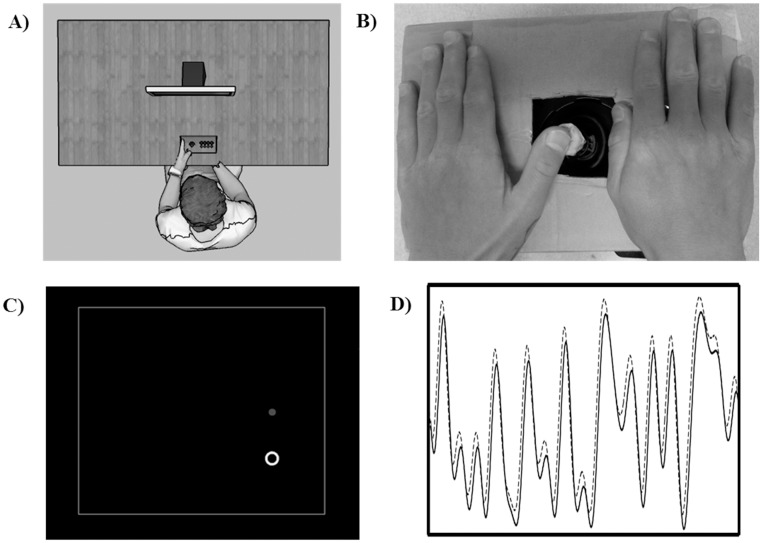
Fig 2. Schematic of the continuous tracking (CT) task used throughout study protocol.
A) Participants were seated at a desk, in front of a computer monitor. B) A modified joystick was manipulated via abduction and adduction movements of the non-dominant hand. C) Participants’ view of the target (white ring) and cursor (red dot) presented on the computer monitor during CT task performance. D) A sample waveform used during a single CT task trial (30 seconds). The solid line represents a sample target sequence, whereas the dashed line depicts a participant’s movement trajectory during target tracking.
Fig 3
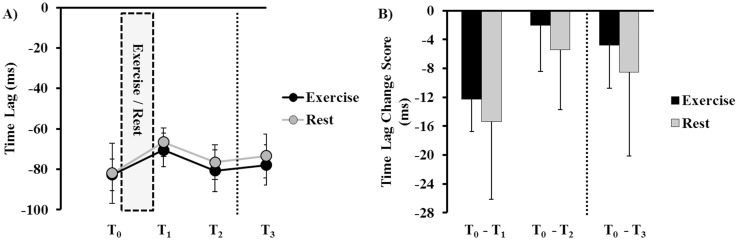
Fig 3. Temporal precision (time lag) performance on the continuous tracking (CT) task.
A) Raw time lag values at baseline (T0), acquisition (T1, T2), and retention (T3) under exercise (black line) and rest (grey line) conditions. Less negative time lag values indicate greater temporal precision. The inlaid box represents the 30-minute exercise bout or rest period. B) Time lag change scores between baseline, acquisition (T0-T1, T0-T2), and retention (T0-T3) blocks, under exercise (black bars) and rest (grey bars) conditions. More negative change scores indicate greater temporal precision. There was no significant difference between conditions during acquisition and retention measurements (p > 0.05). The vertical dotted lines in A and B represent the 24 ± 2 hours between CT practice and retention days. Error bars in A and B represent mean ± standard error of mean (SEM).
Fig 4
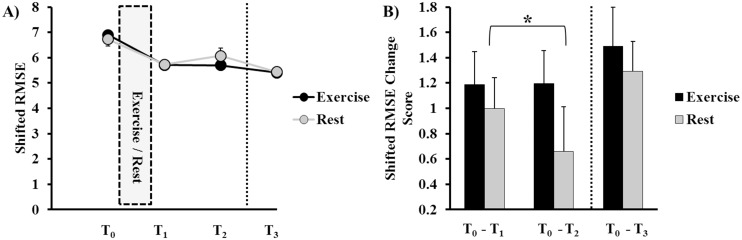
Fig 4. Spatial accuracy (shifted root-mean-square error [RMSE]) performance on the continuous tracking (CT) task.
A) Raw shifted RMSE values at baseline (T0), acquisition (T1, T2), and retention (T3) under exercise (black line) and rest (grey line) conditions. Smaller shifted RMSE values indicate greater spatial accuracy. The inlaid box represents the 30-minute exercise bout or rest period. B) Shifted RMSE change scores between baseline, acquisition (T0-T1, T0-T2), and retention (T0-T3) blocks, under exercise (black bars) and rest (grey bars) conditions. Greater change scores indicate greater spatial accuracy. Additionally, performance was significantly reduced from the first to the second acquisition block under the rest condition (p = 0.05). Spatial accuracy did not differ between conditions at retention (p > 0.05). The vertical dotted lines in A and B represent the 24 ± 2 hours between CT practice and retention days. Error bars in A and B represent mean ± standard error of mean (SEM).

References

    1. Krakauer JW. Motor learning: its relevance to stroke recovery and neurorehabilitation. Curr Opin Neurol. 2006;19: 84–90. 10.1097/01.wco.0000200544.29915.cc - DOI - PubMed
    1. Lambourne K, Tomporowski P. The effect of exercise-induced arousal on cognitive task performance: a meta-regression analysis. Brain Res. Elsevier B.V.; 2010;1341: 12–24. 10.1016/j.brainres.2010.03.091 - DOI - PubMed
    1. McMorris T, Hale BJ. Differential effects of differing intensities of acute exercise on speed and accuracy of cognition: A meta-analytical investigation. Brain Cogn. Elsevier Inc.; 2012;80: 338–351. 10.1016/j.bandc.2012.09.001 - DOI - PubMed
    1. Roig M, Nordbrandt S, Geertsen SS, Nielsen JB. The effects of cardiovascular exercise on human memory: a review with meta-analysis. Neurosci Biobehav Rev. Elsevier Ltd; 2013;37: 1645–66. 10.1016/j.neubiorev.2013.06.012 - DOI - PubMed
    1. McMorris T, Sproule J, Turner A, Hale BJ. Acute, intermediate intensity exercise, and speed and accuracy in working memory tasks: A meta-analytical comparison of effects. Physiol Behav. Elsevier Inc.; 2011;102: 421–428. 10.1016/j.physbeh.2010.12.007 - DOI - PubMed

Publication types