


Rural and remote care: Overcoming the challenges of distance
- PMID: 26902542
- PMCID: PMC5734598
- DOI: 10.1177/1479972316633414
Rural and remote care: Overcoming the challenges of distance
Abstract
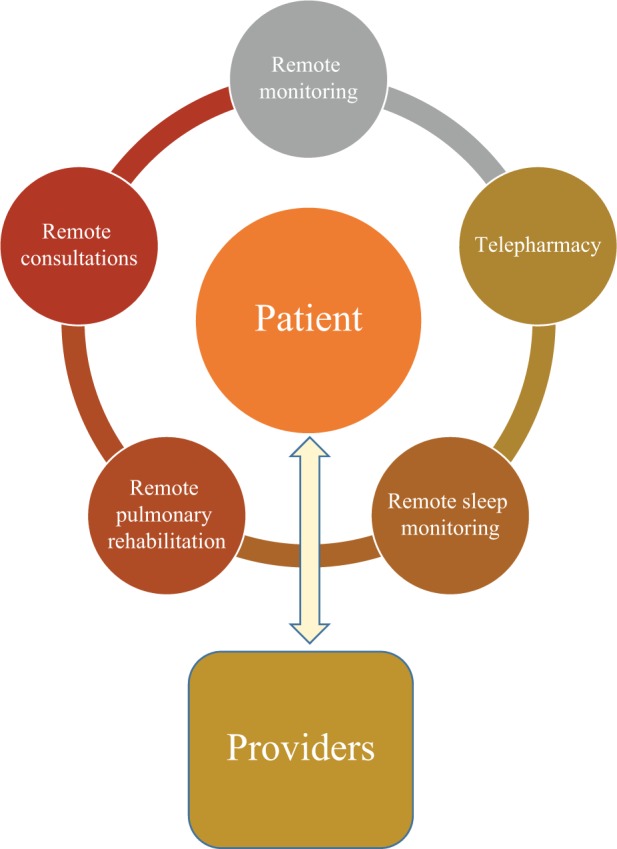
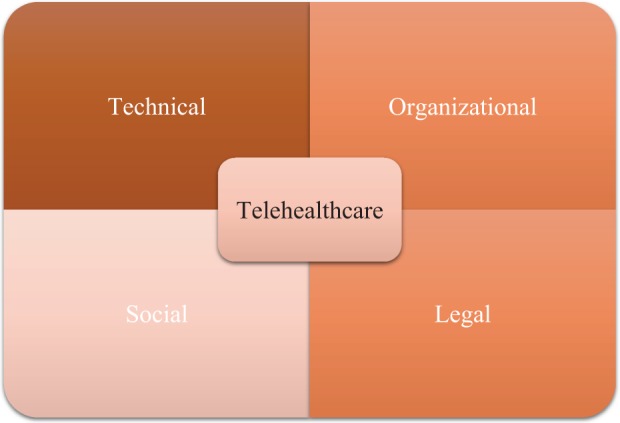
The challenges of providing quality respiratory care to persons living in rural or remote communities can be daunting. These populations are often vulnerable in terms of both health status and access to care, highlighting the need for innovation in service delivery. The rapidly expanding options available using telehealthcare technologies have the capacity to allow patients in rural and remote communities to connect with providers at distant sites and to facilitate the provision of diagnostic, monitoring, and therapeutic services. Successful implementation of telehealthcare programs in rural and remote settings is, however, contingent upon accounting for key technical, organizational, social, and legal considerations at the individual, community, and system levels. This review article discusses five types of telehealthcare delivery that can facilitate respiratory care for residents of rural or remote communities: remote monitoring (including wearable and ambient systems; remote consultations (between providers and between patients and providers), remote pulmonary rehabilitation, telepharmacy, and remote sleep monitoring. Current and future challenges related to telehealthcare are discussed.
Keywords: Telehealth; access to health care; remote; remote monitoring; rural.
© The Author(s) 2016.
Conflict of interest statement
Figures
References
-
- World Health Organization. Telemedicine: Opportunities and developments in member states, http://www.who.int/goe/publications/goe_telemedicine_2010.pdf (2010, accessed 9 September 2015).
-
- United Nations. Population Division. Population Facts, http://www.un.org/en/development/desa/population/publications/pdf/popfac... (2014, accessed 12 September 2015).
-
- Australian Institute of Health and Welfare. Rural, regional and remote health: a guide to remoteness classifications. Rural Health Series No. 4, http://www.aihw.gov.au/WorkArea/DownloadAsset.aspx?id=6442459567 (2004, accessed 30 August 2015).
-
- Slack E, Bourne LS, Gertler MS. Small, rural and remote communities: the anatomy of risk, http://www.law-lib.utoronto.ca/investing/reports/rp18.pdf (2003, accessed 10 August 2015).
Publication types
MeSH terms
LinkOut - more resources
Full Text Sources
Other Literature Sources
Medical
