


Water level changes affect carbon turnover and microbial community composition in lake sediments
- PMID: 26902802
- PMCID: PMC4821186
- DOI: 10.1093/femsec/fiw035
Water level changes affect carbon turnover and microbial community composition in lake sediments
Abstract
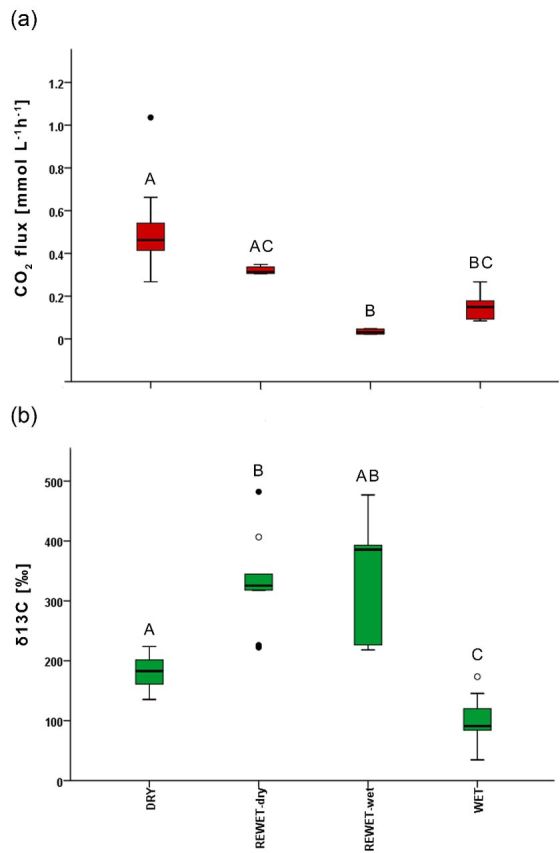
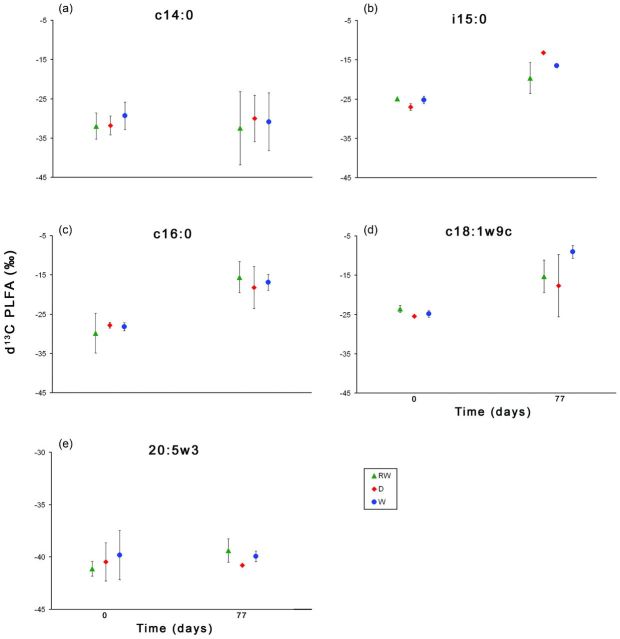
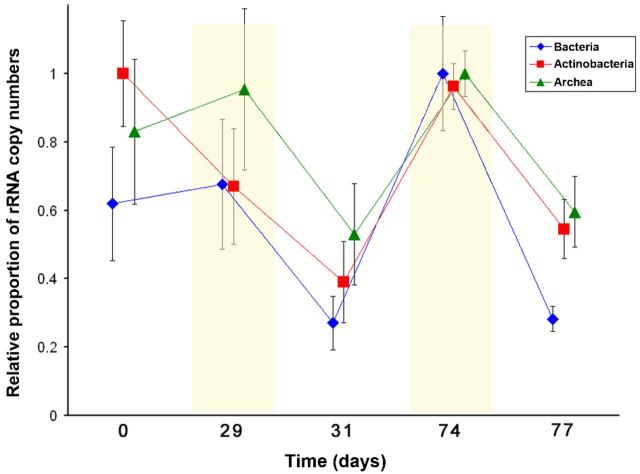
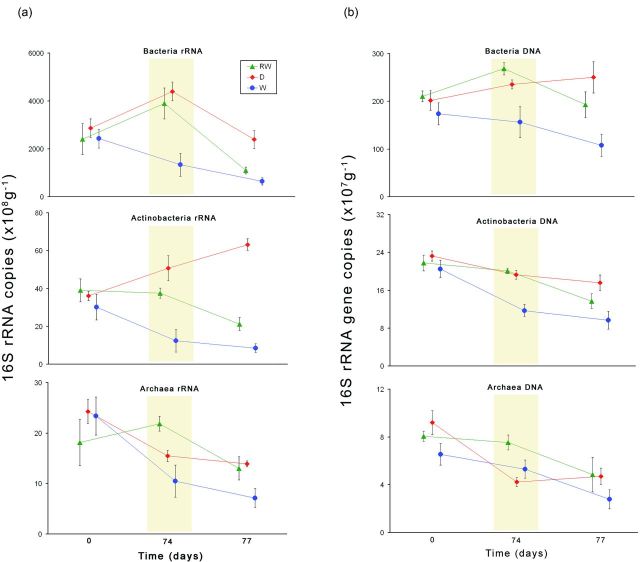
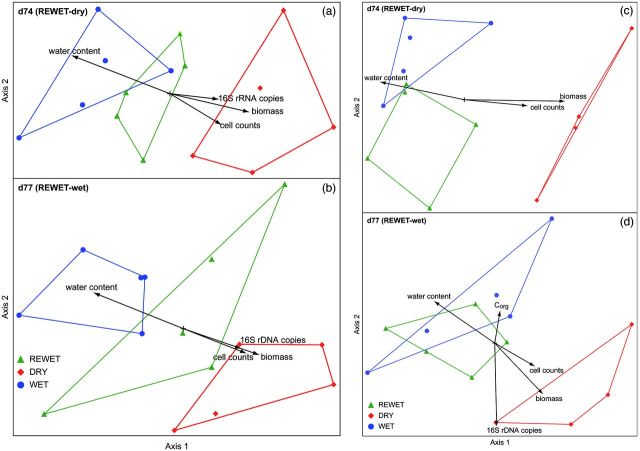
Due to climate change, many lakes in Europe will be subject to higher variability of hydrological characteristics in their littoral zones. These different hydrological regimes might affect the use of allochthonous and autochthonous carbon sources. We used sandy sediment microcosms to examine the effects of different hydrological regimes (wet, desiccating, and wet-desiccation cycles) on carbon turnover. (13)C-labelled particulate organic carbon was used to trace and estimate carbon uptake into bacterial biomass (via phospholipid fatty acids) and respiration. Microbial community changes were monitored by combining DNA- and RNA-based real-time PCR quantification and terminal restriction fragment length polymorphism (T-RFLP) analysis of 16S rRNA. The shifting hydrological regimes in the sediment primarily caused two linked microbial effects: changes in the use of available organic carbon and community composition changes. Drying sediments yielded the highest CO2 emission rates, whereas hydrological shifts increased the uptake of allochthonous organic carbon for respiration. T-RFLP patterns demonstrated that only the most extreme hydrological changes induced a significant shift in the active and total bacterial communities. As current scenarios of climate change predict an increase of drought events, frequent variations of the hydrological regimes of many lake littoral zones in central Europe are anticipated. Based on the results of our study, this phenomenon may increase the intensity and amplitude in rates of allochthonous organic carbon uptake and CO2 emissions.
Keywords: carbon dioxide emission; keeling plot; phospholipid fatty acids; stable isotope; water level changes.
© FEMS 2016.
Figures
References
-
- Attermeyer K, Hornick T, Kayler ZE, et al. Enhanced bacterial decomposition with increasing addition of autochthonous to allochthonous carbon without any effect on bacterial community composition. Biogeosciences. 2014;11:1479–89.
-
- Aufdenkampe AK, Mayorga E, Raymond PA, et al. Riverine coupling of biogeochemical cycles between land, oceans, and atmosphere. Front Ecol Environ. 2011;9:53–60.
-
- Becker R, Bubner B, Remus R, et al. Impact of multi-resistant transgenic Bt maize on straw decomposition and the involved microbial communities. Appl Soil Ecol. 2014;73:9–18.
-
- Billings WD, Luken JO, Mortensen DA, et al. Arctic Tundra – a source or sink for atmospheric carbon-dioxide in a changing environment. Oecologia. 1982;53:7–11. - PubMed
MeSH terms
Substances
LinkOut - more resources
Full Text Sources
Other Literature Sources
Molecular Biology Databases
Research Materials
