


Changes in Cannabis Potency Over the Last 2 Decades (1995-2014): Analysis of Current Data in the United States
- PMID: 26903403
- PMCID: PMC4987131
- DOI: 10.1016/j.biopsych.2016.01.004
Changes in Cannabis Potency Over the Last 2 Decades (1995-2014): Analysis of Current Data in the United States
Abstract
Background: Marijuana is the most widely used illicit drug in the United States and all over the world. Reports indicate that the potency of cannabis preparation has been increasing. This report examines the concentration of cannabinoids in illicit cannabis products seized by the U.S. Drug Enforcement Administration over the last 2 decades, with particular emphasis on Δ(9)-tetrahydrocannabinol and cannabidiol.
Methods: Samples in this report were received over time from materials confiscated by the Drug Enforcement Administration and processed for analysis using a validated gas chromatography with flame ionization detector method.
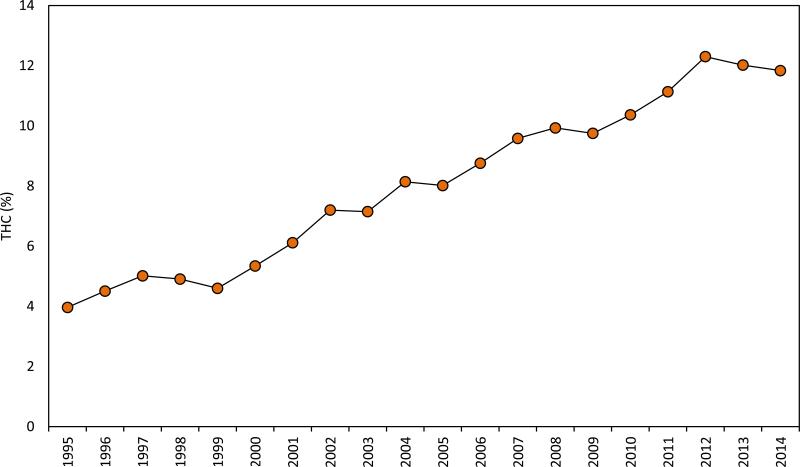
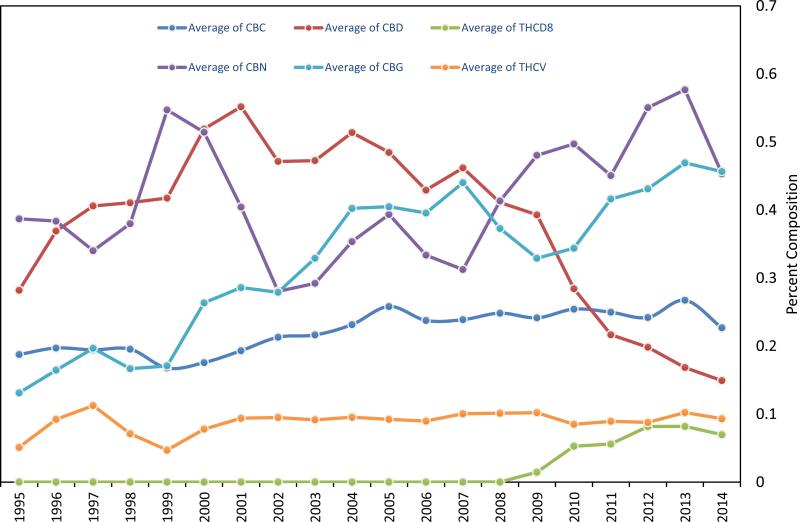
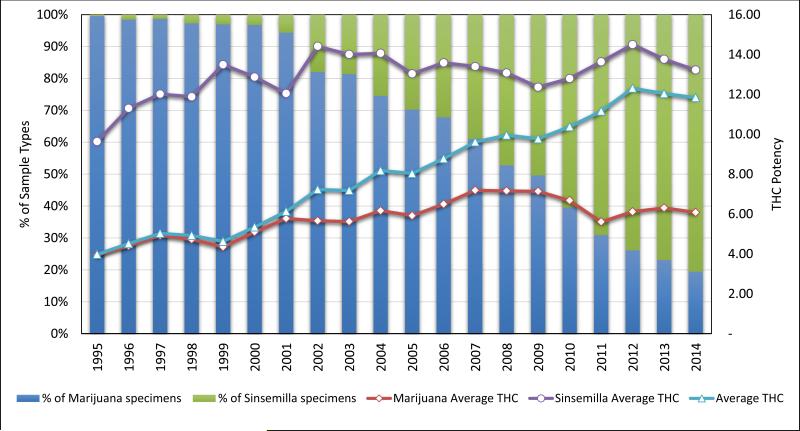
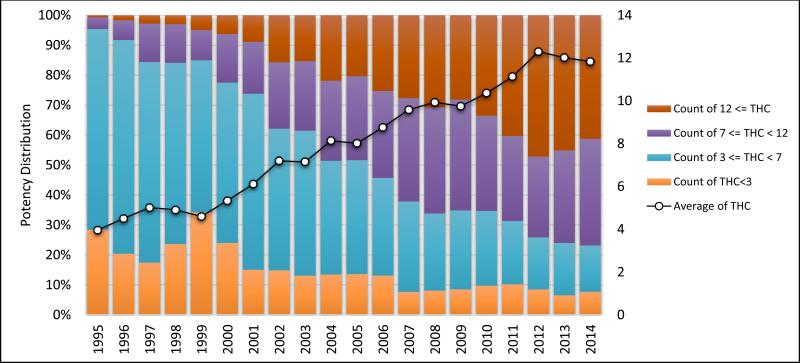
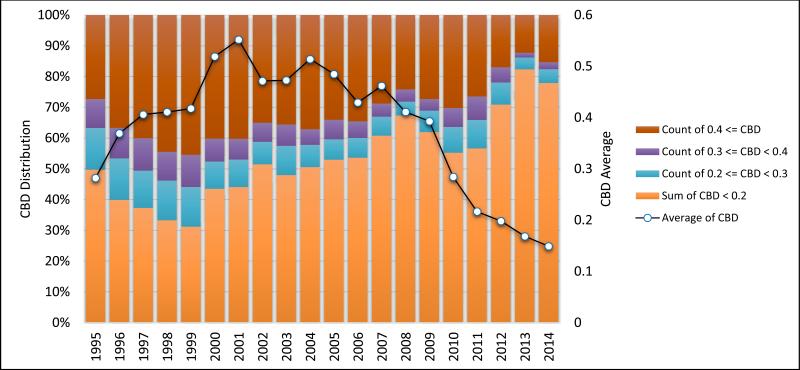
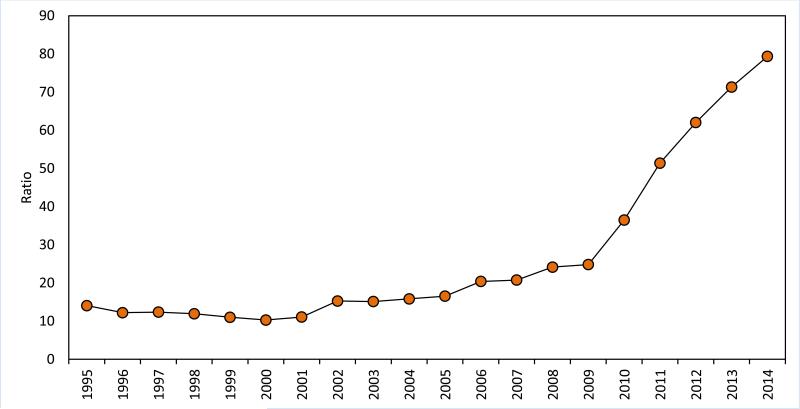
Results: Between January 1, 1995, and December 31, 2014, 38,681 samples of cannabis preparations were received and analyzed. The data showed that although the number of marijuana samples seized over the last 4 years has declined, the number of sinsemilla samples has increased. Overall, the potency of illicit cannabis plant material has consistently increased over time since 1995 from ~4% in 1995 to ~12% in 2014. The cannabidiol content has decreased on average from ~.28% in 2001 to <.15% in 2014, resulting in a change in the ratio of Δ(9)-tetrahydrocannabinol to cannabidiol from 14 times in 1995 to ~80 times in 2014.
Conclusions: There is a shift in the production of illicit cannabis plant material from regular marijuana to sinsemilla. This increase in potency poses higher risk of cannabis use, particularly among adolescents.
Keywords: CBD; Cannabinoids; Cannabis sativa; Gas chromatography with flame ionization detector; Potency; Δ(9)-THC.
Copyright © 2016 Society of Biological Psychiatry. Published by Elsevier Inc. All rights reserved.
Figures
Comment in
-
Commentary - Marijuana use during pregnancy and premature birth: A problem likely to worsen.J Neonatal Perinatal Med. 2020;13(1):1-3. doi: 10.3233/NPM-190403. J Neonatal Perinatal Med. 2020. PMID: 32007963 Free PMC article. No abstract available.
References
-
- ElSohly MA, Holley JH, Lewis GS, Russell MH, Turner CE. Constituents of cannabis sativa L. XXIV: the potency of confiscated marijuana, hashish, and hash oil over a ten-year period. J Forensic Sci. 1984;29(2):500–514.
-
- ElSohly MA, Ross SA, Mehmedic Z, Arafat R, Yi B, Banahan BF. Potency trends of Δ9-THC and other cannabinoids in confiscated marijuana from 1980-1997. J Forensic Sci. 2000;45(1):24–30. - PubMed
-
- Mehmedic Z, Chandra S, Slade D, Denham H, Foster S, Patel AS, et al. Potency trends of Δ9-THC and other cannabinoids in confiscated cannabis preparations from 1993 to 2008. J Forensic Sci. 2010;55(5):1209–1217. - PubMed
-
- Slade D, Mehmedic Z, Chandra S, ElSohly M. Is cannabis becoming more potent? In: Castle D, Murray RM, D'Souza DC, editors. Marijuana and Madness. 2nd ed. Cambridge University Press; 2012. pp. 35–54.
-
- ElSohly M, Gul W. Constituents of cannabis sativa. In: Pertwee RG, editor. Handbook of Cannabis. Oxford University Press; 2014. pp. 3–22.
Publication types
MeSH terms
Substances
Grants and funding
LinkOut - more resources
Full Text Sources
Other Literature Sources
