. 2016:2016:8912184.
doi: 10.1155/2016/8912184. Epub 2016 Jan 21.

The Protective Effects of Isoliquiritigenin and Glycyrrhetinic Acid against Triptolide-Induced Oxidative Stress in HepG2 Cells Involve Nrf2 Activation

Affiliations

The Protective Effects of Isoliquiritigenin and Glycyrrhetinic Acid against Triptolide-Induced Oxidative Stress in HepG2 Cells Involve Nrf2 Activation

Ling-Juan Cao et al. Evid Based Complement Alternat Med. 2016.

Abstract

Triptolide (TP), an active ingredient of Tripterygium wilfordii Hook f., possesses a wide range of biological activities. Oxidative stress likely plays a role in TP-induced hepatotoxicity. Isoliquiritigenin (ISL) and glycyrrhetinic acid (GA) are potent hepatoprotection agents. The aim of the present study was to investigate whether Nrf2 pathway is associated with the protective effects of ISL and GA against TP-induced oxidative stress or not. HepG2 cells were treated with TP (50 nM) for 24 h after pretreatment with ISL and GA (5, 10, and 20 μM) for 12 h and 24 h, respectively. The results demonstrated that TP treatment significantly increased ROS levels and decreased GSH levels. Both ISL and GA pretreatment decreased ROS and meanwhile enhanced intracellular GSH content. Additionally, TP treatment obviously decreased the protein expression of Nrf2 and its target genes including HO-1 and MRP2 except NQO1. Moreover, both ISL and GA displayed activities as inducers of Nrf2 and increased the expression of HO-1, NQO1, and MRP2. Taken together the current data confirmed that ISL and GA could activate the Nrf2 antioxidant response in HepG2 cells, increasing the expression of its target genes which may be partly associated with their protective effects in TP-induced oxidative stress.


Figures
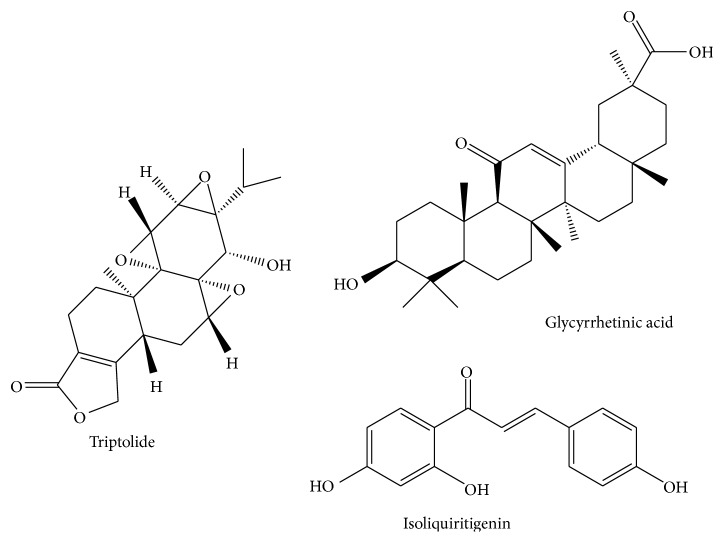
Figure 1
Figure 1
The structures of TP, GA, and ISL.
Figure 2
Figure 2
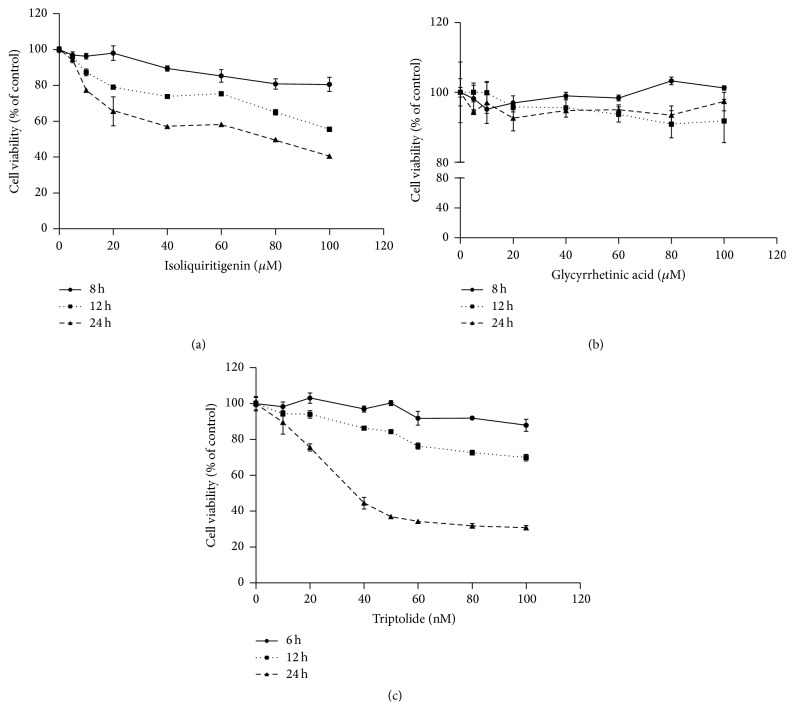
Cytotoxicity of ISL (a), GA (b), and TP (c) in HepG2 cells. Cells were exposed to various concentrations and time of tested drugs before being subjected to the MTT assay (n = 3).
Figure 3
Figure 3
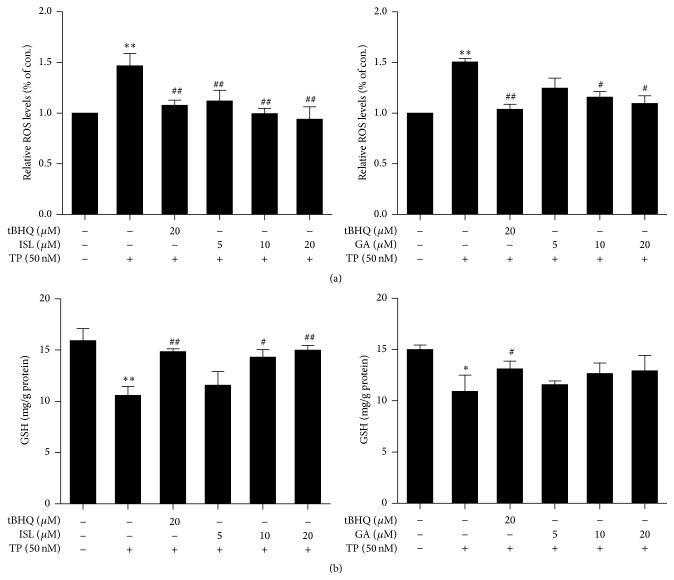
Cells were exposed to 50 nM TP for 24 h after incubation with various concentrations of ISL and GA for 12 h and 24 h, respectively. (a) The content of ROS was measured and normalized to control group. (b) The content of intracellular GSH was measured and normalized to protein content (n = 3). p < 0.05 versus control, ∗∗ p < 0.01 versus control; # p < 0.05 versus TP group, ## p < 0.01 versus TP group. Control (Column 1): 0.1% DMSO.
Figure 4
Figure 4
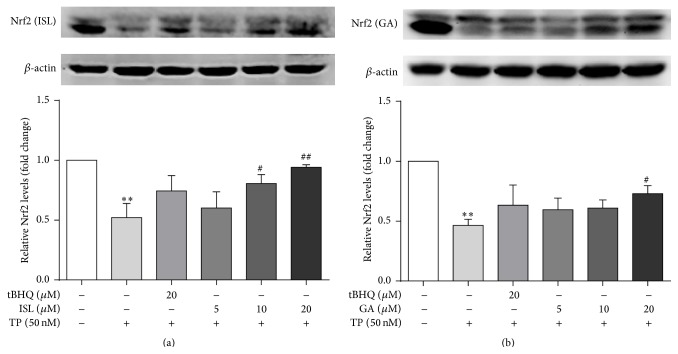
Cells were treated with different concentrations of ISL (a) and GA (b) for 12 h and 24 h, respectively, after which they were exposed to 50 nM TP for 24 h. The protein expression and gray value of Nrf2 was measured (n = 3). ∗∗ p < 0.01 versus control; # p < 0.05 versus TP group, ## p < 0.01 versus TP group. Control (Column 1): 0.1% DMSO.
Figure 5
Figure 5
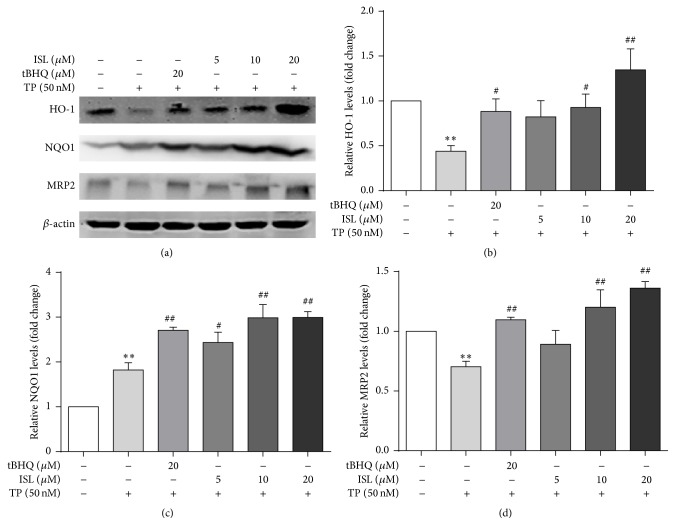
Cells were treated with different concentrations of ISL and tBHQ for 12 h, after which they were exposed to 50 nM TP for 24 h. The protein expressions (a) and gray value of HO-1 (b), NQO1 (c), and MRP2 (d) were measured (n = 3). ∗∗ p < 0.01 versus control; # p < 0.05 versus TP group, ## p < 0.01 versus TP group. Control (Column 1): 0.1% DMSO.
Figure 6
Figure 6
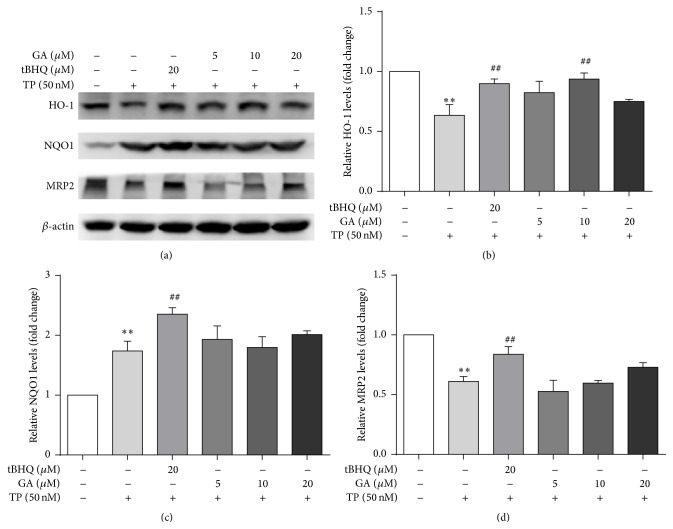
Cells were treated with different concentrations of GA and tBHQ for 24 h, after which they were exposed to 50 nM TP for 24 h. The protein expressions (a) and gray value of HO-1 (b), NQO1 (c), and MRP2 (d) were measured (n = 3). ∗∗ p < 0.01 versus control; ## p < 0.01 versus TP group. Control (Column 1): 0.1% DMSO.

References

    1. Li X.-J., Jiang Z.-Z., Zhang L.-Y. Triptolide: progress on research in pharmacodynamics and toxicology. Journal of Ethnopharmacology. 2014;155(1):67–79. doi: 10.1016/j.jep.2014.06.006. - DOI - PubMed
    1. Mei Z., Li X., Wu Q., Hu S., Yang X. The research on the anti-inflammatory activity and hepatotoxicity of triptolide-loaded solid lipid nanoparticle. Pharmacological Research. 2005;51(4):345–351. doi: 10.1016/j.phrs.2004.10.007. - DOI - PubMed
    1. Ma Q. Role of Nrf2 in oxidative stress and toxicity. Annual Review of Pharmacology and Toxicology. 2013;53:401–426. doi: 10.1146/annurev-pharmtox-011112-140320. - DOI - PMC - PubMed
    1. Ma Q., He X. Molecular basis of electrophilic and oxidative defense: promises and perils of Nrf2. Pharmacological Reviews. 2012;64(4):1055–1081. doi: 10.1124/pr.110.004333. - DOI - PMC - PubMed
    1. Hwang G.-W. Role of intracellular defense factors against methylmercury toxicity. Biological and Pharmaceutical Bulletin. 2012;35(11):1881–1884. doi: 10.1248/bpb.b212019. - DOI - PubMed

LinkOut - more resources