


The Obesity Paradox and Heart Failure: A Systematic Review of a Decade of Evidence
- PMID: 26904277
- PMCID: PMC4745816
- DOI: 10.1155/2016/9040248
The Obesity Paradox and Heart Failure: A Systematic Review of a Decade of Evidence
Abstract
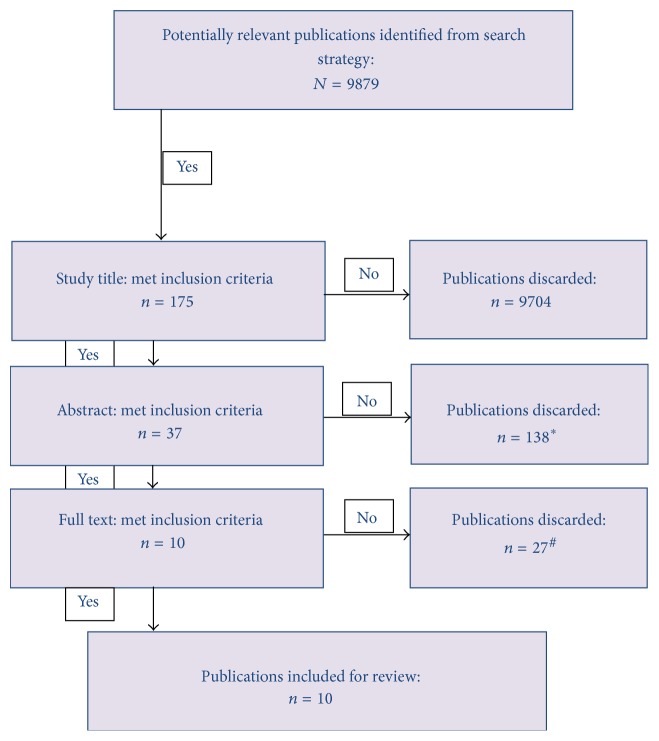
There is scientific consensus that obesity increases the risk of cardiovascular diseases, including heart failure. However, among persons who already have heart failure, outcomes seem to be better in obese persons as compared with lean persons: this has been termed the obesity paradox, the mechanisms of which remain unclear. This study systematically reviewed the evidence of the relationship between heart failure mortality (and survival) and weight status. Search of the PubMed/MEDLINE and EMBASE databases was done according to the PRISMA protocol. The initial search identified 9879 potentially relevant papers, out of which ten studies met the inclusion criteria. One study was a randomized clinical trial and 9 were observational cohort studies: 6 prospective and 3 retrospective studies. All studies used the BMI, WC, or TSF as measure of body fatness and NYHA Classification of Heart Failure and had single outcomes, death, as study endpoint. All studies included in review were longitudinal studies. All ten studies reported improved outcomes for obese heart failure patients as compared with their normal weight counterparts; worse prognosis was demonstrated for extreme obesity (BMI > 40 kg/m(2)). The findings of this review will be of significance in informing the practice of asking obese persons with heart failure to lose weight. However, any such recommendation on weight loss must be consequent upon more conclusive evidence on the mechanisms of the obesity paradox in heart failure and exclusion of collider bias.
Figures
References
-
- Popkin B. M., Doak C. M. The obesity epidemic is a worldwide phenomenon. Nutrition Reviews. 1998;56(4, part 1):106–114. - PubMed
-
- World Health Organization. Obesity and Overweight. 2013, http://www.who.int/mediacentre/factsheets/fs311/en/
-
- Mattei J., Malik V., Wedick N. M., et al. A symposium and workshop report from the Global Nutrition and Epidemiologic Transition Initiative: nutrition transition and the global burden of type 2 diabetes. British Journal of Nutrition. 2012;108(7):1325–1335. doi: 10.1017/s0007114512003200. - DOI - PubMed
Publication types
MeSH terms
LinkOut - more resources
Full Text Sources
Other Literature Sources
Medical
Miscellaneous
