


Systematic review on the effectiveness of augmented reality applications in medical training
- PMID: 26905573
- PMCID: PMC5009168
- DOI: 10.1007/s00464-016-4800-6
Systematic review on the effectiveness of augmented reality applications in medical training
Abstract
Background: Computer-based applications are increasingly used to support the training of medical professionals. Augmented reality applications (ARAs) render an interactive virtual layer on top of reality. The use of ARAs is of real interest to medical education because they blend digital elements with the physical learning environment. This will result in new educational opportunities. The aim of this systematic review is to investigate to which extent augmented reality applications are currently used to validly support medical professionals training.
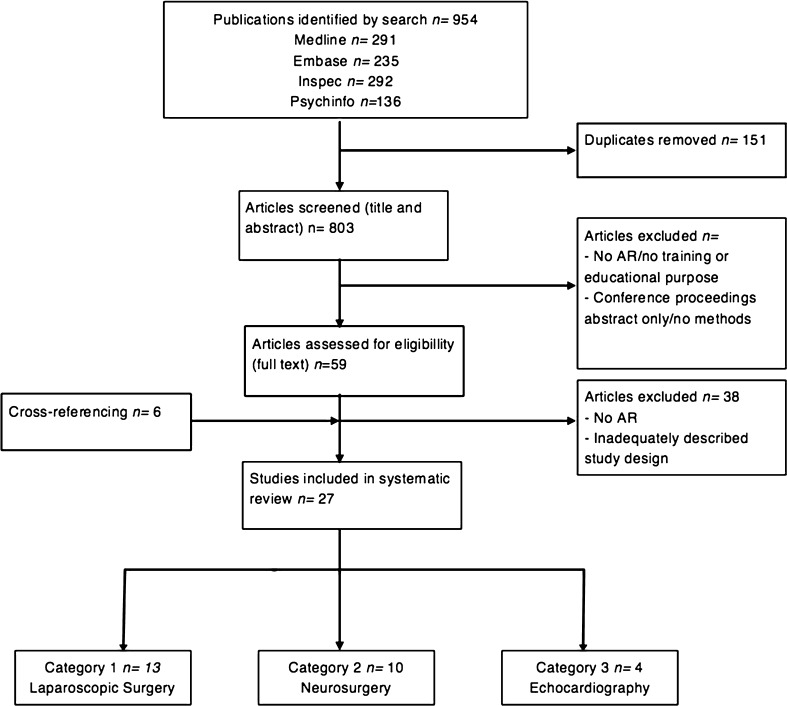
Methods: PubMed, Embase, INSPEC and PsychInfo were searched using predefined inclusion criteria for relevant articles up to August 2015. All study types were considered eligible. Articles concerning AR applications used to train or educate medical professionals were evaluated.
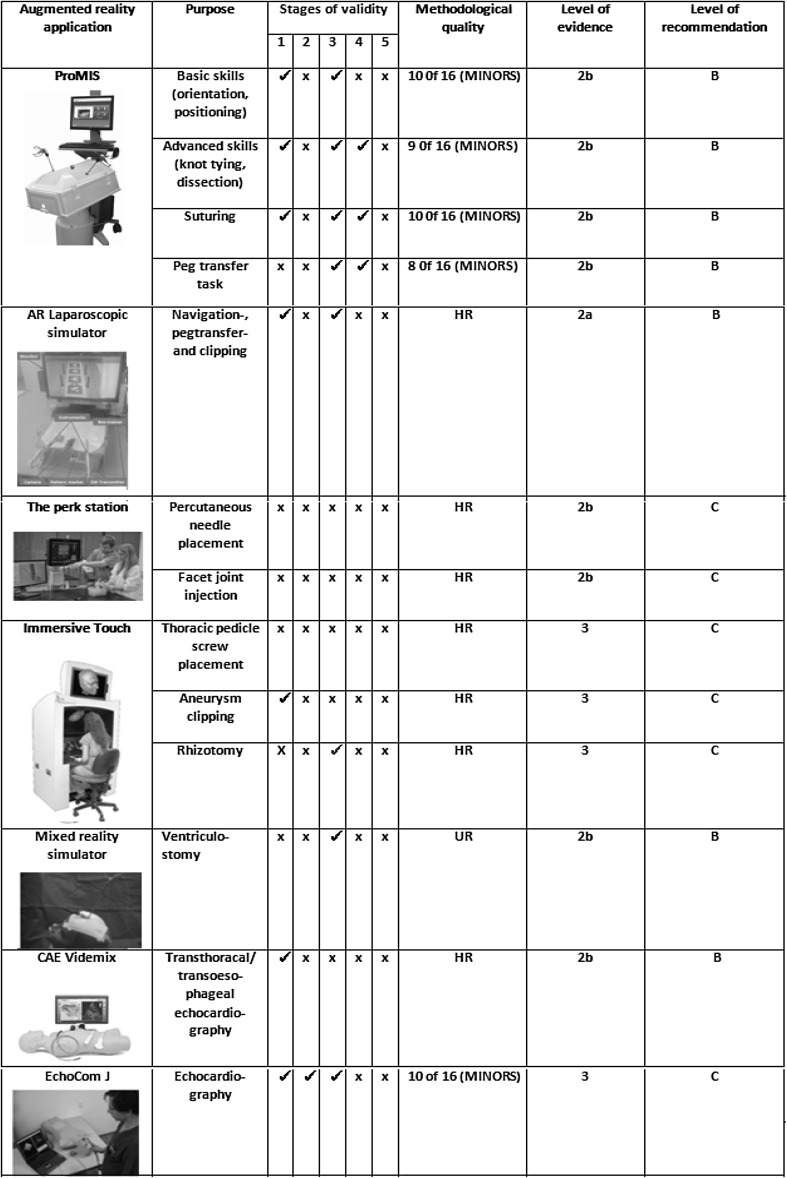
Results: Twenty-seven studies were found relevant, describing a total of seven augmented reality applications. Applications were assigned to three different categories. The first category is directed toward laparoscopic surgical training, the second category toward mixed reality training of neurosurgical procedures and the third category toward training echocardiography. Statistical pooling of data could not be performed due to heterogeneity of study designs. Face-, construct- and concurrent validity was proven for two applications directed at laparoscopic training, face- and construct validity for neurosurgical procedures and face-, content- and construct validity in echocardiography training. In the literature, none of the ARAs completed a full validation process for the purpose of use.
Conclusion: Augmented reality applications that support blended learning in medical training have gained public and scientific interest. In order to be of value, applications must be able to transfer information to the user. Although promising, the literature to date is lacking to support such evidence.
Keywords: Augmented reality; Medical education; Medical specialist training; Surgery; Training.
Conflict of interest statement
Compliance with ethical standards Disclosures Authors E.Z. Barsom, M. Graafland and M.P. Schijven have no conflicts of interest or financial ties to disclose.
Figures
References
-
- Bharathan R, Vali S, Setchell T, Miskry T, Darzi A, Aggarwal R. Psychomotor skills and cognitive load training on a virtual reality laparoscopic simulator for tubal surgery is effective. Eur J Obstet Gynecol Reprod Biol. 2013;7(2):310–327. - PubMed
-
- Grantcharov TP, Kristiansen VB, Bendix J, Bardram L, Rosenberg J, Funch-Jensen P. Randomized clinical trial of virtual reality simulation for laparoscopic skills training. Br J Surg. 2004;91(2):146–150. - PubMed
-
- Schout BM, Ananias HJ, Bemelmans BL, d’Ancona FC, Muijtjens AM, Dolmans VE, et al. Transfer of cysto-urethroscopy skills from a virtual-reality simulator to the operating room: a randomized controlled trial. BJU Int. 2010;106(2):226–231. - PubMed
-
- Schreuder HW, Oei G, Maas M, Borleffs JC, Schijven MP. Implementation of simulation in surgical practice: minimally invasive surgery has taken the lead: the Dutch experience. Med Teach. 2011;33(2):105–115. - PubMed
Publication types
MeSH terms
LinkOut - more resources
Full Text Sources
Other Literature Sources
Medical
Research Materials
