


Prevalence and trends in the childhood dual burden of malnutrition in low- and middle-income countries, 1990-2012
- PMID: 26905921
- PMCID: PMC5470367
- DOI: 10.1017/S1368980016000276
Prevalence and trends in the childhood dual burden of malnutrition in low- and middle-income countries, 1990-2012
Abstract
Objective: To describe trends in country- and individual-level dual burden of malnutrition in children <5 years, and age-stratified (<2 years, ≥2 years) country-level trends, in thirty-six low- and middle-income countries (LMIC).
Design: Using repeated cross-sectional nationally representative data, we calculated the prevalence of malnutrition (stunting, wasting, overweight) at each survey wave, annualized rates of prevalence change for each country over time, and trends before and after 2000, for all children <5 years and separately for those </≥2 years. We examined country- (ratio of stunting to overweight) and individual-level (coexistence of stunting and overweight) dual burden in children <5 years.
Setting: Demographic and Health Surveys from thirty-six LMIC between 1990 and 2012.
Subjects: Children <5 years.
Results: Overall malnutrition prevalence decreased in children <5 years, driven by stunting decreases. Stunting rates decreased in 78 % of countries, wasting rates decreased in 58 % of countries and overweight rates increased in 36 % of countries. Rates of change differed for children </≥2 years, with children <2 years experiencing decreases in stunting in fewer countries yet increases in overweight in more countries. Countries with nearly equal prevalences of stunting and overweight in children <5 years increased from 2000 to the final year. Within a country, 0·3-10·9 % of children <5 years were stunted and overweight, and 0·6-37·8 % of stunted children <5 years were overweight.
Conclusions: The dual burden exists in children <5 years on both country and individual levels, indicating a shift is needed in policies and programmes to address both sides of malnutrition. Children <2 years should be identified as a high-risk demographic.
Keywords: Children; Developing countries; Dual burden; Nutritional status.
Figures
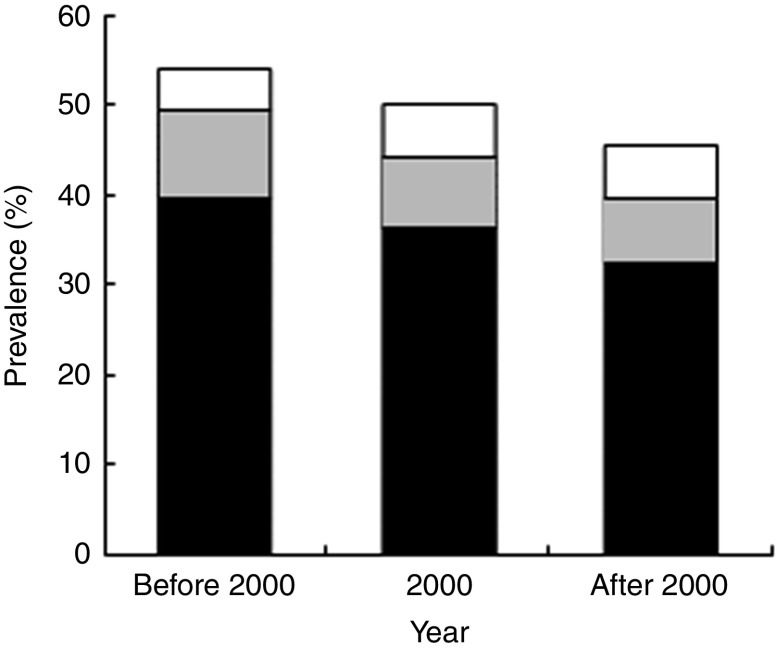
 ), wasting (
 ) and overweight (
 ) at three time points (year closest to 1990, year closest to 2000 and final year) among children <5 years from thirty-six low- and middle-income countries, 1990–2012
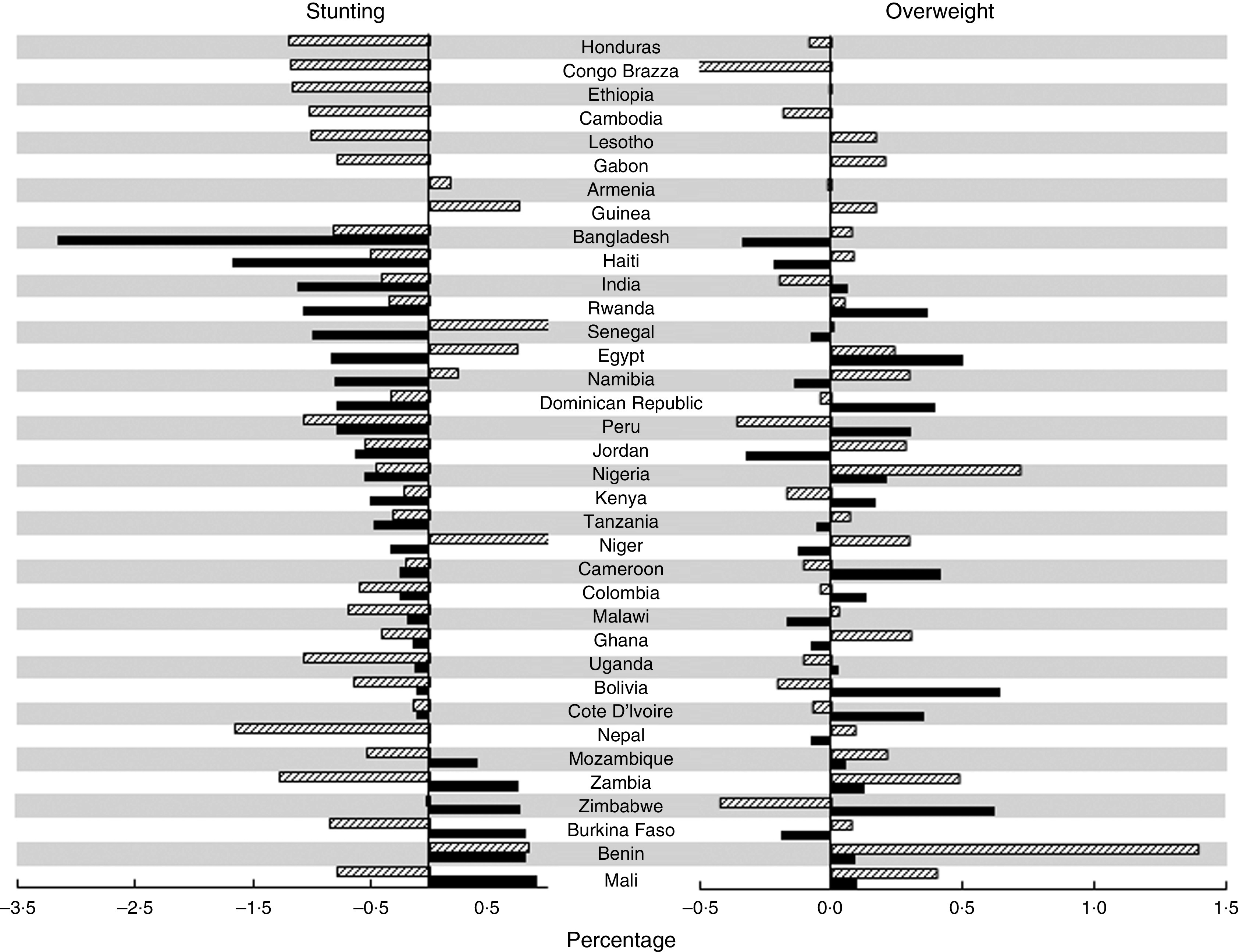 , before 2000;
  , after 2000) among children <5 years from thirty-six low- and middle-income countries, 1990–2012
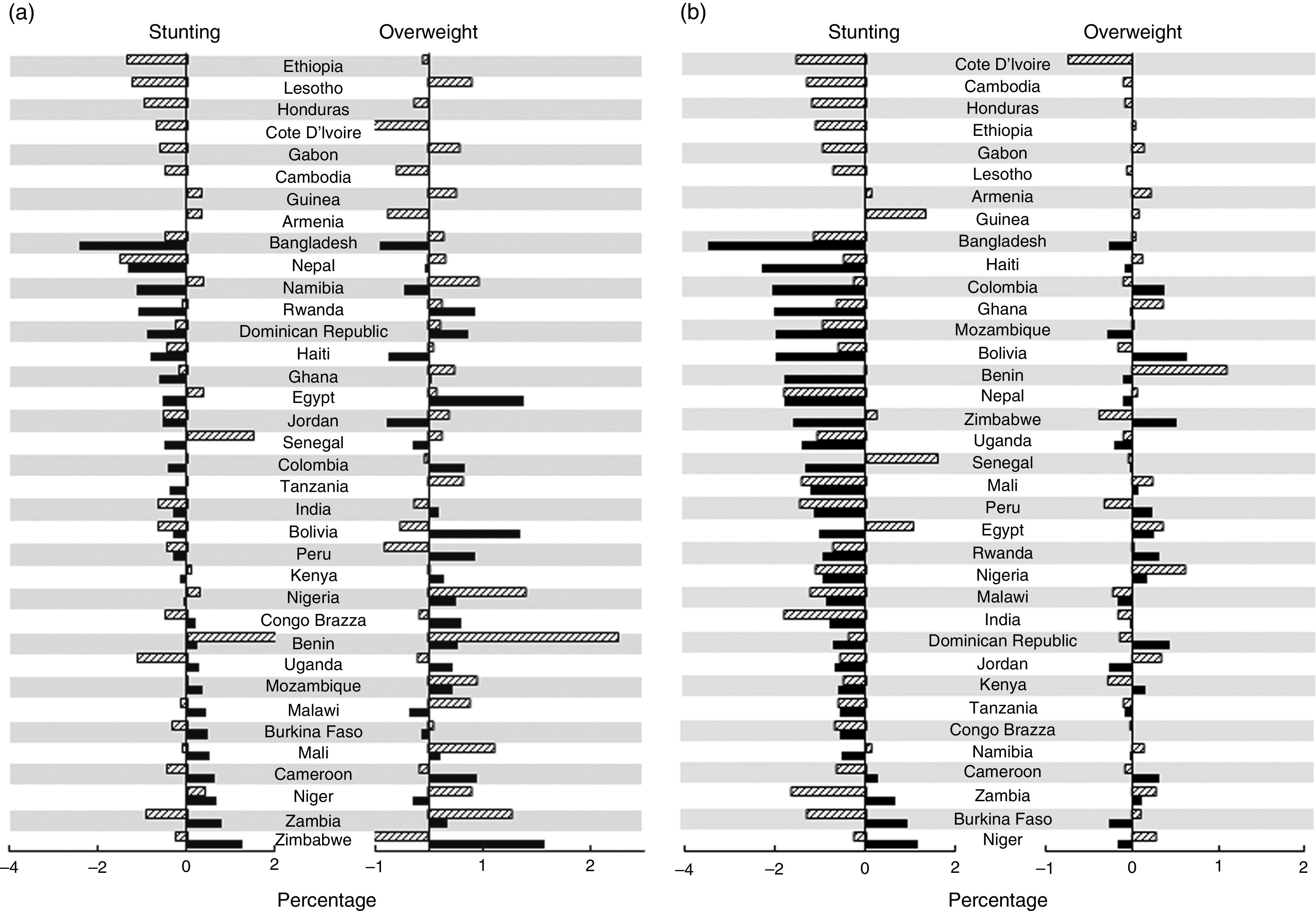 , before 2000; , after 2000) among children <2 years (a) and children ≥2 years (b) from thirty-six low- and middle-income countries, 1990–2012
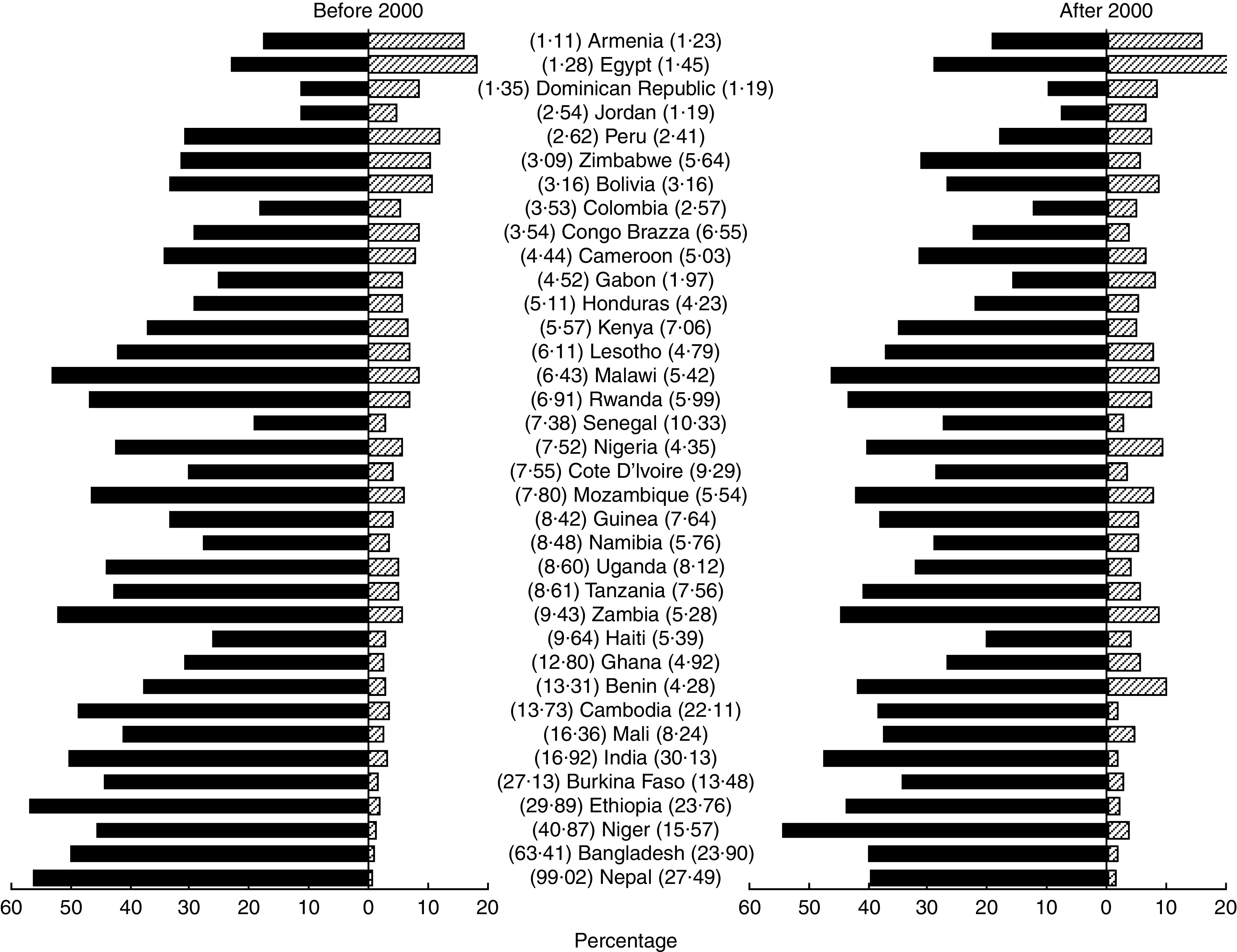 , stunting prevalence; , overweight prevalence)
References
-
- Black RE, Victora CG, Walker SP et al.. (2013) Maternal and child undernutrition and overweight in low-income and middle-income countries. Lancet 382, 427–451. - PubMed
-
- Black RE, Allen LH, Bhutta ZA et al.. (2008) Maternal and child undernutrition: global and regional exposures and health consequences. Lancet 371, 243–260. - PubMed
-
- de Onis M, Blössner M & Borghi E (2012) Prevalence and trends of stunting among pre-school children, 1990–2020. Public Health Nutr 15, 142–148. - PubMed
-
- Popkin BM (1994) The nutrition transition in low-income countries: an emerging crisis. Nutr Rev 52, 285–298. - PubMed
-
- Onis M de, Blössner M & Borghi E (2010) Global prevalence and trends of overweight and obesity among preschool children. Am J Clin Nutr 92, 1257–1264. - PubMed
MeSH terms
Grants and funding
LinkOut - more resources
Full Text Sources
Other Literature Sources
Medical
