


Modeling vitamin D insufficiency and moderate deficiency in adult mice via dietary cholecalciferol restriction
- PMID: 26906176
- PMCID: PMC4995161
- DOI: 10.3109/07435800.2016.1141937
Modeling vitamin D insufficiency and moderate deficiency in adult mice via dietary cholecalciferol restriction
Abstract
Purpose: We sought to develop and characterize a model of human vitamin D nutritional insufficiency/deficiency in the adult mouse, which could have broad utility in examining health consequences of this common condition.
Methods: Adult mice were fed diets containing cholecalciferol contents of 0.05 IU/g, 0.25 IU/g, 0.5 IU/g or 1.5 IU/g for four months. We studied induction of steady-state vitamin D insufficiency, and its consequences on primary cholecalciferol metabolite levels, calcium homeostasis, parathyroid physiology, and bone morphology.
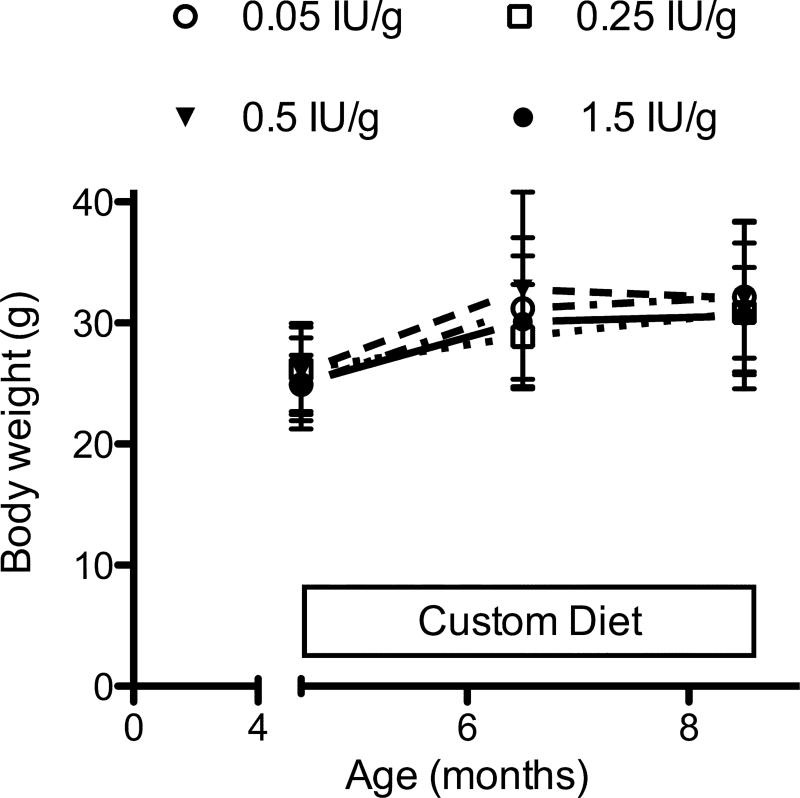
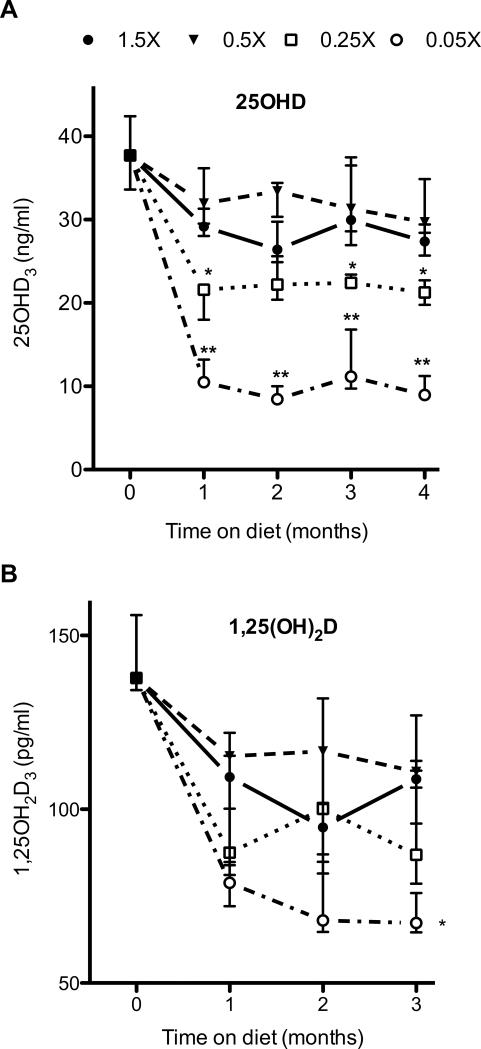
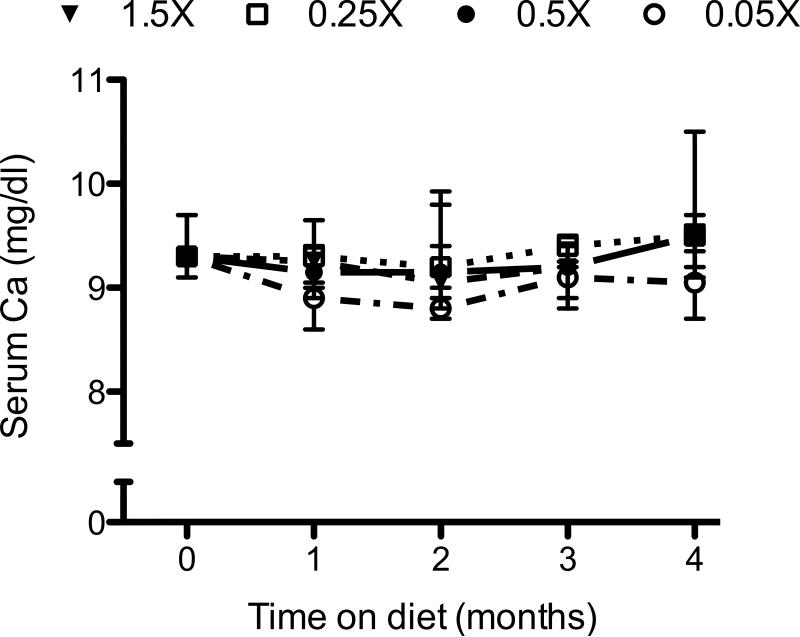
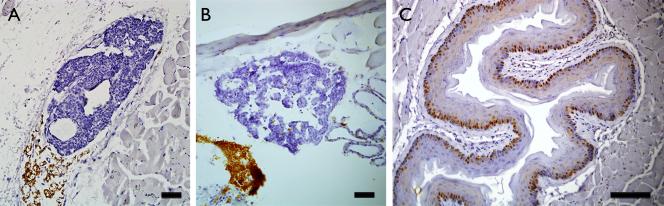
Results: All diets were well tolerated, without adverse effects on body weight. Diets containing 0.05 IU/g and 0.25 IU/g cholecalciferol significantly lowered serum 25-hydroxyvitamin D levels (median 25OHD, 10.5 ng/ml, and 21.6 ng/ml, respectively), starting as early as one month following initiation of the diets, maintained through the four-month experimental period. The 0.05 IU/g diet significantly decreased 1,25-dihydroxyvitamin D (1,25OH2D) levels (median, 78 pg/ml). Despite these decreased 25OHD and 1,25OH2D levels, the diets did not alter parathyroid gland morphology or parathyroid cell proliferation. There were no statistical differences in the serum total calcium and serum PTH levels among the various dietary groups. Furthermore, the 0.05 IU/g diet did not cause any alterations in the cortical and trabecular bone morphology, as determined by microCT.
Conclusions: The dietary manipulations yielded states of vitamin D insufficiency or modest deficiency in adult mice, with no overtly detectable impact on parathyroid and bone physiology, and calcium homeostasis. This model system may be of value to study health effects of vitamin D insufficiency/deficiency especially on extraskeletal phenotypes such as cancer susceptibility or immune function.
Keywords: 25-hydroxyvitamin D; Animal diet; parathyroid; vitamin D.
Figures
References
-
- Dusso AS, Brown AJ, Slatopolsky E. Vitamin D. American journal of physiology. 2005;289(1):F8–28. PubMed PMID: 15951480. - PubMed
-
- Welsh J. Cellular and molecular effects of vitamin D on carcinogenesis. Archives of biochemistry and biophysics. 2012;523(1):107–14. doi: D - nlm: nihms337760 D - NLM: PMC3295909 EDAT- 2011/11/17 06:00 MHDA- 2012/08/07 06:00 CRDT- 2011/11/17 06:00 PHST- 2011/09/21 [received] PHST- 2011/10/31 [accepted] PHST- 2011/11/09 [aheadofprint] AID - S0003-9861(11)00356-0 [pii] AID - 10.1016/j.abb.2011.10.019 [doi] PST - ppublish. - PMC - PubMed
MeSH terms
Substances
Grants and funding
LinkOut - more resources
Full Text Sources
Other Literature Sources
Medical
