


Rhinovirus Disease in Children Seeking Care in a Tertiary Pediatric Emergency Department
- PMID: 26908489
- PMCID: PMC4765491
- DOI: 10.1093/jpids/piu099
Rhinovirus Disease in Children Seeking Care in a Tertiary Pediatric Emergency Department
Abstract
Background: Rhinovirus is the most common cause of viral respiratory tract infections in children. Virologic predictors of lower respiratory tract infection (LRTI), such as viral load and the presence of another respiratory virus (coinfection), are not well characterized in pediatric outpatients.
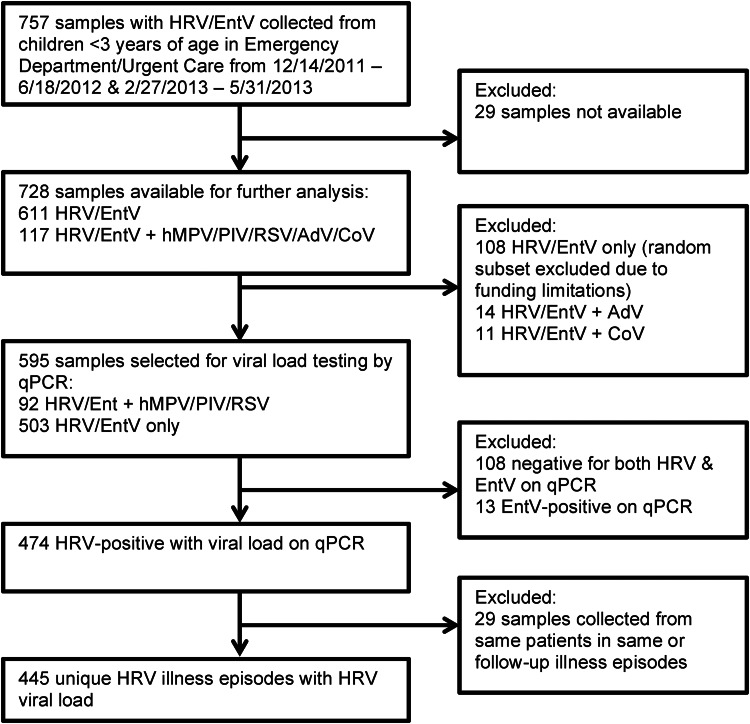
Methods: Mid-nasal turbinate samples were collected from children presenting for care to the Seattle Children's Hospital emergency department (ED) or urgent care with a symptomatic respiratory infection between December 2011 and May 2013. A subset of samples was tested for rhinovirus viral load by real-time polymerase chain reaction. Clinical data were collected by chart reviews. Multivariate logistic regression was used to evaluate the relationship between viral load and coinfection and the risk for LRTI.
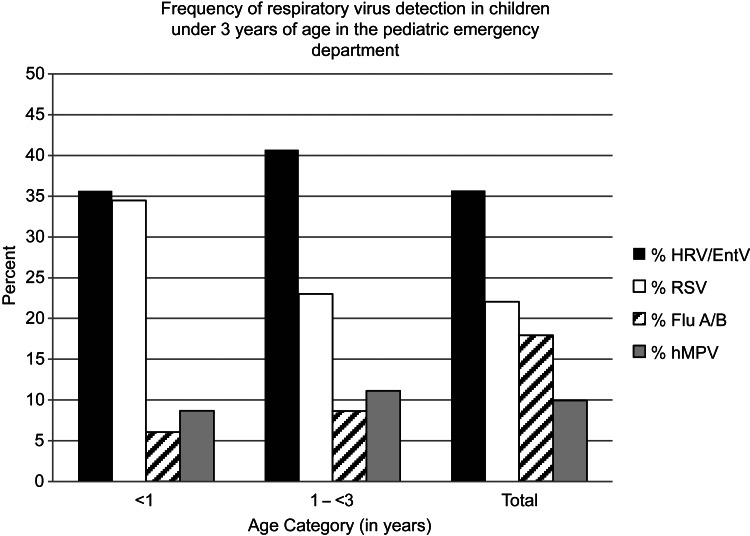
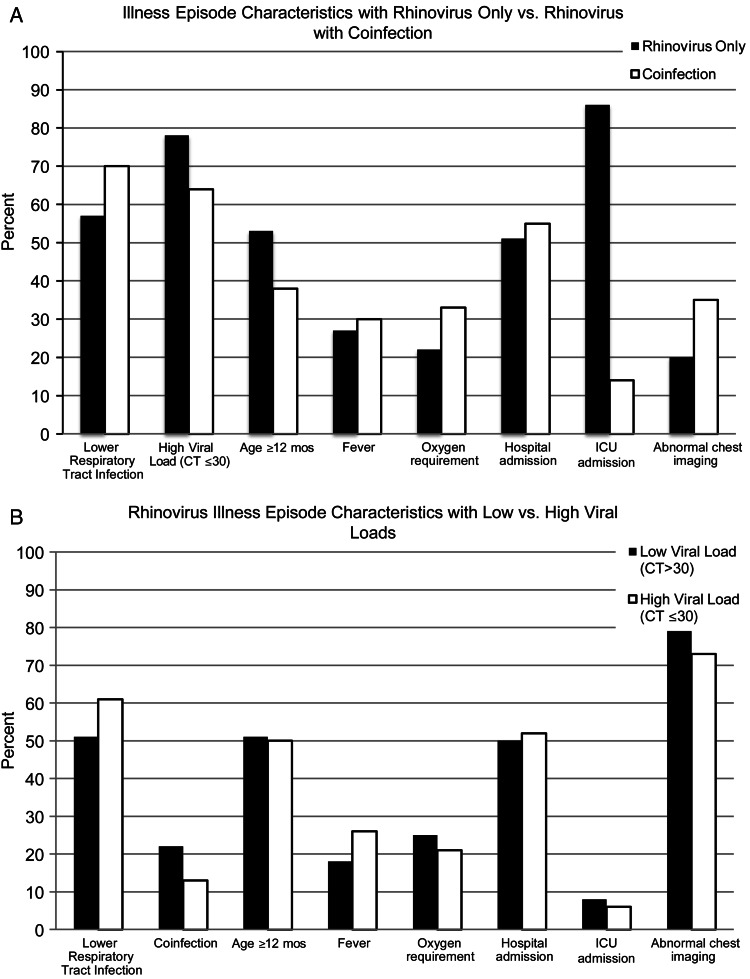
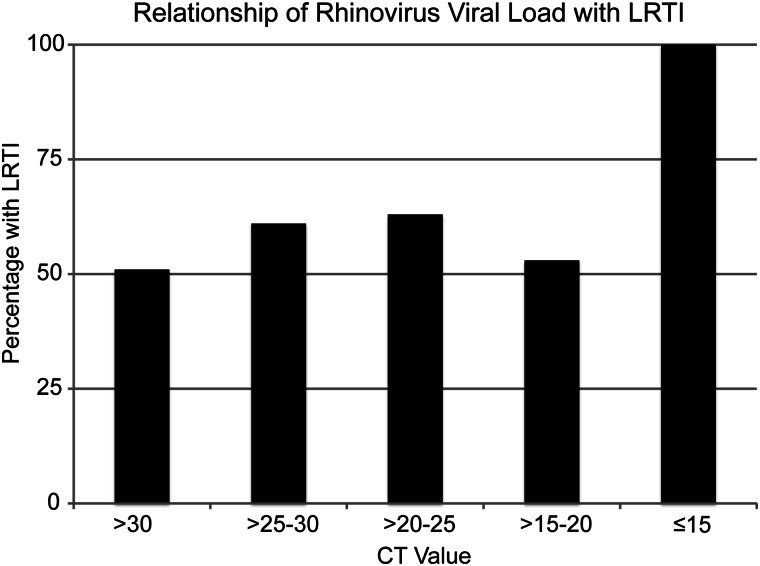
Results: Rhinovirus was the most frequent respiratory virus detected in children younger than 3 years. Of 445 patients with rhinovirus infection, 262 (58.9%) had LRTIs, 231 (51.9%) required hospital admission and 52 (22.5%) were hospitalized for 3 days or longer. Children with no comorbidities accounted for 142 (54%) of 262 rhinovirus LRTIs. Higher viral load was significantly associated with LRTI among illness episodes with rhinovirus alone (OR, 2.11; 95% confidence interval [CI], 1.24-3.58). Coinfection increased the risk of LRTI (OR, 1.83; 95% CI, 1.01-3.32).
Conclusions: Rhinovirus was the most common pathogen detected among symptomatic young children in a pediatric ED who had respiratory viral testing performed, with the majority requiring hospitalization. Higher rhinovirus viral load and coinfection increased disease severity. Virologic data may assist clinical decision making for children with rhinovirus infections in the pediatric ED.
Keywords: coinfection; disease severity; emergency department; rhinovirus; viral load.
© The Author 2014. Published by Oxford University Press on behalf of the Pediatric Infectious Diseases Society. All rights reserved. For Permissions, please e-mail: journals.permissions@oup.com.
Figures
References
-
- Greenberg SB. Respiratory consequences of rhinovirus infection. Arch Intern Med 2003; 163:278–84. - PubMed
Publication types
MeSH terms
Grants and funding
LinkOut - more resources
Full Text Sources
Other Literature Sources
