


First-line lesional aspiration in acute stroke thrombectomy using a novel intermediate catheter: Initial experiences with the SOFIA
- PMID: 26908589
- PMCID: PMC4984371
- DOI: 10.1177/1591019916632370
First-line lesional aspiration in acute stroke thrombectomy using a novel intermediate catheter: Initial experiences with the SOFIA
Abstract
Introduction: Five randomized controlled trials (RCTs) on endovascular therapy (EVT) of stroke have proven a clinical benefit over conservative treatment or IV-thrombolysis alone. Lesional clot aspiration with a dedicated system can achieve revascularization without an additional retriever (a direct-aspiration first-pass technique, ADAPT), and the SOFIA has been shown to be both safe and efficacious in a multicentric retrospective study. We have evaluated a subset of these data acquired in two major stroke centers with regard to using the SOFIA for first-line lesional aspiration.
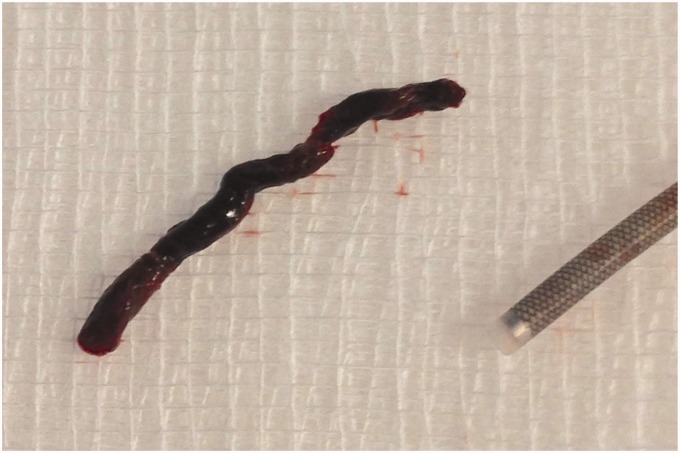
Methods: Thirty patients with large-vessel occlusions treated with first-line lesional aspiration were identified. Procedural data, clot length, reperfusion success (mTICI), procedural timings, complications, and clinical status at admission, discharge and at 90 days were analyzed.
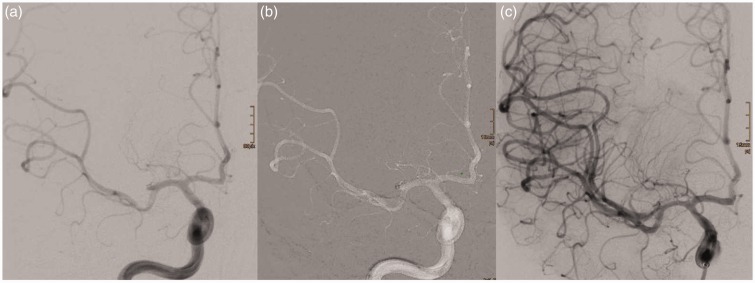
Results: The median baseline NIHSS was 16. IV thrombolysis was administered in 15/30 patients. Ninety-three percent of occlusions were in the anterior circulation. TICI ≥ 2b was achieved in 90% of multimodality treatments; lesional aspiration was successful in 67% within a median time of 20 minutes. The highest first-attempt success rate was in MCA occlusions (median time to recanalization 10 minutes). There were no device-related events. Symptomatic intracerebral hemorrhage (sICH) occurred in 10%, but never with sole lesional aspiration. Embolization to new territories was recorded in 1/30 (3%). Median discharge NIHSS was 7; 30% were mRS ≤ 2 at discharge and 43% at 90-day follow-up.
Conclusions: Lesional aspiration with SOFIA is in line with published data. The SOFIA may be used as a first-line device, aiming at fast recanalization by sole aspiration with good safety and efficacy. If unsuccessful, it converts into part of a stent retriever-based multimodality treatment.
Keywords: Angiography; catheter; lesional aspiration; stroke; thrombectomy.
© The Author(s) 2016.
Figures
References
-
- Hacke W, Kaste M, Bluhmki E, et al. Thrombolysis with alteplase 3 to 4.5 hours after acute ischemic stroke. N Engl J Med 2008; 359: 1317–1329. - PubMed
-
- Bhatia R, Hill MD, Shobha N, et al. Low rates of acute recanalization with intravenous recombinant tissue plasminogen activator in ischemic stroke: Real-world experience and a call for action. Stroke 2010; 41: 2254–2258. - PubMed
-
- Saver JL, Jahan R, Levy EI, et al. Solitaire flow restoration device versus the Merci Retriever in patients with acute ischaemic stroke (SWIFT): A randomised, parallel-group, non-inferiority trial. Lancet 2012; 380: 1241–1249. - PubMed
-
- Goyal M, Demchuk AM, Menon BK, et al. Randomized assessment of rapid endovascular treatment of ischemic stroke. N Engl J Med 2015; 372: 1019–1030. - PubMed
MeSH terms
LinkOut - more resources
Full Text Sources
Other Literature Sources
Medical
